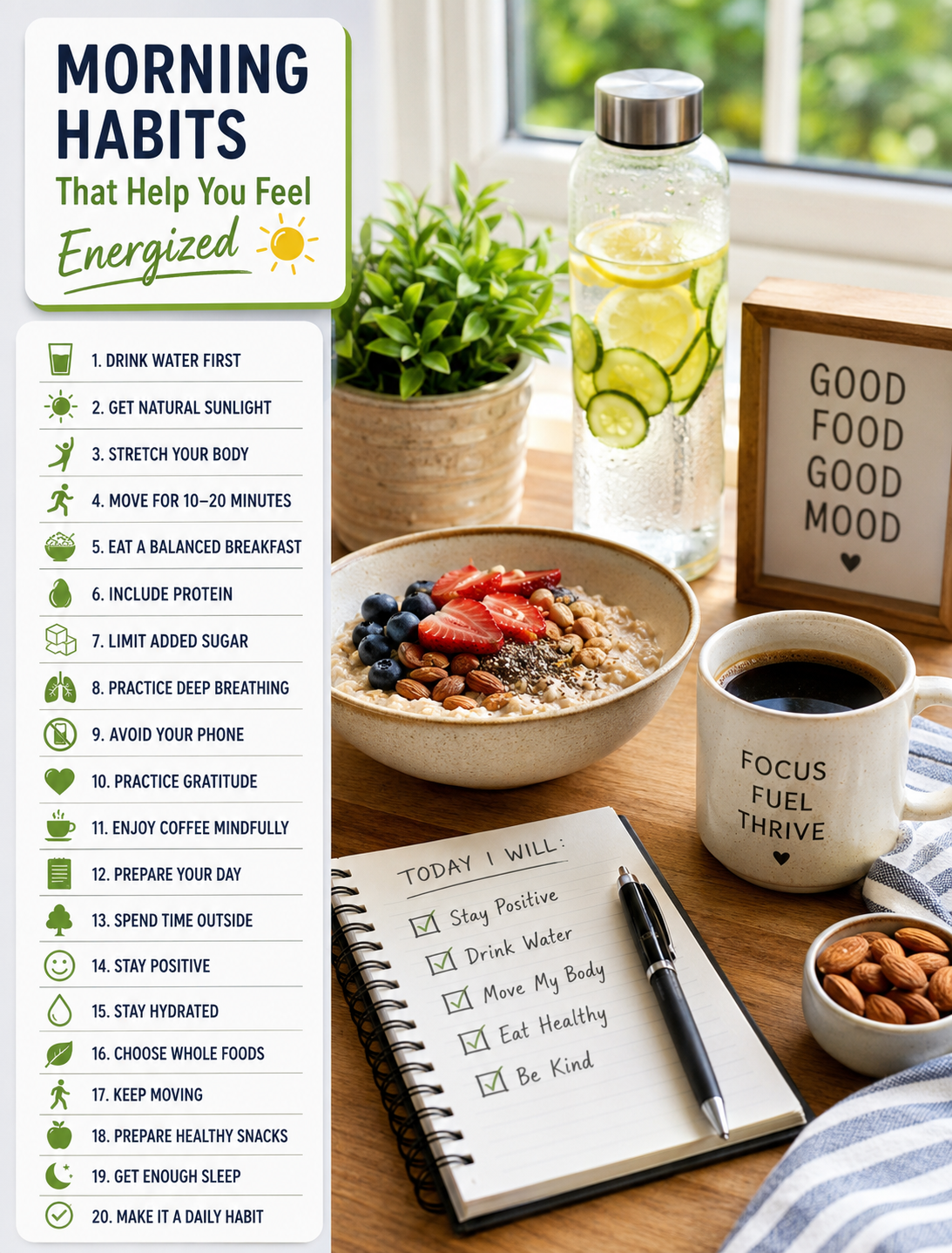
Morning Habits That Help You Feel Energized (Healthy Lifestyle Guide)
Starting your morning with healthy habits can completely change how you feel throughout the day. Instead of reaching for another cup of coffee or feeling sluggish by mid-morning, a simple morning routine can naturally increase your energy, improve focus, boost metabolism, and support better physical and mental health.
Many Americans struggle with fatigue because of poor sleep, dehydration, processed breakfasts, and rushing out the door without giving their bodies the fuel they need. The good news is that you don’t need expensive supplements or complicated routines. A few intentional habits practiced consistently can make a noticeable difference in your daily energy levels.
This guide shares practical, science-backed morning habits that are easy to follow whether you’re working from home, commuting to the office, managing a busy family, or simply trying to live a healthier lifestyle. These habits work together to help regulate your body’s natural energy systems while supporting long-term wellness.
Ingredients (Healthy Morning Essentials):
Think of these as the “ingredients” for an energized morning:
- 1 large glass of water
- Fresh lemon (optional)
- 7–9 hours of quality sleep
- 10–20 minutes of movement
- Healthy protein-rich breakfast
- Fresh fruits
- Whole grains
- Healthy fats
- Fresh vegetables
- Greek yogurt or eggs
- Nuts and seeds
- Natural sunlight
- Positive mindset
- Deep breathing
- Time away from your phone
- Herbal tea or coffee (optional)
Instructions:
1. Wake Up at a Consistent Time
Your body loves routine. Waking up at roughly the same time every day—even on weekends—helps regulate your internal clock. This improves sleep quality, increases alertness, and makes mornings feel easier over time.
Avoid repeatedly hitting the snooze button. Although it feels tempting, fragmented sleep during those extra minutes often leaves you feeling groggier instead of refreshed.
2. Drink Water Before Anything Else
After sleeping for several hours, your body naturally becomes dehydrated. Even mild dehydration can contribute to tiredness, headaches, poor concentration, and low energy.
Start your morning with a large glass of water.
For extra flavor, try adding:
- Lemon slices
- Cucumber
- Mint
- Fresh berries
Hydration helps jump-start digestion, supports circulation, and prepares your body for the day ahead.
3. Get Natural Sunlight
Spend at least 10–15 minutes outside in the morning whenever possible.
Natural sunlight:
- Helps regulate your circadian rhythm
- Supports healthy melatonin production
- Improves mood
- Increases alertness
- May improve nighttime sleep
Take your coffee outside, walk your dog, or simply sit on the porch while enjoying the fresh air.
4. Stretch Your Body
Your muscles become stiff after sleeping.
Spend five to ten minutes doing gentle stretches such as:
- Neck rolls
- Shoulder stretches
- Cat-Cow stretch
- Standing forward fold
- Hip openers
- Hamstring stretch
- Child’s pose
Stretching increases blood flow, improves flexibility, reduces stiffness, and wakes up your body naturally.
5. Move for 10–20 Minutes
Exercise doesn’t have to be intense.
Choose something you enjoy:
- Brisk walking
- Cycling
- Yoga
- Bodyweight exercises
- Dancing
- Light jogging
- Resistance band workouts
Morning movement increases circulation, releases feel-good endorphins, and naturally boosts energy for hours afterward.
6. Eat a Balanced Breakfast
Skipping breakfast may leave you feeling hungry and sluggish later.
Focus on combining:
Protein
- Eggs
- Greek yogurt
- Cottage cheese
- Turkey sausage
- Protein smoothie
Healthy Carbohydrates
- Oatmeal
- Whole grain toast
- Fresh fruit
- Sweet potatoes
Healthy Fats
- Avocado
- Almond butter
- Walnuts
- Chia seeds
- Flaxseed
A balanced breakfast helps stabilize blood sugar while providing long-lasting energy.
7. Include Protein
Protein helps you stay full longer and prevents energy crashes.
Aim for around 20–30 grams of protein in your breakfast.
Examples include:
- Greek yogurt with berries
- Vegetable omelet
- Cottage cheese bowl
- Protein smoothie
- Peanut butter with whole grain toast
- Overnight oats with protein powder
8. Limit Added Sugar
Sugary cereals, pastries, donuts, and sweet coffee drinks may provide a quick burst of energy, but they often lead to an afternoon crash.
Instead choose:
- Fresh fruit
- Plain oatmeal
- Greek yogurt
- Homemade smoothies
- Whole grain toast
These provide more stable energy throughout the day.
9. Practice Deep Breathing
Just three to five minutes of slow breathing can help reduce stress and improve focus.
Try this simple method:
- Inhale for four seconds
- Hold for four seconds
- Exhale for six seconds
Repeat for several minutes.
Deep breathing increases oxygen flow and helps your body feel calm yet alert.
10. Avoid Checking Your Phone Immediately
Many people wake up and instantly start scrolling through emails or social media.
Instead:
- Make your bed
- Drink water
- Stretch
- Eat breakfast
- Spend time outside
Giving yourself even 20–30 minutes before checking your phone helps reduce stress and creates a calmer start to your day.
11. Practice Gratitude
Spend one minute writing down:
- Three things you’re thankful for
- One goal for today
- One positive affirmation
This simple habit can improve mood, increase motivation, and reduce negative thinking.
12. Enjoy Coffee Mindfully
Coffee can absolutely be part of a healthy morning.
To maximize benefits:
- Drink water first
- Avoid excessive sugar
- Limit flavored creamers
- Pair coffee with breakfast
Moderate caffeine supports alertness without causing significant energy crashes.
13. Prepare Your Day
Take five minutes to organize your priorities.
Write down:
- Top three tasks
- Important appointments
- Meals
- Workout
- Water goal
Having a clear plan reduces stress and mental fatigue.
14. Spend Time Outside
Fresh air helps wake up both your mind and body.
Even a short morning walk around your neighborhood can:
- Improve circulation
- Reduce stress
- Increase vitamin D exposure
- Boost mood
- Enhance focus
15. Stay Positive
How you speak to yourself matters.
Replace thoughts like:
“I’ll never finish everything.”
With:
“I’ll focus on one task at a time.”
Positive thinking supports healthier stress management and better productivity.
16. Prepare Healthy Snacks
Pack healthy snacks before leaving home.
Great options include:
- Almonds
- Apple slices
- String cheese
- Baby carrots
- Greek yogurt
- Trail mix
- Protein bars with minimal added sugar
Having nutritious snacks available helps prevent energy crashes later in the day.
17. Keep Moving Throughout the Morning
If you work at a desk, avoid sitting for hours.
Stand up every 30–60 minutes.
Walk around the office, stretch your legs, or refill your water bottle.
Small movement breaks help maintain circulation and reduce fatigue.
18. Stay Hydrated All Morning
Continue drinking water throughout the morning.
A reusable water bottle can help you keep track of your intake.
Adding slices of lemon, lime, cucumber, or berries makes water more enjoyable without added sugar.
19. Choose Whole Foods Whenever Possible
Whole foods provide lasting nourishment compared to highly processed convenience foods.
Examples include:
- Fresh fruit
- Vegetables
- Whole grains
- Lean proteins
- Beans
- Nuts
- Seeds
These foods supply fiber, vitamins, minerals, and healthy fats that support sustained energy.
20. Make It a Daily Habit
Consistency is the secret to feeling energized.
You don’t have to practice every habit perfectly from day one. Start with three or four habits and gradually build your routine over time. Small improvements repeated every morning often produce bigger long-term results than trying to overhaul your entire lifestyle overnight.
Tips
- Prepare breakfast the night before.
- Keep a water bottle beside your bed.
- Lay out workout clothes before sleeping.
- Go to bed at a consistent time.
- Avoid heavy late-night meals.
- Limit screen time before bed.
- Choose whole foods over processed snacks.
- Spend a few minutes outdoors every morning.
- Practice consistency rather than perfection.
Servings
1 Healthy Morning Routine
Q&A
Can I skip breakfast if I’m not hungry?
If you’re not hungry immediately after waking, it’s fine to wait a little while. Just aim to eat a balanced meal within a few hours to support steady energy.
Is coffee bad for morning energy?
Not necessarily. Moderate coffee intake can improve alertness, especially when paired with hydration and a nutritious breakfast.
How long does it take to notice results?
Many people feel improvements in energy and focus within one to two weeks of consistently practicing healthy morning habits.
What’s the most important habit?
Consistency. Regular sleep, hydration, movement, and balanced nutrition work together to support lasting energy.
Nutrition (Approx. Daily Morning Routine Benefits)
- Supports healthy energy production
- Helps maintain stable blood sugar
- Encourages healthy metabolism
- Provides hydration
- Supports heart health
- Improves digestion
- Enhances focus and concentration
- Promotes better mood
- Supports healthy weight management
- Encourages long-term overall wellness