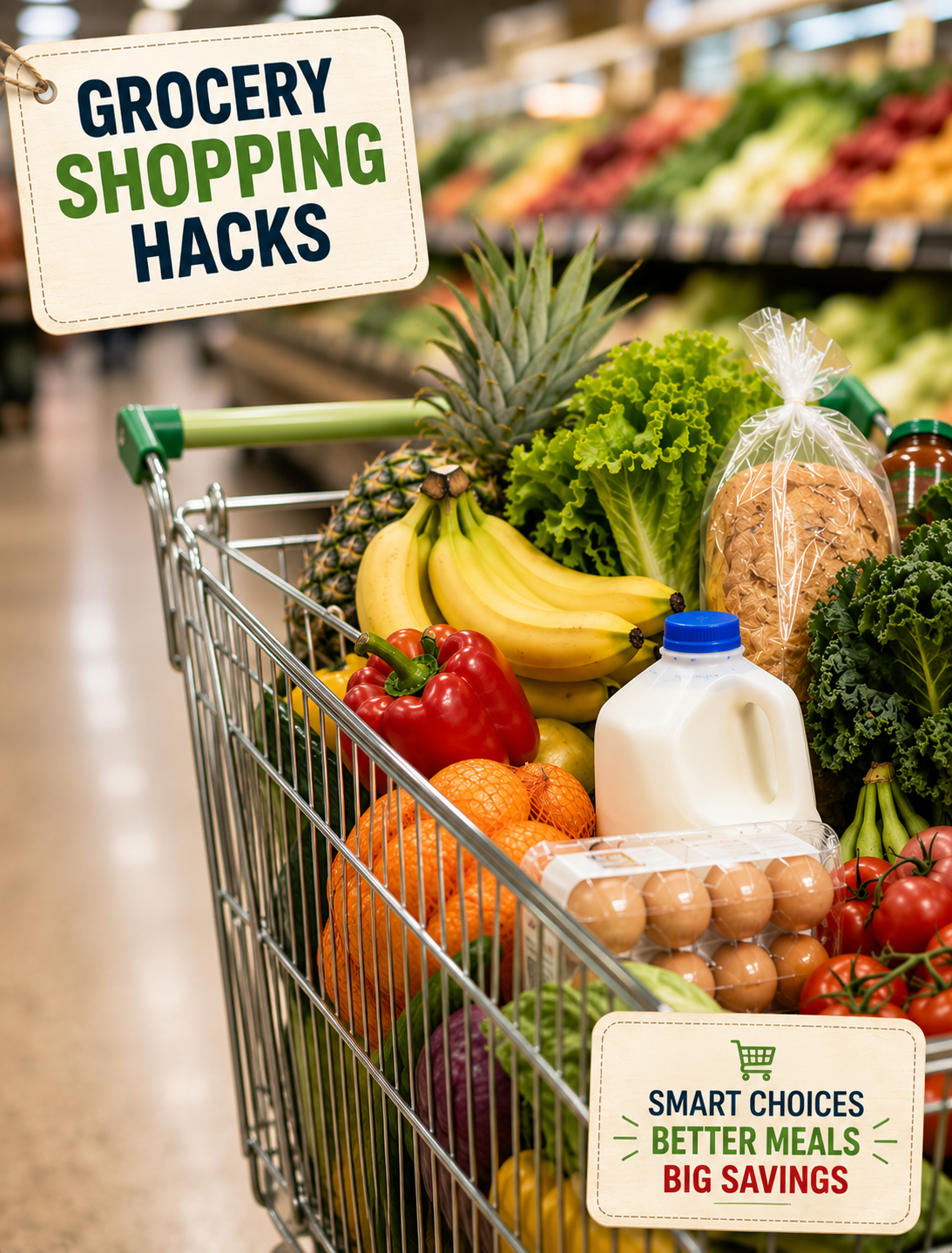
Grocery Shopping Hacks
The Ultimate Guide to Saving Money, Time, and Eating Healthier
Grocery shopping is something every household does, but many Americans spend more than they need to simply because they shop without a plan. Rising food prices have made grocery shopping more expensive than ever, making smart shopping habits essential for every family. The good news is that with a few practical strategies, you can save hundreds or even thousands of dollars each year while still enjoying fresh, nutritious, and delicious meals.
Whether you’re shopping at Walmart, Costco, Target, Aldi, Kroger, Publix, Trader Joe’s, Sam’s Club, Whole Foods, or your local supermarket, these grocery shopping hacks will help you stretch your budget, reduce food waste, and make every shopping trip more efficient.
1. Always Make a Grocery List
The biggest mistake shoppers make is walking into a store without a list.
A shopping list keeps you focused and prevents impulse purchases that quickly increase your bill.
Before heading to the store:
- Check your refrigerator.
- Look through your freezer.
- Inspect your pantry.
- Write down only what you truly need.
Many shoppers find it helpful to organize their list by store sections:
- Produce
- Meat & Seafood
- Dairy
- Frozen Foods
- Pantry
- Snacks
- Household Items
This saves time and reduces forgotten items.
2. Never Shop Hungry
This simple trick can save a surprising amount of money.
Shopping while hungry makes everything look appealing, leading to unnecessary purchases like chips, cookies, candy, and expensive ready-made meals.
Eat a healthy snack or meal before shopping to make smarter decisions.
3. Plan Meals for the Week
Meal planning is one of the easiest ways to cut grocery costs.
Instead of randomly buying food, decide what your family will eat during the week.
For example:
Monday: Chicken tacos
Tuesday: Pasta
Wednesday: Grilled salmon
Thursday: Stir-fry
Friday: Homemade pizza
Saturday: Soup
Sunday: Leftovers
Buying ingredients for planned meals prevents waste and unnecessary spending.
4. Check Weekly Store Ads
Nearly every grocery chain offers weekly sales.
Before shopping:
- Browse digital flyers.
- Use store apps.
- Check online promotions.
Plan meals around discounted products instead of paying full price.
5. Use Digital Coupons
Many grocery stores now offer digital coupons through their apps.
Simply clip coupons before shopping.
You can often save money on:
- Dairy
- Snacks
- Frozen foods
- Beverages
- Household products
- Personal care items
Stacking coupons with sales provides even greater savings.
6. Buy Store Brands
Store brands have improved dramatically over the past decade.
In many cases they’re made by the same manufacturers as national brands but cost significantly less.
Examples include:
- Pasta
- Cereal
- Flour
- Sugar
- Canned vegetables
- Rice
- Milk
- Cheese
Most shoppers notice little or no difference in quality.
7. Buy Seasonal Produce
Seasonal fruits and vegetables are:
- Fresher
- More flavorful
- Less expensive
Summer favorites include:
- Watermelon
- Peaches
- Tomatoes
- Sweet corn
- Berries
Fall offers:
- Apples
- Pumpkin
- Squash
Buying produce in season provides better value and quality.
8. Compare Unit Prices
Don’t just compare package prices.
Look at the unit price shown on shelf labels.
For example:
- Cost per ounce
- Cost per pound
- Cost per gallon
Sometimes the larger package is actually cheaper per serving, but not always.
Unit pricing helps you make smarter choices.
9. Buy in Bulk—When It Makes Sense
Warehouse clubs like Costco and Sam’s Club can save money on:
- Rice
- Pasta
- Paper towels
- Toilet paper
- Coffee
- Frozen vegetables
- Nuts
However, avoid buying perishables in bulk unless your household can finish them before they spoil.
10. Avoid Shopping Every Day
Frequent shopping trips usually mean spending more.
Every visit creates opportunities for impulse purchases.
Instead:
- Shop once a week.
- Plan ahead.
- Keep a running grocery list.
11. Shop the Perimeter First
The outer edges of most grocery stores usually contain:
- Fresh produce
- Meat
- Dairy
- Eggs
- Seafood
The middle aisles often contain more processed foods.
Start around the perimeter before entering inner aisles.
12. Freeze Extra Food
Freezing prevents food waste.
Items that freeze well include:
- Bread
- Chicken
- Ground beef
- Cheese
- Vegetables
- Fruit
- Soup
Label containers with the freezing date.
13. Cook Larger Portions
Cooking extra servings saves both money and time.
For example:
- Make a large pot of chili.
- Prepare extra pasta.
- Roast multiple chicken breasts.
Use leftovers for lunches or future dinners.
14. Avoid Pre-Cut Produce
Convenience costs money.
Pre-cut fruit, sliced vegetables, and prepared salad kits often cost two or three times more than whole produce.
Buying whole fruits and vegetables and cutting them yourself saves money.
15. Understand Expiration Dates
Many people throw away perfectly good food because of misunderstanding labels.
“Best By” usually indicates quality—not safety.
Many foods remain safe after the printed date if stored properly.
Always inspect food before discarding it.
16. Join Store Loyalty Programs
Most grocery chains offer free rewards.
Benefits include:
- Member-only discounts
- Fuel rewards
- Digital coupons
- Personalized offers
- Cashback opportunities
Signing up takes only a few minutes.
17. Buy Frozen Fruits and Vegetables
Frozen produce is:
- Picked at peak freshness
- Nutrient-rich
- Often cheaper
- Available year-round
They’re excellent for:
- Smoothies
- Stir-fries
- Soups
- Side dishes
18. Limit Convenience Foods
Prepared meals, individually packaged snacks, and ready-to-eat foods cost significantly more.
Cooking from scratch usually provides:
- Better nutrition
- Better taste
- Lower cost
19. Watch Checkout Displays
Checkout lanes are designed to encourage impulse buying.
Avoid adding:
- Candy
- Magazines
- Soft drinks
- Small toys
Stick to your original shopping list.
20. Keep Pantry Staples Stocked
Maintaining basic ingredients reduces emergency grocery trips.
Helpful pantry items include:
- Rice
- Pasta
- Beans
- Flour
- Oats
- Peanut butter
- Canned tomatoes
- Broth
- Olive oil
- Spices
These basics make it easy to prepare inexpensive meals anytime.
Bonus Grocery Shopping Tips
- Bring reusable shopping bags.
- Compare prices between stores.
- Use cashback apps when available.
- Shop during less crowded hours.
- Avoid wasting leftovers.
- Rotate pantry items using the “first in, first out” method.
- Store produce properly to extend freshness.
- Keep a small emergency freezer meal for busy nights.
- Track your monthly grocery spending.
- Challenge yourself to reduce your grocery bill each month.
Common Grocery Shopping Mistakes
Many shoppers unknowingly waste money by:
- Buying without a list.
- Ignoring weekly sales.
- Purchasing too much fresh produce.
- Forgetting what’s already at home.
- Falling for end-cap displays.
- Choosing convenience over value.
- Shopping while hungry.
- Throwing away leftovers.
- Buying oversized packages they can’t finish.
- Not comparing unit prices.
Avoiding these habits can make a noticeable difference in your monthly grocery budget.
Final Thoughts
Smart grocery shopping isn’t about buying the cheapest food—it’s about buying wisely. By planning meals, sticking to a shopping list, comparing prices, using coupons, choosing store brands, and reducing food waste, you can enjoy healthy meals while keeping your grocery budget under control. Small changes, such as checking weekly ads or freezing leftovers, add up over time and can save hundreds of dollars each year. With consistent habits and thoughtful planning, grocery shopping becomes less stressful, more efficient, and far more rewarding for individuals and families across the USA.