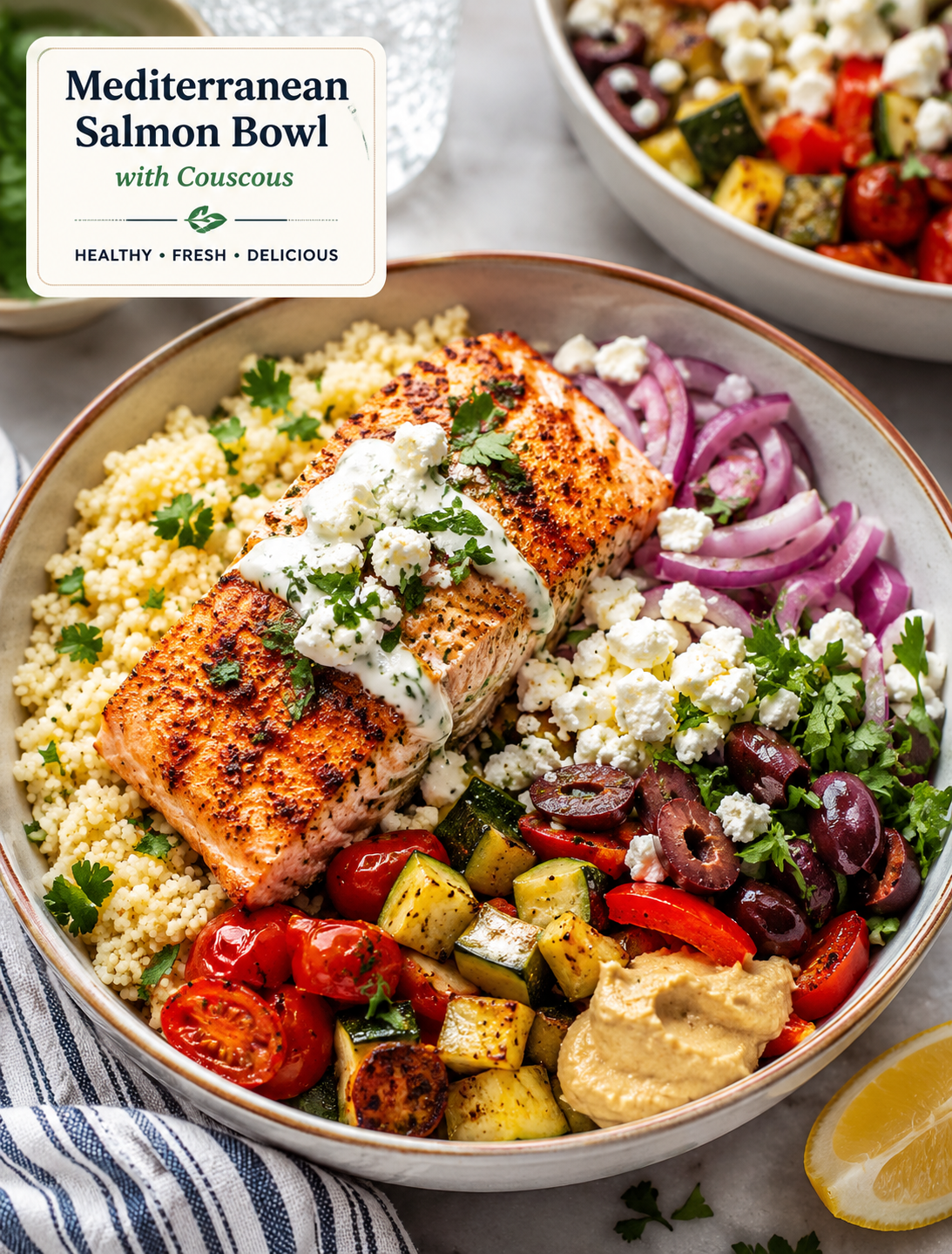
Mediterranean Salmon Bowl with Couscous
If you’re looking for a healthy, colorful, and restaurant-quality meal that comes together with simple ingredients, this Mediterranean Salmon Bowl with Couscous is the perfect recipe. Inspired by the fresh flavors of the Mediterranean diet, this bowl combines flaky herb-marinated salmon, fluffy couscous, roasted vegetables, creamy Greek yogurt sauce, tangy feta cheese, and briny Kalamata olives into one incredibly satisfying dish.
This recipe is packed with lean protein, heart-healthy omega-3 fatty acids, fiber-rich vegetables, and wholesome grains, making it an excellent choice for lunch or dinner. The salmon is seasoned with classic Mediterranean herbs and spices, then pan-seared or baked until perfectly tender. Meanwhile, the couscous cooks in just minutes, creating a light and fluffy base that absorbs all the delicious juices from the vegetables and salmon.
Roasted zucchini, sweet bell peppers, and juicy cherry tomatoes add natural sweetness and texture, while the creamy yogurt sauce ties everything together with a refreshing lemon and dill flavor. A sprinkle of feta cheese and fresh parsley adds the finishing touch, making every bite bright, fresh, and flavorful.
Whether you’re meal prepping for the week, serving guests, or simply making a nutritious family dinner, this Mediterranean Salmon Bowl is a versatile recipe that feels gourmet without requiring hours in the kitchen. It’s naturally balanced, easy to customize with your favorite vegetables, and perfect for anyone following a Mediterranean lifestyle.
Ingredients:
For the Salmon
- 2 salmon fillets (about 6 ounces each)
- 1 tablespoon extra virgin olive oil
- 1 tablespoon fresh lemon juice
- 1 teaspoon garlic, minced
- ½ teaspoon dried oregano
- ½ teaspoon ground cumin
- ½ teaspoon smoked paprika
- ¼ teaspoon salt
- ¼ teaspoon freshly ground black pepper
For the Couscous
- ½ cup couscous
- ¾ cup boiling vegetable broth or water
- ½ teaspoon olive oil
- ¼ teaspoon salt
For the Roasted Vegetables
- ½ cup cherry tomatoes, halved
- ½ cup zucchini, diced
- ½ cup red bell pepper, diced
- 1 tablespoon olive oil
- ½ teaspoon dried oregano
- ¼ teaspoon salt
- ¼ teaspoon black pepper
For the Mediterranean Toppings
- ¼ cup crumbled feta cheese
- ¼ cup sliced Kalamata olives
- ¼ small red onion, thinly sliced
- 2 tablespoons chopped fresh parsley
- 2 tablespoons hummus (optional)
For the Greek Yogurt Sauce
- ½ cup plain Greek yogurt
- 1 tablespoon fresh lemon juice
- ½ teaspoon minced garlic
- ½ teaspoon dried dill or 1 teaspoon fresh dill
- Salt and black pepper, to taste
Instructions:
Step 1: Marinate the Salmon
Begin by patting the salmon fillets dry with paper towels. Removing excess moisture helps the fish develop a beautiful golden crust while cooking.
In a medium bowl, combine the olive oil, fresh lemon juice, minced garlic, oregano, cumin, smoked paprika, salt, and black pepper. Stir until everything is well blended.
Coat each salmon fillet evenly with the marinade, making sure every side is covered.
Allow the salmon to marinate for 15 to 30 minutes. This short marinating time allows the herbs, garlic, and citrus to infuse the fish without overpowering its naturally rich flavor.
Step 2: Prepare the Couscous
While the salmon marinates, prepare the couscous.
Place the couscous into a heatproof bowl. Add the salt and olive oil.
Bring the vegetable broth or water to a rolling boil, then carefully pour it over the couscous.
Immediately cover the bowl tightly with a plate or lid.
Allow it to rest for 5 minutes without disturbing it.
After resting, fluff the couscous gently with a fork until light and fluffy. Set aside while preparing the remaining ingredients.
Step 3: Roast the Vegetables
Preheat your oven to 425°F (220°C).
Line a baking sheet with parchment paper for easy cleanup.
Place the zucchini, cherry tomatoes, and diced red bell peppers onto the baking sheet.
Drizzle with olive oil and sprinkle with oregano, salt, and black pepper.
Toss everything together until the vegetables are evenly coated.
Spread them into a single layer so they roast rather than steam.
Roast for 18–22 minutes, stirring halfway through, until the vegetables are lightly caramelized and tender.
The tomatoes should become juicy, while the zucchini and peppers should develop lightly browned edges.
Step 4: Cook the Salmon
Option 1: Pan-Seared
Heat a large non-stick or cast iron skillet over medium-high heat.
Add a small drizzle of olive oil.
Place the salmon skin-side down (if skin-on).
Cook for 4–5 minutes without moving it.
Carefully flip the salmon and cook another 3–5 minutes, depending on thickness.
The salmon should easily flake with a fork while remaining moist inside.
Option 2: Oven-Baked
Arrange the salmon fillets on a parchment-lined baking tray.
Bake at 400°F (200°C) for 12–15 minutes.
The fish should be opaque throughout and reach an internal temperature of 145°F (63°C).
Step 5: Make the Yogurt Sauce
While the salmon cooks, prepare the creamy yogurt dressing.
In a small bowl combine:
- Greek yogurt
- Lemon juice
- Garlic
- Dill
- Salt
- Black pepper
Whisk until completely smooth.
If you prefer a thinner consistency, stir in 1 to 2 teaspoons of water until it reaches your desired texture.
Refrigerate until ready to serve.
Step 6: Assemble the Mediterranean Bowls
Divide the fluffy couscous evenly between two serving bowls.
Arrange the roasted vegetables over one side of each bowl.
Place one cooked salmon fillet on top.
Add the sliced red onion, Kalamata olives, crumbled feta cheese, chopped parsley, and a spoonful of hummus if using.
Drizzle generously with the creamy yogurt sauce.
Finish with an extra squeeze of fresh lemon juice and a light sprinkle of parsley for a fresh, vibrant presentation.
Serve immediately while the salmon is warm.
Serving Suggestions
This Mediterranean Salmon Bowl is satisfying on its own, but it also pairs wonderfully with:
- Warm whole wheat pita bread
- Homemade tzatziki
- Cucumber tomato salad
- Roasted asparagus
- Lemon roasted broccoli
- Chickpea salad
- Grilled eggplant
- Fresh fruit for dessert
A sparkling lemon water or iced herbal tea makes an excellent refreshing beverage alongside this meal.
Recipe Variations
One of the best things about this recipe is how customizable it is.
Swap the couscous for quinoa, brown rice, farro, or cauliflower rice for a different texture.
Replace zucchini with eggplant, asparagus, broccoli, or Brussels sprouts depending on the season.
For extra protein, add roasted chickpeas or white beans.
If you enjoy spicy food, sprinkle the salmon with crushed red pepper flakes or drizzle the finished bowl with harissa.
You can also substitute grilled shrimp or chicken breast for the salmon while keeping the remaining ingredients exactly the same.
Storage
Store all components separately in airtight containers in the refrigerator.
- Salmon: up to 3 days
- Couscous: up to 4 days
- Roasted vegetables: up to 4 days
- Yogurt sauce: up to 5 days
Keeping everything separate prevents the vegetables from becoming soggy and helps maintain the best texture when reheating.
Meal Prep Tips
This recipe is ideal for weekly meal prep.
Prepare the couscous, roast the vegetables, and mix the yogurt sauce ahead of time.
Cook the salmon fresh, or prepare it one day in advance for quick lunches.
Store the feta, olives, parsley, and onions separately until serving so they remain fresh and crisp.
Assemble the bowls just before eating for the best flavor and presentation.
Helpful Tips
- Choose fresh salmon with firm, bright-colored flesh for the best flavor.
- Don’t overcook the salmon; slightly translucent in the center is ideal before resting.
- Fresh lemon juice provides a brighter flavor than bottled juice.
- Fluff the couscous with a fork instead of stirring with a spoon to keep it light.
- Roast vegetables in a single layer to achieve caramelization.
- Let the salmon rest for 2–3 minutes after cooking to retain its juices.
- Fresh parsley and dill provide the most vibrant Mediterranean flavor.
- A drizzle of high-quality extra virgin olive oil before serving enhances the overall taste.
Frequently Asked Questions
Can I make this recipe ahead of time?
Yes. All the ingredients can be prepared in advance and assembled just before serving.
Can I use frozen salmon?
Absolutely. Thaw it completely in the refrigerator and pat it dry before marinating.
Is this recipe healthy?
Yes. It’s rich in protein, omega-3 fatty acids, vitamins, minerals, healthy fats, and fiber while remaining balanced and satisfying.
Can I grill the salmon?
Definitely. Grill over medium-high heat for approximately 4–5 minutes per side until cooked through.
What other grains work well?
Quinoa, farro, brown rice, bulgur wheat, or cauliflower rice are all excellent alternatives.
Can I make it dairy-free?
Yes. Omit the feta cheese and replace the Greek yogurt sauce with a dairy-free yogurt or a lemon-tahini dressing.
Servings
2 generous bowls
Nutrition (Approx. Per Serving)
- Calories: 610
- Protein: 39g
- Carbohydrates: 32g
- Fat: 36g
- Saturated Fat: 8g
- Fiber: 5g
- Sugar: 7g
- Sodium: 760mg
- Omega-3 Fatty Acids: High
- Calcium: 18% DV
- Iron: 15% DV
- Vitamin A: 70% DV
- Vitamin C: 95% DV