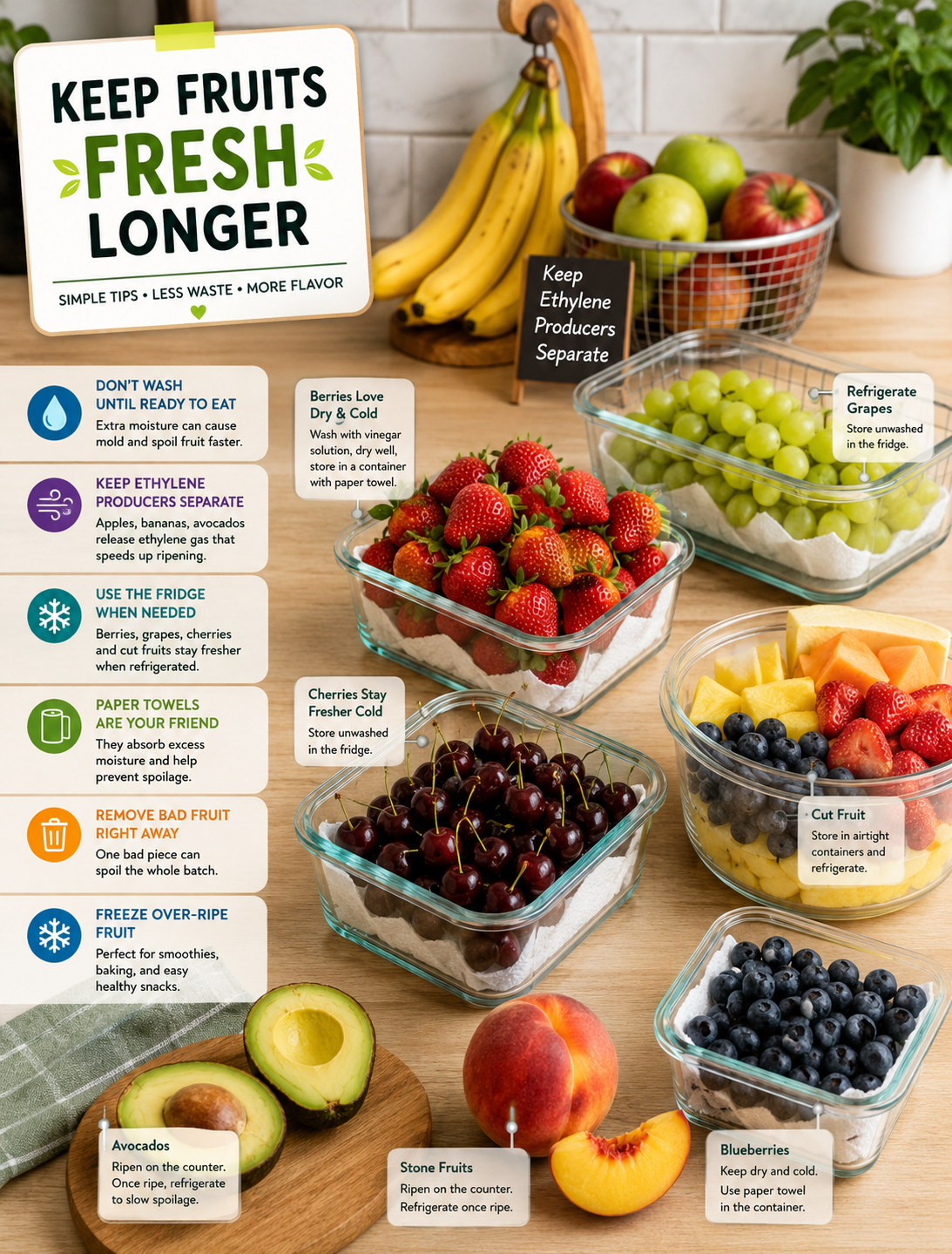
Keep Fruits Fresh Longer
The Ultimate USA Guide to Storing Fresh Fruit for Maximum Freshness
Nothing is more disappointing than buying beautiful, fresh fruit only to watch it become soft, moldy, or overripe after just a few days. Whether you’re stocking up on apples, berries, grapes, citrus, or tropical fruits, proper storage can dramatically extend their freshness, reduce food waste, and save money.
The good news? Keeping fruit fresh isn’t complicated. With the right storage methods, temperature, and a few simple tricks, you can enjoy crisp apples, juicy berries, and sweet grapes for much longer. This guide covers the best ways to store the most popular fruits found in American grocery stores, including expert tips for refrigerators, countertops, and freezers.
If you’re meal prepping, feeding a family, or simply trying to waste less food, these easy fruit storage methods will help every piece of fruit stay fresher, tastier, and more nutritious.
Ingredients (Fresh Fruit Storage Essentials):
- Clean paper towels
- Airtight food storage containers
- Produce storage containers (optional)
- Glass jars with lids (for berries)
- Plastic produce bags with ventilation holes
- Zip-top freezer bags
- White vinegar
- Cold water
- Kitchen towels
- Fruit bowl
- Refrigerator with humidity drawer
- Labels and marker (optional)
Instructions:
1. Don’t Wash Fruit Until You’re Ready to Eat It
One of the biggest mistakes people make is washing all their fruit immediately after grocery shopping.
Extra moisture encourages mold and bacteria growth.
Instead:
- Store fruit dry.
- Wash only before eating.
- If fruit is already wet, dry thoroughly with paper towels before storing.
Exception:
If using a vinegar rinse (explained below), ensure fruit is completely dry before refrigeration.
2. Use a Vinegar Wash for Berries
Berries spoil quickly because mold spreads fast.
Mix:
- 1 cup white vinegar
- 3 cups cold water
Soak strawberries, blueberries, raspberries, or blackberries for about 2 minutes.
Rinse with cold water.
Dry extremely well using paper towels.
Store inside an airtight container lined with dry paper towels.
Replace the paper towel if it becomes damp.
This method can significantly extend berry freshness.
3. Store Apples Correctly
Apples naturally release ethylene gas, which speeds ripening in nearby produce.
Best storage:
- Refrigerator crisper drawer
- Keep away from leafy greens
- Keep away from berries
- Store inside their produce bag or a breathable container
Properly stored apples often stay fresh for several weeks.
4. Separate Bananas
Bananas ripen rapidly because they release large amounts of ethylene gas.
For longer freshness:
- Keep at room temperature.
- Hang on a banana hook if possible.
- Wrap stems with plastic wrap or reusable banana stem covers.
- Keep away from other fruit.
Once bananas become very ripe, refrigerate them.
The peel may darken, but the inside stays fresh.
5. Refrigerate Grapes Immediately
Grapes stay freshest when cold.
Store:
- Unwashed
- Original ventilated bag
- Refrigerator
Wash only before serving.
Crisp grapes can last much longer when refrigerated properly.
6. Citrus Fruits
Oranges, lemons, limes, and grapefruit last longer in the refrigerator.
However:
If you’ll eat them within a week, keeping them in a fruit bowl is perfectly fine.
For long-term freshness:
Store inside the refrigerator produce drawer.
7. Avocados
For unripe avocados:
Store on the counter.
To speed ripening:
Place inside a paper bag with an apple or banana.
Once ripe:
Refrigerate immediately.
This slows further ripening and helps prevent browning.
8. Keep Stone Fruits on the Counter
Peaches
Plums
Nectarines
Apricots
These fruits should ripen at room temperature.
Once soft:
Move them into the refrigerator.
Eat within several days for best flavor.
9. Watermelon Storage
Whole watermelon:
Store on the counter.
Cut watermelon:
Cover tightly.
Refrigerate immediately.
Consume within several days.
10. Pineapple
Whole pineapple:
Store on the counter until ripe.
Once cut:
Place chunks inside an airtight container.
Refrigerate.
11. Mangoes
Keep unripe mangoes on the counter.
Once ripe:
Refrigerate.
Cut mango:
Store in airtight containers.
12. Pears
Ripen pears on the countertop.
Once they become slightly soft:
Transfer to the refrigerator.
This slows over-ripening.
13. Cherries
Store:
Unwashed
Refrigerated
Original bag or airtight container
Wash just before eating.
14. Kiwi
Allow kiwis to soften at room temperature.
After ripening:
Refrigerate.
15. Keep Ethylene Producers Separate
Some fruits naturally produce large amounts of ethylene gas.
These include:
- Apples
- Bananas
- Avocados
- Pears
- Peaches
- Mangoes
Sensitive fruits include:
- Strawberries
- Blueberries
- Grapes
- Leafy greens
- Cucumbers
Keeping them apart helps extend freshness.
16. Use Paper Towels
Moisture causes spoilage.
Line containers with paper towels.
Replace damp towels every few days.
This simple trick absorbs excess moisture and reduces mold.
17. Avoid Overcrowding
Air circulation matters.
Don’t pack fruit tightly into containers.
Leave room for airflow.
Bruised fruit spoils much faster.
18. Remove Damaged Fruit Immediately
One moldy berry can spoil an entire container.
Check fruit every couple of days.
Remove:
- Soft fruit
- Moldy fruit
- Leaking fruit
- Bruised fruit
This protects the rest.
19. Freeze Extra Fruit
If fruit becomes very ripe:
Freeze it.
Great options:
- Bananas
- Blueberries
- Strawberries
- Peaches
- Mangoes
- Pineapple
Freeze on a baking tray first.
Then transfer to freezer bags.
Perfect for smoothies, yogurt bowls, baking, or desserts.
20. Buy Smaller Quantities
Buying only what you’ll eat within a week often keeps fruit fresher than purchasing large amounts.
Fresh fruit tastes better and reduces waste.
Extra Fruit Storage Tips
- Store fruit in the refrigerator’s crisper drawer whenever appropriate.
- Never store berries in sealed containers without paper towels.
- Keep bananas away from direct sunlight.
- Refrigerate cut fruit within two hours.
- Label containers with purchase dates.
- Rotate older fruit to the front.
- Store whole fruit before slicing whenever possible.
- Dry washed fruit completely before refrigeration.
- Use breathable produce bags instead of completely sealed plastic bags.
- Check stored fruit every few days for signs of spoilage.
Common Fruit Storage Mistakes
- Washing everything immediately after shopping.
- Leaving berries in wet containers.
- Storing bananas next to apples.
- Ignoring bruised fruit.
- Sealing fruit while still damp.
- Forgetting to refrigerate ripe avocados.
- Crowding produce drawers.
- Mixing ethylene-producing fruits with delicate fruits.
- Leaving cut fruit uncovered.
- Throwing away overripe fruit instead of freezing it.
Frequently Asked Questions
Can I refrigerate bananas?
Yes. Wait until they are ripe. The peel will darken, but the fruit inside stays fresh longer.
Should berries be washed first?
Only if using a vinegar solution followed by thorough drying. Otherwise, wash them right before eating.
Why do apples make other fruit ripen faster?
Apples release ethylene gas, a natural plant hormone that speeds up the ripening process of nearby fruits and vegetables.
How long do grapes last in the refrigerator?
Properly refrigerated grapes can often stay fresh for up to two weeks or even longer, depending on their condition when purchased.
What’s the best way to store cut fruit?
Place cut fruit in an airtight container and refrigerate immediately. Eat within 3–5 days for the best flavor and texture.
Benefits of Proper Fruit Storage
- Reduces food waste
- Saves money on groceries
- Maintains better flavor and texture
- Preserves vitamins and nutrients longer
- Makes healthy snacks available throughout the week
- Keeps meal prep ingredients ready to use
- Helps families enjoy fresh fruit every day
- Prevents unnecessary spoilage
- Extends refrigerator shelf life
- Supports a healthier lifestyle by making fresh produce more accessible