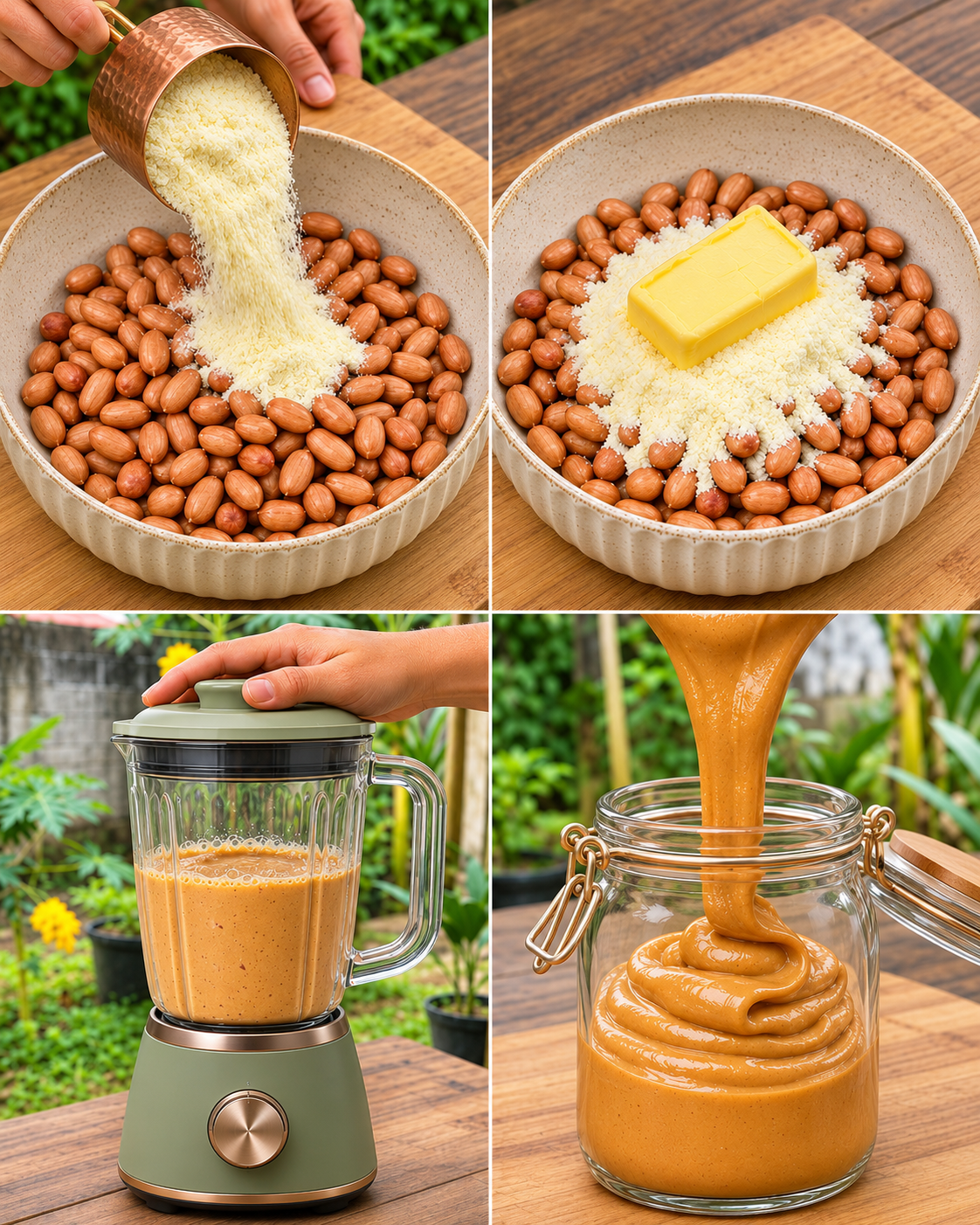
Homemade Peanut Butter
Homemade Peanut Butter is smooth, creamy, rich, and surprisingly easy to make with roasted peanuts and only a few simple ingredients. This homemade spread is perfect for toast, sandwiches, smoothies, oatmeal, baking, fruit, or quick snacks.
The process is simple: blend roasted peanuts until they release their natural oils and transform into a silky, spreadable butter. You can keep it completely natural or add salt, honey, maple syrup, or a little neutral oil to customize the flavor and consistency.
Prep Time: 10 minutes
Blend Time: 8 to 12 minutes
Total Time: About 20 minutes
Servings: About 2 cups
Ingredients
For the Peanut Butter
3 cups roasted unsalted peanuts
1/2 teaspoon fine sea salt, or to taste
1 to 2 teaspoons peanut oil or avocado oil, optional
1 to 2 tablespoons honey or maple syrup, optional
Optional Flavor Additions
1/2 teaspoon ground cinnamon
1 teaspoon vanilla extract
1 to 2 tablespoons unsweetened cocoa powder
Extra chopped roasted peanuts for a crunchy version
Why You’ll Love This Recipe
Homemade Peanut Butter gives you complete control over sweetness, salt, texture, and ingredients. You can make it creamy, chunky, lightly sweetened, or completely unsweetened.
Another reason to love Homemade Peanut Butter is the short ingredient list. Roasted peanuts are all you truly need, and a strong blender or food processor does almost all the work.
It is also incredibly versatile. Use it in breakfast recipes, desserts, sauces, energy bites, smoothies, or classic peanut butter sandwiches.
How to Make Homemade Peanut Butter
Step 1: Choose the Peanuts
Use fresh roasted peanuts for the best flavor.
Unsalted peanuts give you the most control over seasoning, although lightly salted peanuts can also be used.
Avoid peanuts that smell stale or taste bitter because their flavor will become stronger after blending.
Step 2: Warm the Peanuts
Spread the peanuts on a baking sheet and warm them at 300°F or 150°C for about 5 minutes.
This step is optional, but warm peanuts release their natural oils more easily.
It can help Homemade Peanut Butter become smoother in less blending time.
Step 3: Add Peanuts to the Blender
Transfer the warm peanuts to a high-powered blender or food processor.
Begin blending on low speed.
At first, the peanuts will turn into coarse crumbs.
Step 4: Continue Processing
Keep blending.
The peanuts will move through several stages: coarse meal, thick paste, sticky dough-like mixture, and finally creamy butter.
Do not worry if the mixture looks dry at first.
Step 5: Scrape the Sides
Stop the machine every minute or two and scrape down the sides with a spatula.
This pushes the peanut mixture back toward the blades and helps everything blend evenly.
Step 6: Keep Blending Until Creamy
Continue processing for several minutes.
As the peanuts release more natural oil, Homemade Peanut Butter will become shiny, smooth, and easier to spread.
The exact time depends on your blender or food processor.
Step 7: Adjust the Texture
If the mixture is thicker than you prefer, add 1 teaspoon of peanut oil, avocado oil, or another neutral oil.
Blend again.
Add a second teaspoon only if necessary.
Avoid adding too much oil at once because it is difficult to thicken the mixture again.
Step 8: Add Salt
Add salt gradually and blend.
Taste before adding more, especially if your peanuts were already salted.
Step 9: Add Sweetener if Desired
For sweeter Homemade Peanut Butter, add honey or maple syrup.
Start with 1 tablespoon, blend thoroughly, and taste.
Liquid sweeteners can sometimes make natural nut butter slightly thicker, so add them gradually.
Step 10: Blend Again
Continue blending for another 1 to 2 minutes after the mixture looks smooth.
This extra blending gives Homemade Peanut Butter an especially creamy finish.
Step 11: Make It Chunky
If you prefer chunky peanut butter, reserve about 1/3 cup roasted peanuts before blending.
Chop them into small pieces and stir them into the finished spread.
Step 12: Transfer to a Jar
Spoon Homemade Peanut Butter into a clean, dry glass jar.
Let it cool completely before sealing the lid.
Natural oil may rise to the top during storage. Simply stir before serving.
Serving Suggestions
Homemade Peanut Butter is delicious spread over toast, bagels, English muffins, pancakes, waffles, or rice cakes.
For breakfast, swirl Homemade Peanut Butter into oatmeal, Greek yogurt, overnight oats, chia pudding, or smoothie bowls.
Pair it with sliced apples, bananas, strawberries, pears, celery sticks, or crackers for an easy snack.
You can also blend it into smoothies with banana, cocoa, dates, berries, milk, or yogurt.
For an easy breakfast board, serve the spread with toasted sourdough, banana slices, berries, apple wedges, and granola.
It also works as a base for a quick savory sauce. Whisk a spoonful with soy sauce, lime juice, warm water, garlic, and chili for noodles, vegetables, or dipping.
If you want an easy snack made with familiar pantry ingredients, try these Peanut Butter Banana Oat Cookies with Cranberries & Chocolate with soft banana, creamy peanut butter, chewy oats, cranberries, and chocolate.
Recipe Tips
Use a high-powered blender or food processor if possible. Peanuts need several minutes of processing before they release enough natural oil to become creamy.
For the smoothest Homemade Peanut Butter, use warm roasted peanuts and be patient during blending.
If your machine becomes very hot, stop it for a minute before continuing. Scrape down the sides while it rests.
Do not add water. Even a small amount can change the texture and reduce storage life.
Measure optional oil carefully and add only a teaspoon at a time.
A wide food processor bowl is especially convenient because the peanuts circulate easily around the blade. A powerful countertop blender can produce an even smoother texture.
Use fresh peanuts that smell roasted and nutty. Old nuts can make the finished spread taste flat or slightly bitter.
Easy Variations
Homemade Peanut Butter is easy to customize.
For cinnamon flavor, blend in 1/2 teaspoon ground cinnamon.
To make chocolate Homemade Peanut Butter, add 1 to 2 tablespoons unsweetened cocoa powder plus a little honey or maple syrup.
For a honey-roasted style, add honey and a small pinch of salt.
You can also add vanilla extract, espresso powder, nutmeg, or a tiny pinch of cardamom.
For a crunchy version, stir chopped roasted peanuts into the finished spread.
If you want a thinner consistency for drizzling over pancakes or oatmeal, blend in a small amount of neutral oil.
For sandwiches, leave it thicker so it stays easily spreadable without running.
Make-Ahead Instructions
Homemade Peanut Butter is ideal for make-ahead meal prep because it keeps well and works in so many different meals and snacks.
Prepare a batch at the beginning of the week and store it in a clean airtight jar.
If you make a double batch, divide it between two smaller jars. This allows you to keep one sealed while using the other.
The spread may become slightly firmer after refrigeration, but allowing it to sit at room temperature briefly will soften it again.
Storage and Refrigeration
Store Homemade Peanut Butter in a clean, airtight container.
Because homemade versions do not contain the stabilizers found in many commercial spreads, some oil separation is completely normal.
For best quality, refrigerate it and use it within about 3 to 4 weeks.
Always use a clean, dry spoon when scooping from the jar.
If oil collects on top, stir from the bottom of the jar until the texture becomes even again.
Refrigeration reduces separation but makes the spread firmer. Let the jar sit at room temperature for 10 to 15 minutes if you want a softer consistency.
Nutrition Information
Approximate nutrition per 2-tablespoon serving:
Calories: 190
Protein: 8 g
Carbohydrates: 7 g
Fat: 16 g
Saturated Fat: 3 g
Fiber: 2 g
Sugar: 2 g
Sodium: Varies depending on added salt
Nutrition values are estimates and will vary depending on the peanuts, sweetener, oil, and serving size.
Frequently Asked Questions
Can I make Homemade Peanut Butter with raw peanuts?
Yes, but roasted peanuts usually provide better flavor and blend more easily. Roast raw peanuts before processing for the best result.
Do I have to add oil?
No. Peanuts naturally contain enough oil to become creamy when processed long enough.
Why is my peanut butter still dry?
It probably needs more blending time. Warm peanuts can also help release the oils more quickly.
Can I make Homemade Peanut Butter without salt?
Yes. Salt is completely optional.
Can I add honey or maple syrup?
Yes. Add small amounts gradually and blend thoroughly after each addition.
How can I make it extra smooth?
Use warm roasted peanuts, blend for several minutes, and scrape the sides as necessary.
Can I make Homemade Peanut Butter chunky?
Yes. Chop some roasted peanuts and stir them into the finished spread.
Can I use other nuts?
Yes. Almonds, cashews, hazelnuts, and mixed nuts can be processed similarly, although blending times and textures vary.
Final Thoughts
Homemade Peanut Butter is one of the easiest pantry staples to prepare from scratch, and its rich roasted flavor is easy to customize.
Because Homemade Peanut Butter needs little more than peanuts and a blender, it is practical for breakfast, baking, snacks, smoothies, sandwiches, and meal prep.
Keep Homemade Peanut Butter in your kitchen whenever you want a simple, creamy spread made with ingredients you can control.
For a rich and gooey dessert, try this Slow Cooker Cookie Lava Cake – Easy & Gooey Dessert with warm chocolate flavor and a soft, melty center.
1 thought on “Homemade Peanut Butter”