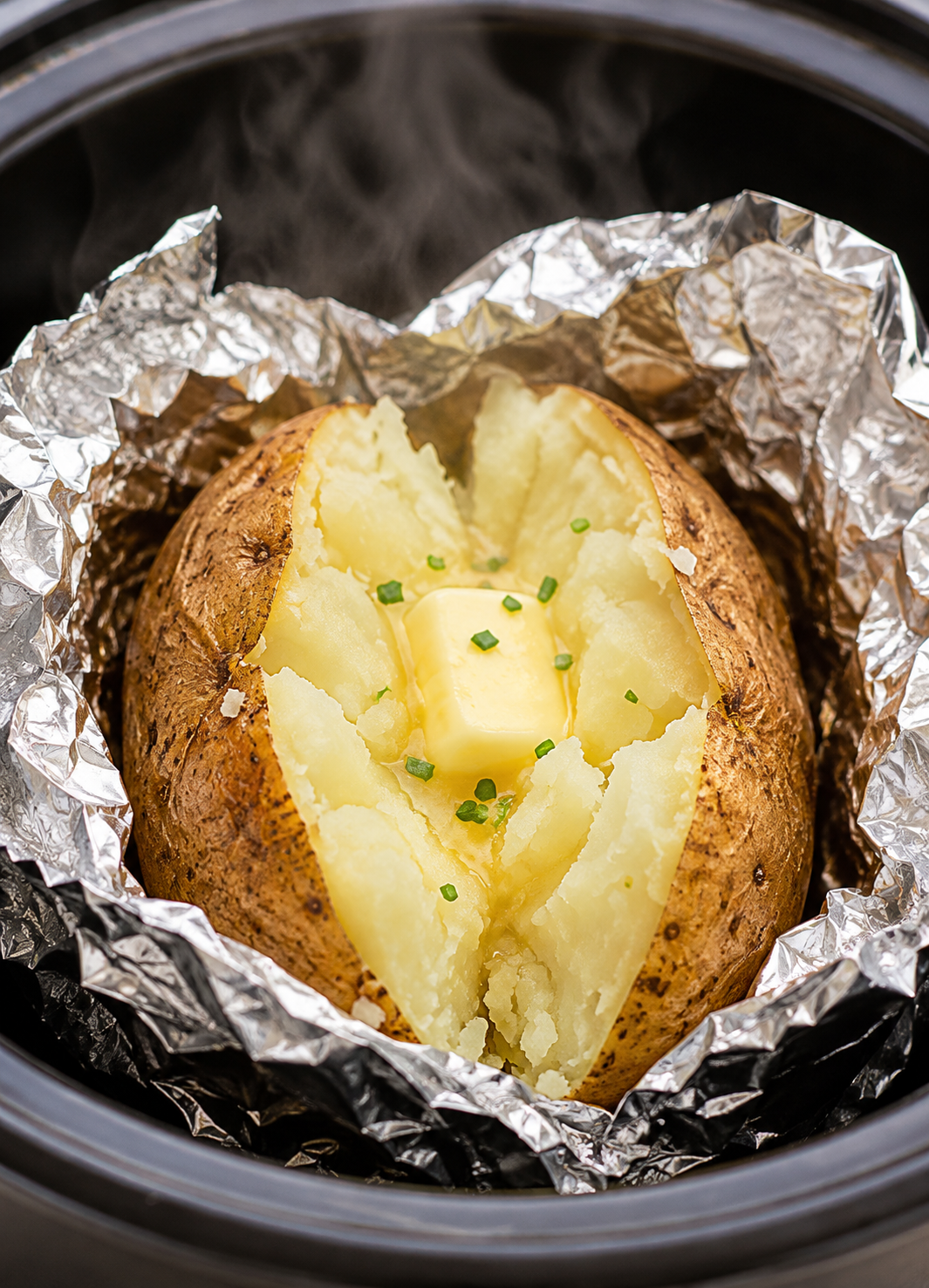
Description
Baked potatoes are more nutritious than many people realize. They provide potassium, vitamin C, vitamin B6, dietary fiber, and carbohydrates that help fuel your body. When prepared with minimal added fat and enjoyed as part of a balanced diet, baked potatoes can support digestive health, normal muscle function, healthy blood pressure, and everyday energy needs.
Many people avoid potatoes because they believe potatoes automatically cause weight gain or increase blood sugar. However, the nutritional effects of potatoes depend on portion size, preparation method, toppings, and the foods eaten alongside them.
A plain baked potato is naturally low in fat and contains no cholesterol. Keeping the skin on provides additional fiber, while the fluffy interior delivers satisfying carbohydrates and important nutrients.
Cooking potatoes in a slow cooker is an easy way to prepare them without frying or adding excessive oil. The result is a soft, fluffy potato that pairs beautifully with a little butter, Greek yogurt, fresh herbs, or vegetables.
But what actually happens inside your body when you eat baked potatoes? Let’s explore the potential benefits, important precautions, and a simple slow cooker recipe.
Prep Time: 10 minutes
Cook Time: 6–8 hours on LOW or 3–4 hours on HIGH
Total Time: 3 hours 10 minutes to 8 hours 10 minutes
Servings: 4
Cooking Method: Slow Cooker
Recipe Type: Healthy Side Dish
If you love easy and comforting potato dishes, try these delicious Slow Cooker Baked Potatoes. They are tender, fluffy, and perfect as a simple side dish for lunch or dinner.
What Happens to Your Body When You Eat Baked Potatoes?
1. Your Body Gets a Natural Source of Energy
Potatoes contain carbohydrates, which your digestive system breaks down into glucose.
Glucose provides energy for your brain, muscles, and other body tissues.
A medium baked potato supplies approximately 35–40 grams of carbohydrates, depending on its size.
For people with active lifestyles, potatoes can be a convenient source of energy.
However, people managing diabetes should consider their carbohydrate portions and individual blood glucose responses.
2. You Get Potassium That Supports Normal Blood Pressure
Baked potatoes are naturally rich in potassium.
Potassium helps regulate fluid balance, supports nerve signaling, and contributes to normal muscle contractions.
Adequate potassium intake can also support healthy blood pressure, particularly when combined with a diet that is not excessively high in sodium.
However, eating baked potatoes does not automatically lower high blood pressure.
People with kidney disease or those taking medications that affect potassium levels may need to limit potassium-rich foods.
3. Your Digestive System Benefits From Fiber
A medium baked potato with its skin provides approximately 3–4 grams of dietary fiber.
Fiber supports regular bowel movements and helps maintain digestive health.
The potato skin contains some of this fiber, so eating the skin can increase the nutritional value of your meal.
Fiber also helps make meals more satisfying.
For additional digestive benefits, pair baked potatoes with vegetables, beans, or other fiber-rich foods.
4. Your Immune System Receives Important Nutrients
Potatoes contain vitamin C and vitamin B6.
Vitamin C supports normal immune function and helps the body produce collagen, which is important for healthy skin and connective tissues.
Vitamin B6 contributes to normal metabolism and immune function.
Although some vitamin C is lost during cooking, baked potatoes can still contribute useful nutrients to your diet.
No single food can guarantee protection against infections or illness.
5. You May Feel Fuller After Eating
Potatoes contain water, carbohydrates, and fiber, which can contribute to feelings of fullness.
A plain baked potato can be a satisfying part of a meal.
However, the calorie content increases when large amounts of butter, cheese, bacon, or creamy sauces are added.
For a balanced meal, combine a baked potato with lean protein and vegetables.
6. Your Muscles and Nerves Receive Essential Minerals
Potassium is involved in normal muscle contraction and nerve signaling.
Vitamin B6 also contributes to the body’s normal nervous system function.
Including potatoes among a variety of nutritious foods can help support adequate nutrient intake.
However, baked potatoes are not a treatment for muscle cramps, nerve damage, or other medical conditions.
7. Your Blood Sugar May Rise After Eating
Potatoes contain starch, which is digested into glucose.
As a result, baked potatoes can raise blood sugar levels, particularly when eaten in large portions without protein, fat, or fiber-rich accompaniments.
The response varies depending on potato variety, cooking method, portion size, and individual metabolism.
People with diabetes do not necessarily need to avoid potatoes, but they may benefit from smaller portions and balanced meals.
8. Your Body May Benefit From Resistant Starch
When cooked potatoes are cooled, some of their starch becomes resistant starch.
Resistant starch is not fully digested in the small intestine and can be fermented by bacteria in the large intestine.
This may support gut health, although the amount formed varies with preparation and storage.
Cooling and reheating potatoes does not make them carbohydrate-free or eliminate their effect on blood sugar.
Ingredients
For the Slow Cooker Baked Potatoes
-
4 medium russet potatoes
-
1 tablespoon extra virgin olive oil
-
½ teaspoon kosher salt
-
¼ teaspoon freshly ground black pepper
-
½ teaspoon garlic powder (optional)
For the Buttery Filling
-
2 tablespoons unsalted butter
-
2 tablespoons plain Greek yogurt (optional)
-
1 tablespoon freshly chopped chives
-
¼ teaspoon black pepper
For Healthy Optional Toppings
-
½ cup steamed broccoli
-
¼ cup shredded cheddar cheese
-
2 tablespoons chopped green onions
-
¼ cup plain Greek yogurt
-
2 tablespoons freshly chopped parsley
-
¼ cup cooked black beans
-
A pinch of smoked paprika
Step-by-Step Instructions
Step 1: Choose Fresh Potatoes
Select four medium russet potatoes of similar size.
Russet potatoes are ideal for baking because their starchy interiors become soft and fluffy.
Avoid potatoes with green areas, extensive sprouting, or signs of spoilage.
Step 2: Wash Thoroughly
Rinse the potatoes under cool running water.
Scrub the skins gently with a vegetable brush to remove dirt.
Pat them completely dry with a clean kitchen towel.
Leaving the skin on provides additional fiber and nutrients.
Step 3: Pierce the Potatoes
Use a fork to pierce each potato approximately 5–6 times.
These small holes allow steam to escape as the potatoes cook.
Step 4: Season the Potatoes
Rub each potato lightly with olive oil.
Sprinkle with kosher salt, black pepper, and optional garlic powder.
Coat the skins evenly without using excessive oil.
Step 5: Arrange in the Slow Cooker
Place the potatoes directly inside a 5–6-quart slow cooker.
Arrange them in a single layer if possible.
You do not need to add water.
For simpler food-safe handling, leave the potatoes unwrapped rather than tightly enclosing them in aluminum foil.
Step 6: Cook Until Tender
Cover the slow cooker.
Cook on LOW for approximately 6–8 hours or HIGH for 3–4 hours.
Cooking times depend on potato size and slow cooker performance.
Avoid lifting the lid frequently because this releases heat.
Step 7: Check for Doneness
Carefully insert a fork or thin knife into the center of the largest potato.
The potato should feel completely tender.
A fully baked russet potato typically reaches an internal temperature of approximately 205–212°F (96–100°C).
If the center remains firm, continue cooking until tender.
Step 8: Open and Fluff
Transfer the cooked potatoes to serving plates using kitchen tongs.
Cut a lengthwise slit across the top of each potato.
Gently press the ends toward the center to expose the fluffy interior.
Use a fork to loosen the potato flesh.
Step 9: Add Butter and Toppings
Add approximately ½ tablespoon butter to each potato.
Allow it to melt into the hot center.
For additional protein, add plain Greek yogurt.
Sprinkle with chopped chives, black pepper, or fresh parsley.
Step 10: Serve Warm
Serve immediately alongside grilled chicken, baked fish, beans, or roasted vegetables.
For a more balanced meal, add a protein source and plenty of vegetables.
Tips and Notes
1. Keep the Skin On: Potato skins provide additional dietary fiber.
2. Choose Medium Potatoes: Medium portions make it easier to manage carbohydrate intake.
3. Avoid Excess Butter: A little butter adds flavor, but large amounts significantly increase saturated fat and calories.
4. Use Greek Yogurt: Plain Greek yogurt provides a creamy topping with additional protein.
5. Add Vegetables: Broccoli, spinach, mushrooms, and bell peppers make nutritious toppings.
6. Avoid Overcooking: Cook until tender but not excessively mushy.
7. Consider Blood Sugar: Pair potatoes with protein and fiber-rich vegetables to create a balanced meal.
8. Try Different Varieties: Russet, red, and Yukon Gold potatoes have different textures and slightly different nutrient profiles.
9. Cool Leftovers Safely: Refrigerate cooked potatoes promptly rather than leaving them at room temperature for extended periods.
10. Avoid Green Potatoes: Green coloring can indicate increased glycoalkaloid exposure. Discard potatoes that are extensively green, bitter, or heavily sprouted.
Frequently Asked Questions (Q&A)
1. Is Eating Baked Potatoes Every Day Healthy?
For many healthy adults, baked potatoes can be included regularly as part of a balanced diet.
However, eating a variety of vegetables, fruits, whole grains, and protein sources remains important.
2. Are Baked Potatoes Good for Weight Loss?
Plain baked potatoes can be satisfying and relatively low in fat.
They may fit into a weight-management plan, but weight loss depends on overall calorie intake, activity, and other factors.
3. Can People With Diabetes Eat Baked Potatoes?
Yes, many people with diabetes can include baked potatoes in appropriate portions.
However, potatoes contain carbohydrates and may raise blood sugar.
Pairing them with protein, vegetables, and healthy fats can help create a balanced meal.
4. Do Baked Potatoes Lower Blood Pressure?
Potatoes provide potassium, which supports normal blood pressure regulation.
However, they are not a treatment for hypertension, and their effects depend on the overall diet.
5. Are Baked Potatoes Healthier Than French Fries?
Plain baked potatoes generally contain much less added fat than deep-fried French fries.
The nutritional difference depends on preparation methods, portion sizes, and toppings.
6. Is Potato Skin Safe to Eat?
Yes. Thoroughly washed, properly cooked potato skin is edible and provides fiber.
Avoid eating extensively green or spoiled potatoes.
7. Do Baked Potatoes Cause Weight Gain?
Baked potatoes do not automatically cause weight gain.
Weight changes depend on overall energy intake and expenditure over time.
8. Can Baked Potatoes Help With Digestion?
Their dietary fiber can support regular bowel movements and digestive health.
They should be eaten as part of a varied, fiber-rich diet.
9. Can I Make Baked Potatoes Without Butter?
Absolutely. Use Greek yogurt, fresh herbs, salsa, or a little olive oil instead.
10. How Long Do Cooked Baked Potatoes Last?
Refrigerate cooked potatoes within 2 hours and store them in airtight containers at 40°F (4°C) or below.
Use within 3–4 days.
If potatoes were cooked in foil, remove the foil before refrigeration so they can cool safely.
11. Can I Freeze Baked Potatoes?
Yes. Cool the potatoes safely, transfer them to freezer-safe containers, and freeze for up to 2–3 months for best quality.
12. How Should I Reheat Leftover Baked Potatoes?
Reheat in an oven or microwave until thoroughly hot, reaching 165°F (74°C).
Servings and Nutrition
Servings: 4
Serving Size: 1 medium baked russet potato with approximately ½ tablespoon butter and a share of the olive oil
Estimated Nutrition Per Serving
| Nutrient | Amount |
|---|---|
| Calories | 265 kcal |
| Protein | 5 g |
| Carbohydrates | 42 g |
| Total Fat | 9 g |
| Saturated Fat | 4 g |
| Fiber | 4 g |
| Sugar | 2 g |
| Potassium | 900 mg |
| Sodium | 300 mg |
| Cholesterol | 15 mg |
Nutrition values are approximate and depend on potato size, butter, oil, and toppings. Optional cheese, bacon, and yogurt are not included.
Serving Suggestions
Slow cooker baked potatoes pair beautifully with grilled chicken, baked salmon, roasted vegetables, and fresh garden salads.
For a nutritious lunch, top a baked potato with steamed broccoli, black beans, and a spoonful of plain Greek yogurt.
For dinner, serve with lean protein and vegetables to create a more balanced meal.
You can also prepare a baked potato bar with healthy toppings such as sautéed mushrooms, fresh herbs, diced tomatoes, and Greek yogurt.
Why You’ll Love This Recipe
Baked potatoes are affordable, filling, versatile, and naturally rich in important nutrients.
They provide potassium, vitamin B6, vitamin C, and fiber, especially when eaten with their skins.
Slow cooking makes them easy to prepare without deep frying or complicated ingredients.
The biggest benefit of eating baked potatoes is not an overnight health transformation. It’s their ability to provide valuable nutrients, satisfying carbohydrates, and delicious flavor as part of a balanced diet. 🥔❤️
Looking for a hearty main dish to serve alongside your potatoes? Try this flavorful Filipino Stuffed Meatloaf, a delicious homemade meal perfect for family dinners.