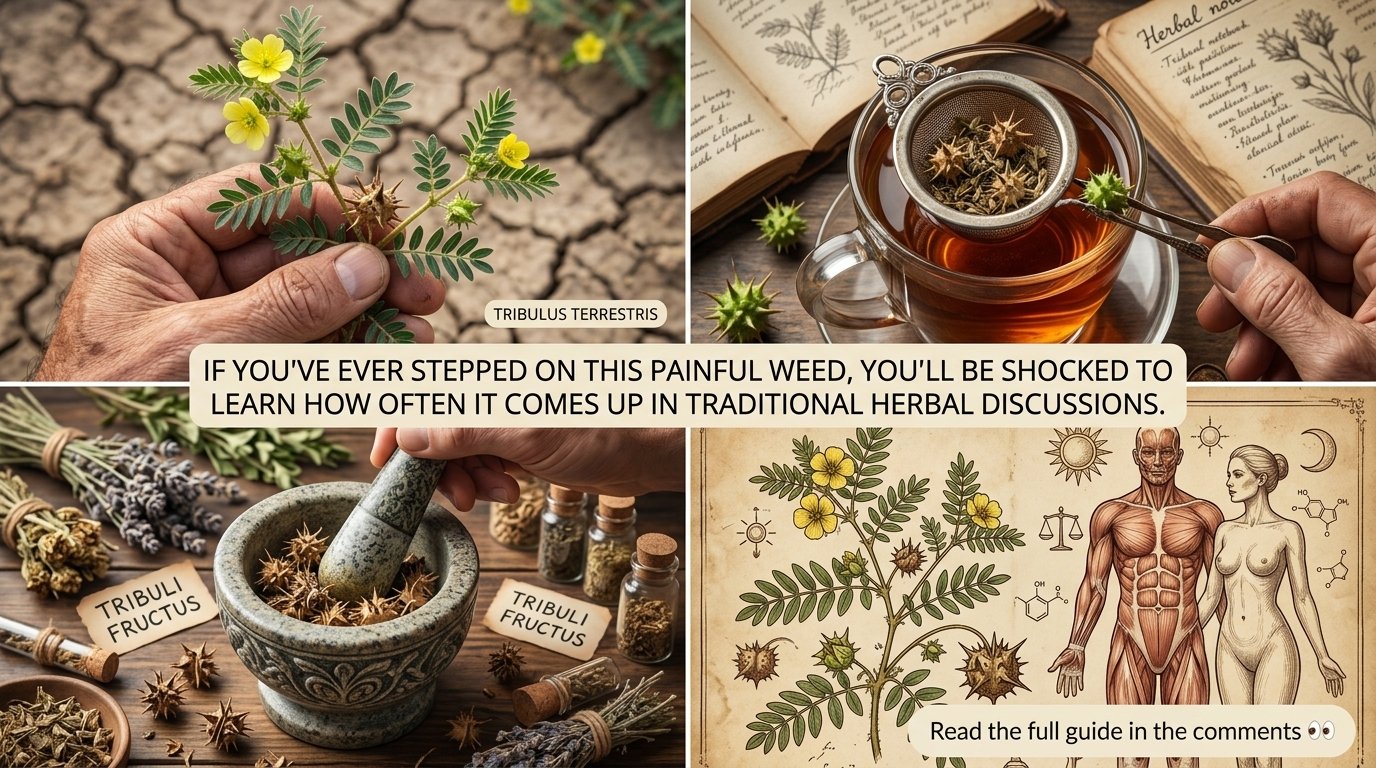
If you’ve ever walked barefoot across a gravel path and stepped on a spiky little seed pod, there’s a good chance you’ve had a close encounter with Tribulus terrestris. Nicknamed “puncture vine” for its sharp, tire-piercing burrs, this scrappy desert plant has a surprising second life in traditional herbal practice. For centuries, healers across India, China, and the Mediterranean have dried its leaves and fruit to brew into a warming, earthy tea — one often associated with vitality, energy, and general wellness.
This article walks you through a simple, traditional-style Tribulus terrestris tea, along with tips, variations, and storage advice. A quick note before you start: Tribulus is best treated as an herbal supplement, not a food. Its reputation for supporting libido, energy, and muscle strength comes primarily from traditional use and preliminary research, not settled science, so it’s worth chatting with your doctor before adding it to your routine — especially if you’re pregnant, nursing, on medication, or managing a hormone-sensitive condition.
Recipe Overview
- Preparation Time: 5 minutes
- Steeping Time: 10 minutes
- Total Time: 15 minutes
- Servings: 1 cup
Ingredients
- 1 teaspoon dried Tribulus terrestris fruit or leaf (available at herbal shops or online)
- 1 cup (240 ml) filtered water
- 1 teaspoon honey or maple syrup (optional, for sweetness)
- 1 thin slice fresh ginger (optional, for warmth and flavor)
- 1 small strip lemon peel (optional, for brightness)
Step-by-Step Instructions
Step 1: Boil the Water
Bring 1 cup of filtered water to a gentle boil in a small saucepan or kettle.
Step 2: Add the Tribulus
Once the water is boiling, reduce the heat to low and add the dried Tribulus terrestris. If you’re using ginger or lemon peel, add them now as well.
Step 3: Simmer Gently
Let the mixture simmer on low heat for 8–10 minutes. This slow simmer helps draw out the plant’s natural compounds more effectively than a quick steep.
Step 4: Strain
Remove the pan from heat and strain the liquid through a fine mesh sieve or tea strainer into a mug, discarding the solids.
Step 5: Sweeten and Serve
Stir in honey or maple syrup if desired. Serve warm.
Cooking Tips
- Simmer, don’t just steep. Because Tribulus is a tougher, fibrous plant material, a gentle simmer extracts more flavor and compounds than simply pouring hot water over it.
- Start with a small amount. If this is your first time trying Tribulus tea, use half the recommended amount to see how you feel before increasing it.
- Pair with citrus. A little lemon peel balances out the tea’s naturally earthy, slightly bitter taste.
- Use a glass or ceramic strainer rather than metal when possible, as some herbalists prefer to avoid reactive metals with delicate plant compounds — though this is more a traditional preference than a strict rule.
Notes
Tribulus terrestris tea has a distinctly earthy, slightly bitter flavor profile, similar to other root or fruit-based herbal teas. It is not a fast-acting “energy shot” — like most herbal infusions, any effects (if experienced) tend to build gradually with regular use rather than appearing after a single cup.
Variations
- Iced Tribulus Tea: Brew as directed, let cool, and pour over ice with a squeeze of fresh lemon.
- Spiced Version: Add a cinnamon stick or a pinch of cardamom while simmering for a warming, chai-inspired twist.
- Blended Herbal Tea: Combine with other traditional herbs like hibiscus or nettle leaf for a more complex flavor and varied herbal profile.
- Cold Brew Method: Steep 1 teaspoon of dried Tribulus in cold water overnight in the refrigerator, then strain in the morning for a smoother, less bitter cup.
Storage Instructions
- Dried Tribulus terrestris: Store in an airtight container in a cool, dark place for up to 12 months.
- Brewed Tea: Refrigerate any leftover tea in a sealed container and consume within 24 hours for best flavor and freshness.
- Avoid freezing brewed tea, as it can alter the flavor and texture upon thawing.
Nutrition Facts (Per Serving)
Tribulus terrestris tea is naturally low in calories and macronutrients, as it’s an herbal infusion rather than a food:
- Calories: 2–5 kcal (without sweetener)
- Carbohydrates: <1 g
- Protein: 0 g
- Fat: 0 g
- Sugars: 0 g (add ~4 g if using 1 tsp honey)
Note: Nutritional values are approximate and will vary depending on the exact plant material and any added sweeteners.
Frequently Asked Questions
1. What does Tribulus terrestris tea taste like? It has an earthy, slightly bitter, and mildly nutty flavor, somewhat similar to dandelion root tea.
2. Is Tribulus terrestris safe to consume daily? Traditional use suggests moderate consumption is generally well tolerated by healthy adults, but daily use should be discussed with a healthcare provider, particularly for anyone with hormone-related conditions or those taking medication.
3. Can I use fresh Tribulus instead of dried? Dried Tribulus is more commonly available and produces a more concentrated, traditional-style tea. Fresh plant material can be used but may require a longer simmer time.
4. Does Tribulus terrestris tea actually boost testosterone or libido? These are among its most talked-about traditional uses, but current scientific evidence is limited and mixed. It’s best to view these benefits as historically claimed rather than clinically proven.
5. Can pregnant or breastfeeding women drink this tea? It’s best to avoid Tribulus terrestris during pregnancy or breastfeeding unless specifically approved by a doctor, as safety data for these groups is limited.
6. Where can I buy dried Tribulus terrestris? It’s typically available at herbal apothecaries, specialty health food stores, and reputable online herb retailers. Look for suppliers who provide sourcing and quality information.
7. Can I mix Tribulus tea with other herbal teas? Yes, it blends well with mild herbs like hibiscus, nettle, or chamomile. Start with small amounts of each to find a balance you enjoy.
Conclusion
Tribulus terrestris may be best known as a prickly roadside nuisance, but its traditional use as a warming herbal tea offers a glimpse into centuries-old wellness practices. Whether you’re curious about its folklore or simply want to try a new herbal infusion, this simple recipe is an easy, low-effort way to explore it. As with any herbal supplement, moderation and a conversation with your healthcare provider go a long way toward enjoying it safely.