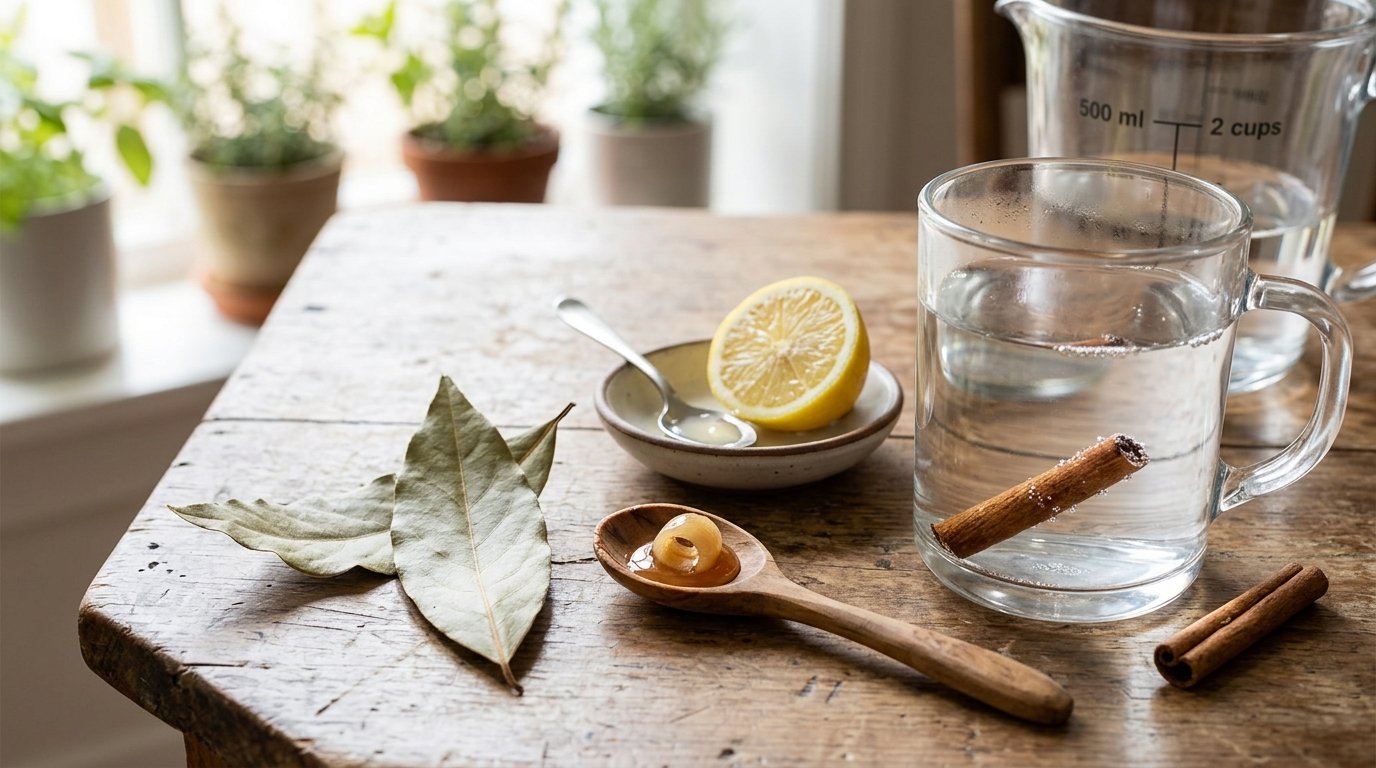
If you only think of bay leaves as the crinkly herb you toss into soups and stews, it’s time to meet their gentler side. Bay leaf tea is a warm, subtly spiced infusion that’s been used for generations in Mediterranean and South Asian kitchens as a comforting after-meal drink. It has a mild, slightly peppery flavor with hints of eucalyptus and clove, making it a nice alternative to your usual cup of chamomile or green tea.
This recipe is simple, requires just one pantry staple, and comes together in under 15 minutes. Below, you’ll find everything you need: exact measurements, step-by-step instructions, tips for the best flavor, storage advice, and answers to common questions.
Recipe Overview
- Prep Time: 2 minutes
- Cook Time: 10 minutes
- Total Time: 12 minutes
- Servings: 2 cups
Ingredients
- 2 dried bay leaves (whole, not crushed)
- 2 cups (500 ml) water
- 1 teaspoon honey or maple syrup (optional, for sweetness)
- ½ teaspoon fresh lemon juice (optional)
- 1 small cinnamon stick (optional, for extra warmth)
Step-by-Step Instructions
Step 1: Boil the Water
Pour 2 cups of water into a small saucepan and bring it to a rolling boil over medium-high heat.
Step 2: Add the Bay Leaves
Once boiling, reduce the heat to low and add the 2 dried bay leaves. If you’re using a cinnamon stick, add it now as well.
Step 3: Simmer
Let the mixture simmer gently for 8–10 minutes. This allows the leaves to release their aromatic oils and flavor into the water. The liquid should turn a light golden-brown color.
Step 4: Strain
Remove the saucepan from heat and strain the tea into two cups using a fine mesh strainer, discarding the leaves and cinnamon stick.
Step 5: Sweeten and Serve
Stir in honey or maple syrup and a splash of lemon juice if desired. Serve warm.
Cooking Tips
- Use whole, dried bay leaves rather than powdered or crushed ones. Whole leaves release flavor more slowly and evenly, giving you a smoother-tasting tea.
- Don’t over-boil. Boiling the leaves too aggressively or for too long can make the tea taste bitter. A gentle simmer is best.
- Choose quality leaves. Fresher, more fragrant bay leaves (with a green tint rather than faded brown) produce a more flavorful cup.
- Taste as you go. Steeping time affects strength — start checking at the 6-minute mark if you prefer a milder tea.
Notes
Bay leaf tea has a naturally mild, herbal taste, so it pairs well with warming spices like cinnamon, ginger, or cardamom. It’s traditionally enjoyed after meals in some cultures as a digestive aid, though it’s best treated as a comforting herbal beverage rather than a medical treatment.
Variations
- Ginger Bay Leaf Tea: Add a few thin slices of fresh ginger while simmering for a spicier, warming version.
- Bay Leaf and Green Tea Blend: Steep a green tea bag alongside the bay leaves for added antioxidants and a more complex flavor.
- Iced Bay Leaf Tea: Brew as directed, let cool, then refrigerate and serve over ice with a lemon wedge for a refreshing summer drink.
- Spiced Chai-Style Version: Add a cinnamon stick, 2 cloves, and a pinch of black pepper for a chai-inspired twist.
Storage Instructions
- Brewed Tea: Store any leftover tea in an airtight container in the refrigerator for up to 3 days. Reheat gently on the stove or enjoy cold.
- Dried Bay Leaves: Keep whole dried bay leaves in a sealed jar in a cool, dark pantry. They stay fresh and fragrant for up to a year.
Nutrition Facts (Per Serving, Approximate)
- Calories: 5–10 kcal (without sweetener)
- Carbohydrates: 1–2 g
- Sugar: 0 g (unsweetened)
- Fat: 0 g
- Protein: 0 g
- Sodium: 0 mg
Note: Nutrition values are estimates and will vary slightly depending on added sweeteners or spices.
Frequently Asked Questions
1. What does bay leaf tea taste like? It has a mild, slightly earthy and peppery flavor with subtle notes of eucalyptus and clove — less bitter than many herbal teas.
2. Can I drink bay leaf tea every day? Most people can enjoy it in moderation, but it’s a good idea to check with a healthcare provider before making it a daily habit, especially if you’re pregnant, nursing, or on medication.
3. Can I use fresh bay leaves instead of dried? Yes, though dried leaves are more common for tea since drying concentrates their aromatic oils. If using fresh, you may need 3–4 leaves instead of 2.
4. Is bay leaf tea caffeine-free? Yes, bay leaf tea is naturally caffeine-free, making it a good option for an evening drink.
5. Can I reuse the bay leaves for a second batch? You can, but the second infusion will be noticeably weaker in flavor. It’s best to use fresh leaves for the strongest taste.
6. What’s the best time of day to drink it? Many people enjoy it after meals or in the evening as a calming, warm beverage, but it can be enjoyed any time of day.
7. Can I add milk to bay leaf tea? Yes, a splash of milk or a plant-based alternative can make it taste creamier, similar to a spiced chai.
Conclusion
Bay leaf tea is a simple, fragrant, and comforting drink that’s easy to make with ingredients you likely already have at home. Whether you enjoy it plain, sweetened with honey, or dressed up with cinnamon and ginger, it’s a versatile addition to your tea rotation. Give this recipe a try the next time you want something warm, soothing, and a little different from your usual cup — and feel free to experiment with the variations above to make it your own.