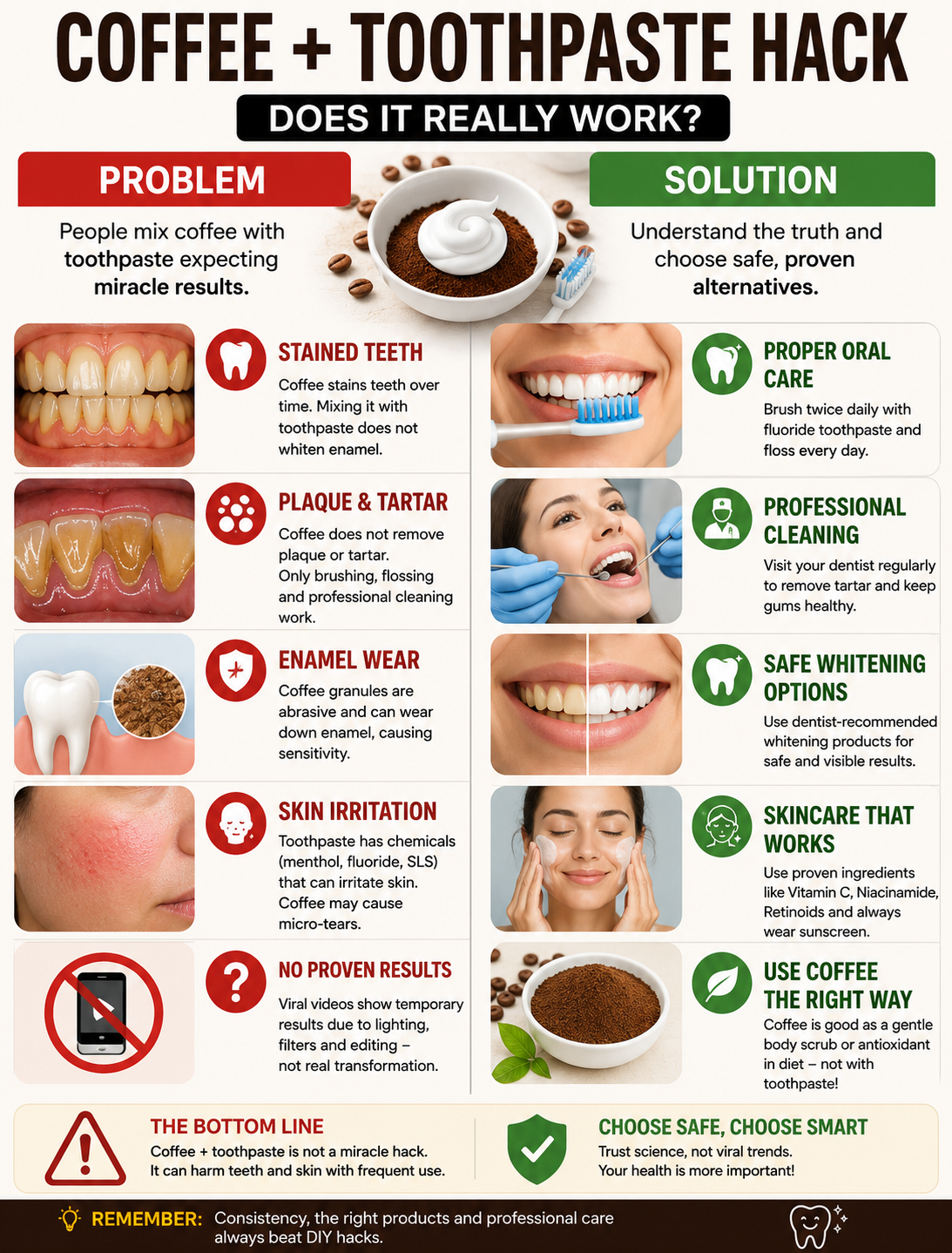
Mix Coffee with Toothpaste Hack: Does It Really Work?
Social media is full of unusual DIY hacks, and one of the most talked-about trends is mixing instant coffee with toothpaste. Videos often claim this simple mixture can whiten teeth, remove plaque, brighten skin, eliminate dark spots, polish household items, or even act as a miracle cleaning solution. Millions of people have watched these clips, leaving many wondering whether this hack is actually effective or simply another internet myth.
The short answer is that there is no reliable scientific evidence that mixing coffee with toothpaste provides special benefits beyond what toothpaste already does. In fact, depending on how it is used, the mixture may even cause unwanted problems, especially when applied to your teeth or skin.
This article explains exactly what the coffee and toothpaste hack is, why people believe it works, what science says, the possible risks, and safer alternatives you can use instead.
What Is the Coffee and Toothpaste Hack?
The hack usually involves combining a small amount of instant coffee with regular toothpaste to form a paste. Different versions recommend different uses, including:
- Whitening teeth
- Removing tartar and plaque
- Cleaning stained mugs or kitchen items
- Brightening the face
- Removing blackheads
- Fading dark spots
- Reducing acne marks
- Cleaning jewellery or metal objects
Many viral videos show dramatic before-and-after results within just a few minutes. However, these videos often rely on editing, lighting changes, filters, or repeated applications rather than genuine instant results.
Why Do People Think It Works?
There are a few reasons why this trend has become so popular.
Toothpaste Already Cleans
Toothpaste contains mild abrasives that remove surface stains from teeth. When someone brushes with the mixture, the cleaning effect often comes from the toothpaste itself rather than the coffee.
Coffee Granules Feel Like a Scrub
Instant coffee particles create a rough texture that makes users feel like they are deep cleaning. This physical scrubbing can temporarily remove some surface dirt but does not necessarily improve health or appearance.
Does Coffee Whiten Teeth?
This is one of the biggest misconceptions.
Ironically, coffee is one of the most common causes of tooth staining. Drinking coffee regularly can leave brown pigments on tooth enamel over time.
Because of this, adding coffee to toothpaste does not logically create a whitening treatment.
Any slight improvement people notice usually comes from:
- Brushing away plaque
- Removing loose surface debris
- Temporary polishing from toothpaste
It does not mean the coffee itself is whitening the teeth.
Can Coffee Remove Plaque?
Plaque is a sticky layer of bacteria that forms on teeth.
Removing plaque requires:
- Regular brushing
- Daily flossing
- Professional dental cleanings
Coffee does not kill plaque effectively or dissolve it. Toothpaste ingredients like fluoride help protect teeth, but adding coffee does not improve that function.
Can Coffee Remove Tartar?
No.
Tartar is hardened plaque that cannot be brushed away at home.
Only professional dental instruments used by a dentist or dental hygienist can safely remove tartar.
Any video claiming coffee and toothpaste removes tartar in minutes is misleading.
Is Coffee Good for Teeth?
Coffee contains antioxidants that are beneficial when consumed as part of a balanced diet. However, regarding oral health:
Pros:
- Contains antioxidants
- May have mild antibacterial properties
Cons:
- Can stain teeth
- May contribute to acidic conditions when sugar is added
- Does not whiten enamel
Therefore, coffee should not be considered a dental treatment.
What About Skin Benefits?
Some viral videos recommend applying coffee mixed with toothpaste to the face.
This practice is not recommended.
Coffee Alone
Coffee has some beneficial properties for skincare.
It contains:
- Antioxidants
- Caffeine
- Anti-inflammatory compounds
Many commercial skincare products use caffeine because it may temporarily reduce puffiness.
Toothpaste on Skin
Toothpaste is designed for teeth—not facial skin.
It often contains ingredients such as:
- Fluoride
- Menthol
- Sodium lauryl sulfate
- Whitening agents
- Flavourings
These ingredients can irritate delicate facial skin.
Can the Mixture Remove Dark Spots?
No scientific evidence shows that coffee mixed with toothpaste fades pigmentation or dark spots.
Dark spots usually result from:
- Sun exposure
- Acne
- Hormonal changes
- Skin inflammation
Effective treatments typically include ingredients such as:
- Niacinamide
- Vitamin C
- Azelaic acid
- Retinoids
- Sunscreen
Coffee and toothpaste do not replace these evidence-based treatments.
Can It Remove Blackheads?
Blackheads develop when pores become clogged with oil and dead skin cells.
Although scrubbing may temporarily make skin feel smoother, it does not eliminate the underlying cause.
Over-scrubbing may actually increase irritation.
Can It Help Acne?
Some people believe toothpaste dries pimples.
Years ago, this advice was common.
Modern dermatologists generally advise against it because toothpaste can:
- Cause redness
- Dry the skin excessively
- Trigger peeling
- Worsen irritation
Adding coffee does not solve these problems.
Risks of Using Coffee and Toothpaste on Teeth
Using the mixture occasionally is unlikely to cause serious harm for most people, but frequent use may lead to problems.
Enamel Wear
Coffee particles create additional abrasion.
Too much scrubbing can slowly wear away enamel.
Unlike skin, enamel does not grow back.
Tooth Sensitivity
As enamel becomes thinner, teeth may become more sensitive to:
- Cold drinks
- Hot drinks
- Sweet foods
Gum Irritation
Aggressive brushing with abrasive mixtures may damage gum tissue.
Risks of Using It on Skin
Possible side effects include:
- Dryness
- Burning
- Itching
- Redness
- Allergic reactions
- Skin peeling
- Increased sensitivity
People with eczema, rosacea, or sensitive skin are especially likely to experience irritation.
Are There Any Real Benefits?
Coffee alone does have legitimate uses.
These include:
Gentle Body Scrub
Ground coffee can provide mild exfoliation for areas like elbows or feet when mixed with an appropriate moisturising base.
Temporary Puffiness Reduction
Caffeine may temporarily reduce under-eye puffiness in specially formulated eye creams.
Antioxidants
Coffee contains beneficial plant compounds that help protect cells from oxidative stress when consumed in moderation.
However, these benefits do not mean coffee becomes more effective when mixed with toothpaste.
Better Ways to Whiten Teeth
Instead of internet hacks, consider:
- Brush twice daily with fluoride toothpaste.
- Floss every day.
- Limit staining drinks or rinse your mouth with water after drinking coffee or tea.
- Use whitening toothpaste designed for surface stains.
- Consult a dentist about professional whitening if needed.
These approaches are safer and supported by evidence.
Better Ways to Improve Skin
For healthier skin:
- Cleanse gently twice a day.
- Wear sunscreen daily.
- Moisturise regularly.
- Use proven ingredients such as vitamin C, niacinamide, or retinoids based on your skin type.
- Avoid applying products intended for teeth to your face.
Frequently Asked Questions:
Can coffee and toothpaste whiten teeth overnight?
No. There is no scientific evidence that the mixture can dramatically whiten teeth overnight.
Can I use it every day?
It is not recommended. Frequent use may increase abrasion and contribute to enamel wear or skin irritation.
Does it remove tartar?
No. Tartar requires professional dental cleaning.
Is it safe for sensitive teeth?
People with sensitive teeth should avoid abrasive DIY mixtures, as they may worsen discomfort.
Can children use this hack?
No. Children should use toothpaste appropriate for their age and avoid experimental DIY dental treatments.
Is coffee itself bad for teeth?
Coffee is not inherently harmful, but frequent consumption can stain teeth, especially if oral hygiene is poor.
Does toothpaste kill acne?
No. Toothpaste is not an acne treatment and may irritate the skin.
Final Verdict:
The coffee and toothpaste hack is largely a social media myth. While brushing with toothpaste can remove some surface stains and coffee contains antioxidants, combining the two does not create a scientifically proven whitening, skin-brightening, or miracle-cleaning formula.
For teeth, the mixture may increase abrasion without providing additional whitening benefits beyond regular toothpaste. For skin, toothpaste is formulated for dental use rather than facial care and may cause dryness, redness, or irritation, particularly with repeated application.
If your goal is whiter teeth, healthier skin, or fewer blemishes, evidence-based products and good daily hygiene are far more effective and safer than viral DIY hacks. Internet trends can be entertaining, but they are not always supported by science. When it comes to your health, it is best to rely on treatments that have been properly tested rather than dramatic online videos that promise instant results.