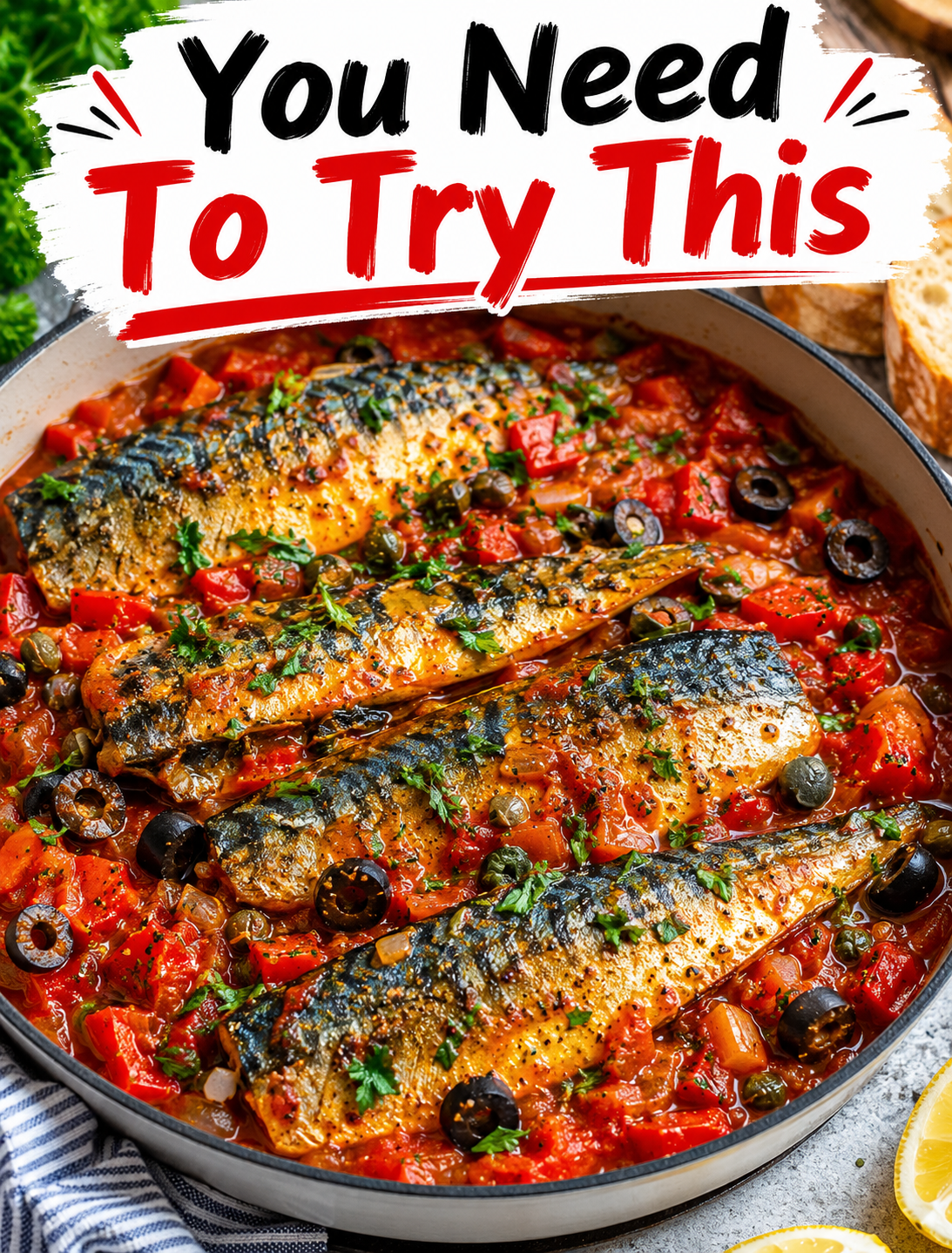
Mediterranean-Style Braised Mackerel
Mediterranean-Style Braised Mackerel is a comforting seafood dish that celebrates the fresh, wholesome flavours of Mediterranean cuisine. Mackerel is one of the healthiest fish available, prized for its rich, buttery texture and impressive nutritional profile. Packed with heart-friendly omega-3 fatty acids, high-quality protein, vitamin D, vitamin B12, and essential minerals, it makes an excellent choice for anyone seeking a nourishing meal without sacrificing flavour.
In this recipe, the mackerel fillets are lightly seasoned and gently braised in a vibrant tomato sauce infused with garlic, onions, sweet red peppers, olives, capers, herbs, and a hint of lemon. As the fish cooks slowly in the aromatic sauce, it absorbs every layer of Mediterranean flavour while remaining incredibly moist and flaky.
The beauty of this recipe lies in its simplicity. It requires only one pan, everyday ingredients, and very little hands-on cooking time. The sauce develops a rich, savoury taste that perfectly complements the natural richness of the fish. Whether you’re preparing a quick weeknight dinner, a family meal, or serving guests with crusty artisan bread and a fresh salad, this dish is always a crowd-pleaser.
The combination of tomatoes, olives, herbs, and olive oil is inspired by the coastal cooking traditions of Greece, Italy, and Southern Spain, where fresh seafood is often cooked in light, flavourful sauces rather than heavy creams. Every bite delivers a wonderful balance of savoury, tangy, slightly sweet, and herbal notes that make this recipe unforgettable.
Prep Time: 15 minutes
Cook Time: 35 minutes
Total Time: 50 minutes
Ingredients:
For the Mackerel
- 4 fresh mackerel fillets (skin-on)
- 2 tablespoons extra virgin olive oil
- ½ teaspoon salt
- ½ teaspoon freshly ground black pepper
- ½ teaspoon paprika
- ½ teaspoon ground cumin (optional)
For the Braising Sauce
- 1 medium onion, finely chopped
- 3 garlic cloves, minced
- 1 red bell pepper, chopped
- 1 can (14 oz / 400 g) crushed tomatoes
- ½ cup fish stock or water
- ¼ cup sliced green or black olives
- 1 tablespoon capers, rinsed
- 1 teaspoon dried oregano
- ½ teaspoon red pepper flakes (optional)
- ½ teaspoon sugar
- 1 tablespoon fresh lemon juice
- 2 tablespoons chopped fresh parsley
Optional Garnishes
- Lemon wedges
- Fresh basil leaves
- Extra parsley
- Fresh oregano
- Extra virgin olive oil drizzle
Instructions:
Step 1: Prepare the Fish
If using frozen mackerel, thaw it completely in the refrigerator overnight. Pat each fillet dry using paper towels. Removing excess moisture helps the seasonings stick and allows the fish to brown slightly before braising.
Season both sides of each fillet with salt, black pepper, paprika, and ground cumin if using. Let the fish rest for about 10–15 minutes while preparing the sauce. This short resting time allows the seasoning to penetrate the flesh.
Step 2: Prepare the Vegetables
Dice the onion into small pieces, mince the garlic finely, and chop the bell pepper into bite-sized cubes. Slice the olives if they are whole, rinse the capers to remove excess brine, and chop the fresh parsley.
Having all ingredients prepared before cooking makes the process smooth and enjoyable.
Step 3: Sauté the Aromatics
Heat the olive oil in a large deep skillet or sauté pan over medium heat.
Add the chopped onions and cook for about 5 minutes until they become soft and translucent.
Stir in the garlic and cook for another minute until fragrant.
Add the chopped red bell pepper and continue cooking for 4–5 minutes until slightly softened.
Avoid browning the garlic, as burnt garlic can make the sauce bitter.
Step 4: Build the Sauce
Pour the crushed tomatoes into the pan.
Add:
- Fish stock
- Olives
- Capers
- Oregano
- Red pepper flakes
- Sugar
Stir everything together until well combined.
Allow the sauce to come to a gentle simmer.
Reduce the heat to medium-low and cook uncovered for approximately 10–12 minutes.
During this time, the tomatoes become sweeter, the peppers soften, and all the flavours begin to blend beautifully.
Step 5: Taste and Adjust
Taste the sauce before adding the fish.
Depending on the tomatoes used, you may wish to adjust:
- A pinch more salt
- Extra black pepper
- More oregano
- Additional lemon juice
- Slightly more sugar if the tomatoes are especially acidic
The ideal sauce should be rich, balanced, slightly tangy, and aromatic.
Step 6: Add the Mackerel
Carefully nestle the seasoned mackerel fillets into the simmering tomato sauce.
Place them skin-side down if using skin-on fillets.
Spoon some of the sauce gently over the tops of the fish.
Cover the pan with a lid.
Reduce the heat to low.
Allow the fish to braise gently for approximately 10–12 minutes.
Cooking time depends on the thickness of the fillets.
The fish is ready when it flakes easily with a fork and reaches an internal temperature of 63°C (145°F).
Avoid overcooking, as mackerel is best when moist and tender.
Step 7: Finish the Dish
Remove the pan from the heat.
Stir in the fresh lemon juice.
Sprinkle generously with chopped parsley.
Allow the fish to rest for about 3–5 minutes before serving so the flavours can settle.
Step 8: Serve
Serve the braised mackerel hot with plenty of sauce spooned over each fillet.
Excellent serving options include:
- Warm crusty artisan bread
- Brown rice
- Couscous
- Quinoa
- Roasted potatoes
- Garlic mashed potatoes
- Steamed vegetables
- Mediterranean salad
- Butter beans
- Grilled zucchini
- Roasted asparagus
A squeeze of fresh lemon over the top just before eating enhances every bite.
Tips
- Always use the freshest mackerel possible for the best flavour.
- Frozen fillets work perfectly if thawed properly.
- Do not boil the sauce aggressively after adding the fish.
- Add spinach during the final few minutes for extra nutrition.
- Cherry tomatoes can replace canned tomatoes for a fresher flavour.
- Kalamata olives provide a deeper Mediterranean taste.
- White wine can replace part of the fish stock for additional richness.
- Fresh herbs always provide brighter flavour than dried herbs.
- Make the sauce a day ahead for even better flavour.
- Leftovers taste even better the following day.
Servings
4 servings
Nutritional Benefits
This dish is considered one of the healthiest Mediterranean seafood meals because it combines oily fish with vegetables, olive oil, and herbs.
Mackerel
- Excellent source of Omega-3 fatty acids (EPA & DHA)
- Rich in complete protein
- High in vitamin D
- Excellent source of vitamin B12
- Rich in selenium
- Supports heart and brain health
Tomatoes
- High in lycopene
- Rich in vitamin C
- Powerful antioxidants
Olive Oil
- Healthy monounsaturated fats
- Anti-inflammatory compounds
- Supports cardiovascular health
Garlic
- Natural antibacterial properties
- Supports immune health
- Adds rich flavour without excess sodium
Bell Peppers
- Rich in vitamin C
- Excellent source of antioxidants
- High in fibre
Parsley
- Vitamin K
- Vitamin C
- Fresh herbal flavour
Q&A
Can I use frozen mackerel?
Yes. Thaw it completely in the refrigerator and pat it dry before seasoning.
Can I substitute another fish?
Absolutely. Sardines, sea bass, cod, snapper, haddock, hake, or salmon all work well with this braising sauce.
Can I make this recipe ahead?
Yes. The tomato sauce can be prepared up to two days in advance. Add the fish only when ready to serve for the best texture.
Is this recipe spicy?
Not unless you include the red pepper flakes. They are completely optional.
Can I freeze leftovers?
Yes. Cool completely before transferring to airtight containers. Freeze for up to 2 months and thaw overnight in the refrigerator before reheating gently.
What wine pairs well with this dish?
A crisp dry white wine such as Sauvignon Blanc, Pinot Grigio, or Vermentino complements the bright tomato and herb flavours beautifully.
How do I know when the fish is cooked?
The flesh should turn opaque and flake easily with a fork. Avoid overcooking, as mackerel is naturally rich and is at its best when still moist.
Nutrition (Approx. Per Serving)
- Calories: 420 kcal
- Protein: 33 g
- Carbohydrates: 12 g
- Fat: 27 g
- Saturated Fat: 5 g
- Omega-3 Fatty Acids: Approximately 2.8 g
- Fibre: 3 g
- Sugar: 6 g
- Cholesterol: 95 mg
- Sodium: 560 mg
- Vitamin D: High
- Vitamin B12: Very High
- Vitamin C: 45 mg
- Calcium: 90 mg
- Iron: 2.4 mg