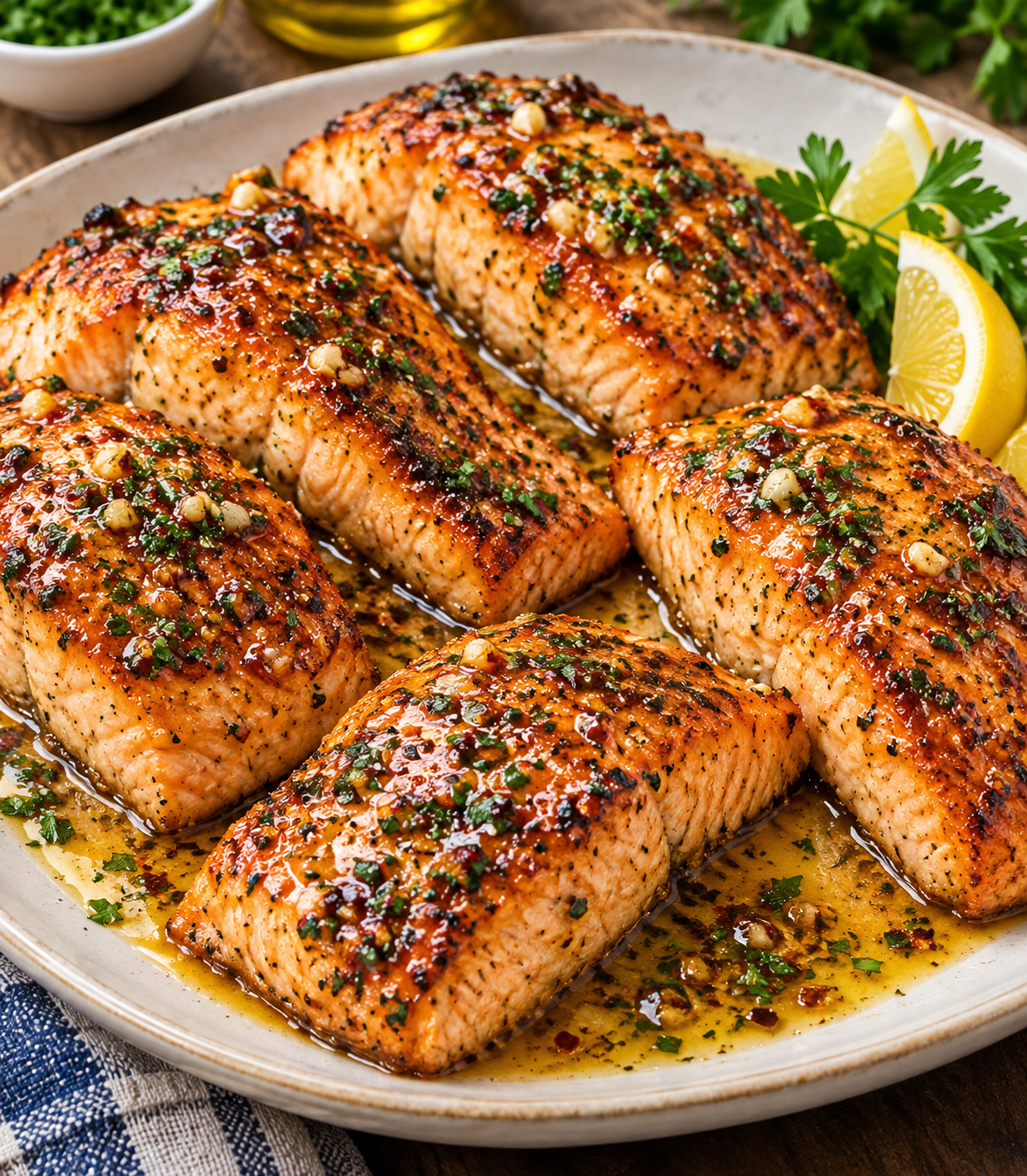
Honey Garlic Butter Baked Salmon – Easy & Juicy
Honey Garlic Butter Baked Salmon is an easy seafood dinner made with tender salmon fillets and a glossy sauce of honey, butter, fresh garlic, soy sauce, and lemon juice. It combines gentle sweetness with savory garlic flavor and a light citrus finish.
The salmon cooks in the oven at 400°F, making this a convenient dinner for busy weeknights. The butter melts into the honey and seasonings, while the sauce collects around the fish, ready to spoon over each serving.
You can finish the salmon briefly under the broiler for lightly caramelized edges, although this step is optional. The fish is just as delicious without additional browning.
Serve it with fluffy rice, roasted asparagus, steamed broccoli, or mashed potatoes. This recipe uses familiar grocery-store ingredients and takes approximately 25–30 minutes from start to finish.
Whether you’re preparing a quick family meal or a seafood dinner for guests, this baked salmon offers a simple way to bring sweet, savory, and fresh flavors together.
Recipe Overview
- Prep Time: 10 minutes
- Cook Time: Approximately 12–17 minutes
- Total Time: Approximately 25–30 minutes
- Servings: 4
- Yield: Four salmon fillets
- Course: Main Dish, Lunch, or Dinner
- Cuisine: American-Inspired
- Cooking Method: Oven-Baked
- Oven Temperature: 400°F
- Equipment: Baking dish or rimmed metal baking sheet, small saucepan, whisk, measuring spoons, and food thermometer
Description
Honey Garlic Butter Baked Salmon has a tender, flaky texture and a flavorful glaze that combines sweet honey, rich butter, and fresh garlic.
Low-sodium soy sauce adds a savory note, while lemon juice balances the sweetness. A little paprika gives the surface a warm color and mild smoky flavor when smoked paprika is used.
Unlike recipes that require pan-searing several batches, this method cooks all four fillets in one baking dish.
The sauce stays fairly fluid during baking because it mixes with the natural juices released by the salmon. Spoon those juices over the fish just before serving for extra flavor.
If you prefer a slightly darker finish, brief broiling can create lightly caramelized edges. Watch carefully because honey contains sugar and can burn quickly under direct heat.
This easy baked salmon is especially useful for dinners when you want a flavorful protein without a complicated preparation process.
Ingredients
The ingredient list is divided into the salmon, honey garlic butter sauce, and optional garnishes. Measure everything before starting because the sauce comes together quickly.
For the Salmon
- 4 salmon fillets, approximately 6 ounces each
- 1 teaspoon olive oil, for greasing the baking dish
- ½ teaspoon smoked or sweet paprika
- ¼ teaspoon salt, or to taste
- ¼ teaspoon freshly ground black pepper
For the Honey Garlic Butter Sauce
- 4 tablespoons unsalted butter
- ¼ cup honey
- 4 garlic cloves, finely minced
- 1 tablespoon low-sodium soy sauce
- 1 tablespoon fresh lemon juice
- 1 teaspoon Dijon mustard, optional
- ½ teaspoon dried parsley or Italian seasoning
For Garnishing
- 2 tablespoons freshly chopped parsley
- Fresh lemon wedges
- A pinch of crushed red pepper flakes, optional
Important Ingredient Notes
Salmon: Choose fillets of similar thickness. They will cook more evenly than pieces with dramatically different sizes. Skin-on and skinless salmon both work.
Honey: Regular liquid honey is convenient because it blends easily into the warm butter. Its sweetness balances the garlic and soy sauce.
Unsalted butter: Unsalted butter allows you to control the seasoning more accurately, especially because soy sauce already contains sodium.
Fresh garlic: Finely minced garlic distributes flavor throughout the glaze. Cook it gently so it becomes fragrant without browning too much.
Soy sauce: Low-sodium soy sauce adds savory depth. Gluten-free tamari is an alternative for people avoiding wheat, provided the remaining ingredients are also suitable.
Lemon juice: Fresh lemon provides a clean, bright finish. Do not add excessive juice because it can overpower the honey and change the sauce’s balance.
Dijon mustard: This optional ingredient adds a little tanginess. The recipe still works when it is omitted.
Why You’ll Love Honey Garlic Butter Baked Salmon
1. Quick Enough for Weeknights
The recipe takes about 10 minutes to prepare, followed by a short baking time. Most of the work involves seasoning the salmon and mixing the sauce.
2. Sweet and Savory Flavor
Honey adds sweetness, garlic provides a bold savory taste, and soy sauce contributes depth. Lemon keeps the final flavor from tasting too rich.
3. Minimal Equipment
You need one baking dish and a small saucepan. There is no need for a grill, deep fryer, or complicated cooking equipment.
4. Easy to Pair with Side Dishes
The glaze works with steamed vegetables, rice, potatoes, couscous, and simple salads.
5. Suitable for Family Dinners
The basic recipe is mildly seasoned. You can add crushed red pepper flakes for anyone who prefers extra heat.
6. Attractive Presentation
The glossy sauce, fresh parsley, and lemon wedges create a colorful finish without requiring elaborate garnishes.
How to Make Honey Garlic Butter Baked Salmon
Follow these seven steps to prepare the salmon, mix the glaze, and bake the fish.
Step 1: Preheat the Oven
Preheat your oven to 400°F.
Lightly grease a baking dish or rimmed metal baking sheet with 1 teaspoon olive oil.
Choose a dish large enough to hold all four salmon fillets in a single layer without stacking them.
If you plan to use the broiler for the optional finish, select a pan that is specifically rated as broiler-safe.
Many glass baking dishes are unsuitable for direct broiler heat because sudden intense heating can cause breakage.
Step 2: Prepare and Season the Salmon
Pat the fully thawed salmon dry with paper towels.
Check each fillet for pin bones and remove any with clean kitchen tweezers.
Arrange the fish in the prepared dish, skin-side down if using skin-on fillets.
Sprinkle evenly with paprika, salt, and black pepper.
Do not add too much salt at this stage because the soy sauce in the glaze provides additional seasoning.
Keep raw fish and its juices away from ready-to-eat ingredients. Wash hands and clean utensils after handling uncooked seafood.
Step 3: Make the Honey Garlic Butter Sauce
Place 4 tablespoons unsalted butter in a small saucepan over low heat.
Once melted, add the minced garlic and cook for approximately 30–60 seconds, stirring gently.
The garlic should become fragrant without turning dark brown.
Remove the saucepan from the heat.
Stir in the honey, low-sodium soy sauce, lemon juice, optional Dijon mustard, and dried herbs.
Whisk until the sauce is evenly combined.
The glaze will be fairly thin at this stage. It will coat the fish while leaving extra sauce in the baking dish.
Step 4: Coat the Salmon
Spoon the warm honey garlic butter sauce over each fillet.
Make sure the top and exposed sides receive a coating of sauce.
Allow the remaining sauce to collect in the bottom of the baking dish.
Avoid leaving the fish sitting in the acidic glaze for an extended period before baking.
If some sauce runs off the fillets, that is normal. You can spoon the cooked pan juices over the salmon when serving.
Step 5: Bake Until Cooked Through
Place the baking dish in the preheated oven.
Bake for approximately 12–15 minutes, depending on the thickness of the salmon.
Begin checking thinner fillets after about 10 minutes.
Insert a food thermometer into the thickest part of the fish, avoiding contact with the pan.
For the standard FDA-recommended safe temperature, cook fin fish to 145°F.
The cooked salmon should also appear opaque and separate into flakes when gently pressed with a fork.
Thicker fillets may take longer than the suggested range. Use the thermometer instead of relying only on the cooking time.
Step 6: Add an Optional Caramelized Finish
If you want lightly browned edges, the broiler can provide a more caramelized surface.
Only use this step when the salmon is nearly done and your baking pan is rated for broiler use.
Spoon a small amount of pan sauce over the fillets.
Switch the oven to broil and cook for approximately 1–2 minutes while watching continuously.
Honey and garlic can scorch quickly under direct heat.
Check the final temperature before serving. Skip broiling if the salmon has already reached the required temperature.
This step is optional; the recipe tastes good without it.
Step 7: Rest and Serve
Remove the baking dish from the oven.
Allow the salmon to stand briefly for approximately 2–3 minutes.
Spoon the hot pan sauce over each fillet.
Sprinkle with freshly chopped parsley and finish with a small squeeze of lemon juice.
Serve immediately with rice, potatoes, or your preferred vegetable side dish.
For the best presentation, place the salmon on individual plates and drizzle a little extra sauce around the fish rather than covering all the sides.
Expert Recipe Tips and Notes
Choose similar-sized fillets. Even thickness helps the fish finish cooking at approximately the same time.
Use a thermometer. Salmon thickness and oven performance affect cooking time. A food thermometer is more reliable than color alone.
Dry the salmon first. Removing surface moisture helps the seasonings stay on the fish instead of sliding into the baking dish.
Avoid burning the garlic. Garlic only needs a short time in melted butter. Keep the heat low and stir frequently.
Use low-sodium soy sauce. This helps you control the finished dish’s saltiness.
Watch the broiler. Honey can darken quickly under intense heat. A minute can make a noticeable difference.
Do not expect a thick barbecue-style glaze. This recipe makes a buttery sauce that mixes with the salmon juices.
Avoid extending the cooking time unnecessarily. Once the fish reaches the appropriate internal temperature, remove it rather than continuing to bake it for appearance.
Easy Recipe Variations
Spicy Honey Garlic Salmon
Add ¼ teaspoon crushed red pepper flakes or 1 teaspoon sriracha to the sauce.
Stir well before spooning it over the salmon.
Start with less heat if you are serving people who prefer mild food.
Orange Honey Garlic Salmon
Replace the lemon juice with 1 tablespoon orange juice and add ½ teaspoon finely grated orange zest.
This variation creates a sweeter citrus flavor.
A little fresh parsley adds color when serving.
Maple Garlic Butter Salmon
Replace the honey with an equal amount of pure maple syrup.
The sauce will have a different sweetness and mild maple flavor.
Watch closely during broiling because maple syrup can also caramelize quickly.
Garlic Butter Salmon Without Soy Sauce
Omit the soy sauce and season the sauce with a small additional pinch of salt.
The finished glaze will be lighter in color and slightly less savory.
Gluten-Free Honey Garlic Salmon
Use certified gluten-free tamari in place of regular soy sauce.
Check the labels of Dijon mustard and other packaged ingredients to confirm they meet your dietary needs.
Serving Suggestions
This baked salmon pairs well with side dishes that complement its rich, sweet-savory glaze.
Rice and Grains
Fluffy white rice, brown rice, or couscous can absorb the extra honey garlic butter sauce.
For a Mediterranean-inspired dinner, try seasoned rice with fresh parsley and lemon.
Roasted Vegetables
Roasted asparagus, broccoli, carrots, and zucchini add texture and color.
Prepare vegetables separately so they can cook for the appropriate amount of time without overcooking the salmon.
Fresh Salads
A chilled cucumber appetizer can balance the richness of the glaze.
For a refreshing starter, try EAWOD’s Fresh Cucumber Rounds with Creamy Herb & Garlic Topping. The cool cucumber, dill, and lemon flavors provide a fresh contrast to the warm salmon.
Mashed Potatoes
Creamy mashed potatoes make an easy, comforting side dish.
Spoon a little of the cooked pan sauce over the salmon and serve the potatoes alongside it.
Make-Ahead Instructions
The honey garlic butter sauce can be prepared up to 2 days ahead and stored in a clean, covered container in the refrigerator.
Before cooking, warm the sauce gently until the butter melts and the ingredients can be stirred together.
For the best texture, prepare the salmon shortly before baking.
Pat the fish dry, season it, and add the sauce just before placing it in the oven.
Avoid marinating the salmon in the lemon-containing sauce for many hours because the acidity can affect the fish’s surface texture.
If using frozen salmon, thaw it safely in the refrigerator before preparing this recipe.
Plan enough time for the fish to thaw completely, especially when the fillets are thick.
Storage and Reheating
Refrigerator Storage
Transfer leftover salmon into shallow, airtight containers.
Refrigerate within 2 hours of cooking, or within 1 hour if the surrounding temperature is above 90°F.
Keep the refrigerator at 40°F or below.
Use refrigerated leftovers within 3–4 days.
Store extra sauce with the fish when possible to help preserve moisture during reheating.
Freezer Storage
Place cooled salmon in freezer-safe containers with some of the sauce.
For best eating quality, use within approximately 2 months.
Thaw frozen leftovers in the refrigerator overnight.
Cooked salmon may become slightly firmer after freezing and reheating, so use gentle heat to maintain its texture.
Oven Reheating
Preheat the oven to 325°F.
Place the salmon in an oven-safe dish with a spoonful of sauce or water.
Cover loosely with foil to limit moisture loss.
Reheat until the internal temperature reaches 165°F, following USDA guidance for leftovers.
Microwave Reheating
Place an individual serving in a microwave-safe dish.
Cover loosely and reheat in short intervals, allowing for even heating.
Check the center with a food thermometer to ensure the leftovers reach 165°F.
For official recommendations, read the FDA’s safe food handling guidance.
Frequently Asked Questions
Can I use frozen salmon for this recipe?
Yes. Thaw the salmon safely in the refrigerator first, following any special instructions on the packaging.
Should I leave the salmon skin on?
Either option works. Skin-on fillets can be baked skin-side down, and the skin can be removed after cooking if desired.
How long does salmon take to bake at 400°F?
Many 6-ounce fillets take approximately 12–15 minutes, but the exact time depends on thickness. Check the center with a food thermometer.
What temperature should baked salmon reach?
The FDA recommends 145°F for fin fish. Measure the thickest portion with a food thermometer.
Can I make this without soy sauce?
Yes. Omit the soy sauce and add a small pinch of extra salt. The glaze will have a milder savory flavor.
Why is there white liquid on my salmon?
The white material is albumin, a natural protein that appears as salmon cooks. It is normal and does not mean the fish is spoiled.
How do I make the honey garlic sauce thicker?
After removing the cooked salmon, simmer the pan juices separately in a saucepan until slightly reduced. Do not keep baking the fish just to thicken the sauce.
Can I skip the broiler?
Yes. Broiling is optional. Baking alone produces tender fish with a flavorful honey garlic butter sauce.
Servings and Nutrition
Yield: 4 servings
Serving Size: One approximately 6-ounce salmon fillet with one-quarter of the sauce
Estimated Nutrition Per Serving
The following approximate values were provided in the original recipe draft and have not been independently recalculated from ingredient brands or a nutrition database.
| Nutrient | Approximate Amount |
|---|---|
| Calories | 530 kcal |
| Protein | 35 g |
| Carbohydrates | 19 g |
| Total Fat | 34 g |
| Saturated Fat | 11 g |
| Fiber | Less than 1 g |
| Total Sugar | 17 g |
Actual nutrition depends on the salmon variety, butter, honey, soy sauce, and amount of sauce served. Side dishes are not included.
The values should be recalculated before they are entered as verified nutrition data in Recipe structured markup.
Final Thoughts
Honey Garlic Butter Baked Salmon is a convenient way to prepare a seafood dinner with familiar ingredients and plenty of flavor.
Honey adds sweetness, garlic gives the sauce a bold savory taste, and lemon balances the richness of the butter.
The oven handles most of the cooking, while an optional broiler finish adds lightly caramelized edges.
Serve the salmon with your favorite rice, vegetables, or salad for a complete meal.
If you’re planning several dinners for the week, explore EAWOD’s Mexican Street Corn White Chicken Chili for another comforting family meal with a completely different flavor profile.
2 thoughts on “Honey Garlic Butter Baked Salmon – Easy & Juicy”