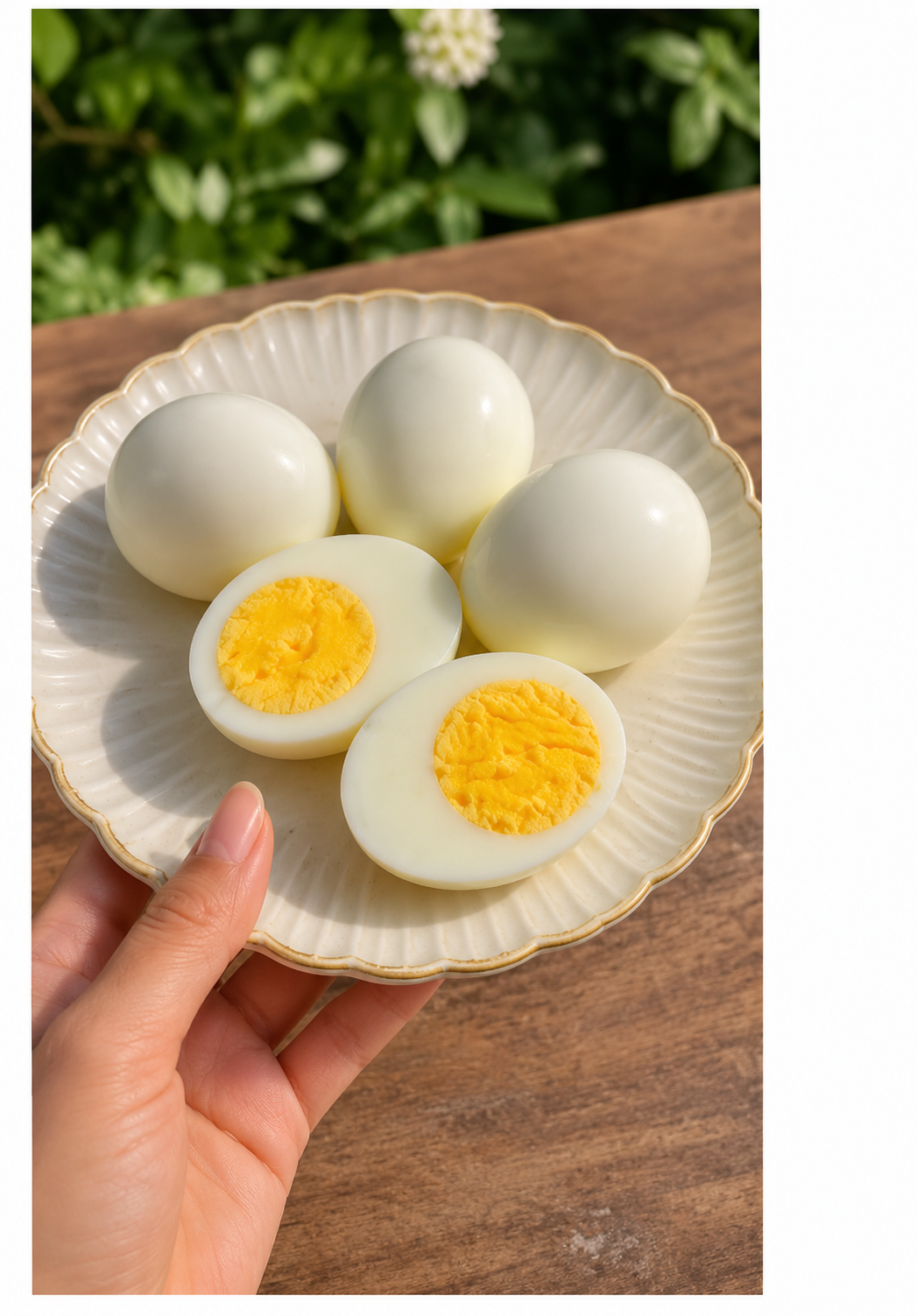
Perfect Classic Hard-Boiled Eggs – Easy, Delicious & Foolproof Breakfast Recipe
Description
Hard-Boiled Eggs are one of the simplest, most versatile, and satisfying foods you can prepare at home. With tender egg whites, perfectly cooked golden yolks, and a smooth texture, this classic recipe is ideal for breakfast, healthy snacks, salads, and meal preparation.
The secret to perfect Hard-Boiled Eggs is controlling the cooking time and cooling the eggs immediately afterward. This simple technique helps produce fully cooked yolks without excessive dryness and makes peeling easier.
Whether you enjoy them plain with salt and black pepper or use them in sandwiches and salads, Hard-Boiled Eggs offer an affordable and convenient source of high-quality protein.
Another advantage of this recipe is its flexibility. You can prepare several eggs at once, refrigerate them, and use them throughout the week. They are also naturally low in carbohydrates and contain important nutrients, including vitamin B12, choline, and selenium.
With only eggs, water, and a few simple steps, you can achieve consistent results without expensive kitchen equipment.
Prep Time: 5 minutes
Cooking Time: 10–12 minutes
Cooling Time: 10 minutes
Total Time: 25–27 minutes
Servings: 6
Ingredients
For the Eggs
-
6 large eggs
-
4–6 cups water, enough to cover the eggs
-
Ice cubes, for cooling
-
Additional cold water, for the ice bath
Optional Seasonings
-
¼ teaspoon sea salt
-
¼ teaspoon freshly ground black pepper
-
¼ teaspoon smoked paprika
-
Freshly chopped chives
-
Fresh parsley
Optional Serving Additions
-
Whole-grain toast
-
Fresh avocado slices
-
Cherry tomatoes
-
Cucumber slices
-
Dijon mustard
Instructions
Step 1: Choose Fresh Eggs
Select six large eggs with clean, uncracked shells.
Check the expiration or best-before date on the carton.
Slightly older refrigerated eggs may peel more easily than very fresh eggs, although either can work.
For consistent Hard-Boiled Eggs, choose eggs of similar size.
Step 2: Prepare the Saucepan
Choose a medium saucepan large enough to hold all six eggs in one layer.
Avoid stacking the eggs because uneven heating may affect cooking.
Add enough water to cover the eggs by approximately one inch.
Remove the eggs temporarily before heating the water.
Step 3: Bring the Water to a Boil
Place the saucepan over medium-high heat.
Bring the water to a rolling boil.
A properly boiling pot helps establish a consistent starting temperature.
Prepare a slotted spoon for gently lowering the eggs into the water.
Step 4: Add the Eggs Carefully
Reduce the heat slightly to prevent vigorous splashing.
Using the slotted spoon, lower each egg gently into the boiling water.
Avoid dropping the eggs because sudden impact can crack their shells.
Once all the eggs are submerged, adjust the heat to maintain a gentle boil.
Step 5: Set the Cooking Timer
Start the timer immediately after adding the eggs.
For large eggs, cook for approximately 10–12 minutes.
Ten minutes generally produces fully set yolks with a slightly softer texture.
Twelve minutes creates firmer, classic Hard-Boiled Eggs.
Cooking times may vary with egg size, altitude, and stove performance.
Step 6: Maintain Gentle Boiling
Keep the water at a steady, gentle boil.
Avoid excessive bubbling that causes the eggs to knock against one another.
Do not cover the saucepan unless necessary for maintaining the temperature.
Consistent heat helps Hard-Boiled Eggs cook evenly.
Step 7: Prepare an Ice Bath
While the eggs cook, fill a large bowl halfway with cold water.
Add several ice cubes.
The water should be cold enough to cool the eggs quickly.
Place the bowl near the stove for easy transfer.
Step 8: Remove the Cooked Eggs
Once the timer finishes, turn off the heat.
Use a slotted spoon to carefully remove the eggs.
Transfer them directly into the prepared ice bath.
Avoid leaving them in hot water because residual heat can continue cooking the yolks.
Step 9: Cool Completely
Allow the eggs to rest in the ice bath for approximately 10 minutes.
The rapid cooling helps stop the cooking process.
It also makes the eggs easier to handle.
Proper cooling is an important step when preparing Hard-Boiled Eggs for salads or meal preparation.
Step 10: Crack the Shells
Remove one egg from the ice bath.
Gently tap it against a clean countertop.
Rotate the egg and tap several areas until small cracks form.
Avoid pressing too firmly because this may damage the cooked egg white.
Step 11: Peel the Eggs
Begin peeling near the wider end of the egg, where an air pocket is often present.
Gently lift the shell and the thin membrane underneath.
Peel under cool running water if necessary.
This can help loosen small shell fragments.
Step 12: Slice and Serve
Place the peeled Hard-Boiled Eggs on a clean cutting board.
Slice them lengthwise using a sharp knife.
Arrange the halves on a serving plate.
Sprinkle with salt, black pepper, paprika, or fresh herbs.
Serve immediately or refrigerate for later use.
Tips for the Best Hard-Boiled Eggs
Use Similar-Sized Eggs
Eggs of similar size cook more evenly, reducing the chance of inconsistent yolk textures.
Control the Cooking Time
For fully cooked yolks, begin with 10–12 minutes and adjust according to your stove and preferences.
Avoid Aggressive Boiling
A gentle boil reduces collisions and lowers the risk of cracked shells.
Use an Ice Bath
Quick cooling prevents additional cooking and helps preserve the texture.
Peel Gently
Start at the wider end and remove the membrane along with the shell when possible.
Use a Slotted Spoon
A slotted spoon makes transferring eggs safer and helps prevent cracking.
Avoid Overcooking
Excessive cooking may create dry, chalky yolks and a greenish-gray ring around them.
Store Properly
Refrigerate Hard-Boiled Eggs promptly and keep them chilled until ready to eat.
Variations
Classic Salt and Pepper Eggs
Slice the cooked eggs and sprinkle lightly with sea salt and freshly ground black pepper.
Smoked Paprika Eggs
Add smoked paprika for a mild, smoky flavor and attractive color.
Everything Bagel Eggs
Sprinkle with everything bagel seasoning for extra flavor and crunch.
Avocado Egg Breakfast
Serve sliced eggs over mashed avocado on whole-grain toast.
Spicy Hard-Boiled Eggs
Add chili flakes, hot sauce, or a pinch of cayenne pepper.
Herb-Seasoned Eggs
Sprinkle chopped parsley, dill, or chives over the cooked eggs.
Mustard Egg Snack
Serve with a small spoonful of Dijon mustard for a sharp, savory contrast.
Deviled Egg Variation
Cut the eggs in half, remove the yolks, and mash them with mayonnaise, mustard, and seasoning.
Spoon the filling back into the whites for a classic appetizer.
Serving Suggestions
Healthy Breakfast Plate
Serve Hard-Boiled Eggs with whole-grain toast, avocado, and sliced tomatoes.
For a hearty Southern-style breakfast, pair these perfectly cooked eggs with our Homemade Southern Sausage Gravy and Biscuits, featuring fluffy, buttery biscuits smothered in rich, creamy sausage gravy.
Fresh Garden Salad
Add sliced eggs to lettuce, cucumbers, cherry tomatoes, and a light vinaigrette.
For a fresh and nutritious meal, serve these protein-rich eggs alongside our Simple Tomato, Cucumber, and Avocado Salad Recipe, featuring juicy tomatoes, crisp cucumbers, creamy avocado, and a refreshing homemade dressing.
Protein-Rich Snack
Enjoy one or two eggs with fresh vegetables for a convenient afternoon snack.
Egg Salad Sandwich
Chop the eggs and combine with mayonnaise, mustard, and chopped celery.
Serve between slices of whole-grain bread.
Breakfast Meal Prep
Prepare several Hard-Boiled Eggs in advance for quick weekday breakfasts.
Vegetable Snack Platter
Arrange egg halves with carrot sticks, cucumbers, bell peppers, and hummus.
Lunchbox Addition
Pack chilled eggs with fruit, whole-grain crackers, and fresh vegetables.
Keep the lunchbox cold with an ice pack.
Frequently Asked Questions (FAQ)
How long should I boil eggs for hard-boiled yolks?
For large eggs lowered into boiling water, approximately 10–12 minutes generally produces fully set yolks. Cooking times vary slightly.
Why are my eggs difficult to peel?
Very fresh eggs may be harder to peel. Starting in boiling water and cooling in an ice bath can help.
Can I prepare Hard-Boiled Eggs ahead of time?
Yes. Cook and refrigerate them for convenient meals and snacks throughout the week.
How long do hard-boiled eggs last?
According to USDA food safety guidance, properly refrigerated hard-boiled eggs should be consumed within one week of cooking.
Should I store eggs peeled or unpeeled?
Both are possible, but keeping the shells intact helps protect the eggs from drying out.
Can I freeze hard-boiled eggs?
Freezing whole hard-boiled eggs is not recommended because the whites become tough and watery after thawing.
Why do egg yolks sometimes turn green?
A greenish-gray ring can develop when eggs are overcooked. It results from a reaction between sulfur and iron compounds and is generally harmless.
Can I cook eggs directly from the refrigerator?
Yes. Refrigerated eggs can be placed carefully into boiling water, although cooking times may vary slightly.
Are Hard-Boiled Eggs suitable for a low-carb diet?
Yes. Eggs naturally contain very little carbohydrate and may fit into many low-carbohydrate eating plans.
How can I tell whether an egg is fully cooked?
The most reliable method is using a consistent cooking time. When sliced, a fully hard-boiled egg has firm whites and a set yolk.
Can I reheat hard-boiled eggs?
Yes. Place peeled eggs in a bowl of hot, not boiling, water for several minutes. Never microwave whole eggs because they may burst.
Do hard-boiled eggs contain protein?
Yes. One large hard-boiled egg generally provides approximately six grams of protein.
Nutrition Information
Approximate nutritional values per serving, based on one large egg without optional seasonings:
| Nutrient | Estimated Amount |
|---|---|
| Calories | 78 kcal |
| Protein | 6.3 g |
| Total Carbohydrates | 0.6 g |
| Total Fat | 5.3 g |
| Saturated Fat | 1.6 g |
| Cholesterol | 186 mg |
| Sodium | 62 mg |
| Sugar | 0.6 g |
| Fiber | 0 g |
| Vitamin B12 | Approximately 0.6 mcg |
| Choline | Approximately 147 mg |
Nutrition values are estimates and may vary according to egg size.
Final Thoughts
Hard-Boiled Eggs are a simple, affordable, and versatile food that can be enjoyed in countless ways.
With fully cooked golden yolks, tender egg whites, and a mild flavor, they are perfect for breakfast plates, salads, sandwiches, snacks, and meal preparation.
The secret to consistent results is simple: use properly heated water, follow the cooking time carefully, and transfer the eggs immediately into an ice bath.
Whether you prefer them sprinkled with seasoning, sliced over avocado toast, or mixed into a creamy egg salad, Hard-Boiled Eggs provide a convenient source of protein.
Their minimal ingredients and easy preparation make them suitable for both beginner and experienced home cooks.
Save this Hard-Boiled Eggs recipe for your next breakfast or meal prep session and enjoy perfectly cooked eggs with tender whites and beautiful golden yolks every time.