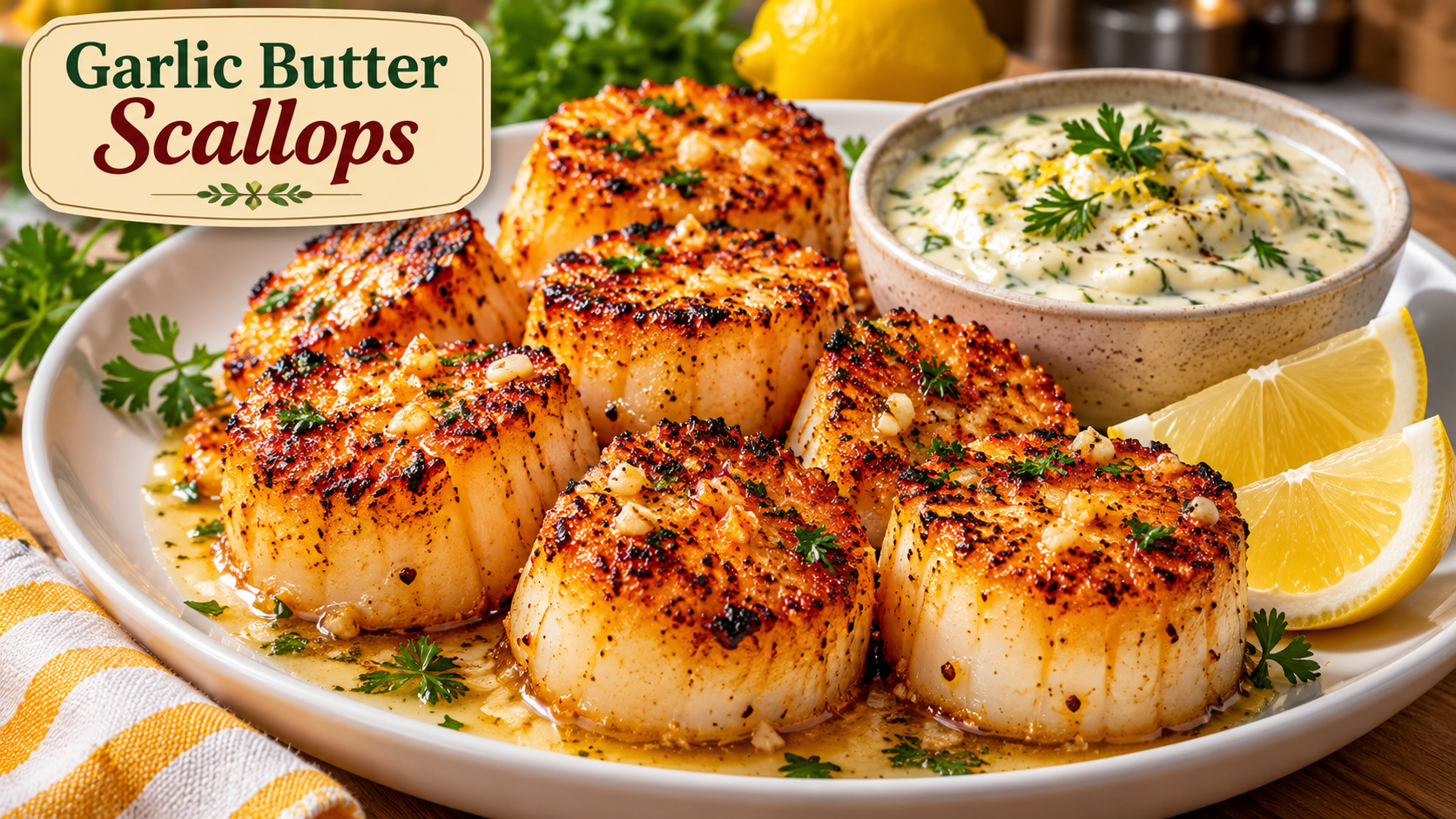
Garlic Butter Seared Scallops with Creamy Lemon Herb Sauce
Garlic butter scallops are a delicious combination of tender seafood, golden caramelized edges, fragrant garlic, and rich buttery flavor. Paired with a creamy lemon herb sauce, this restaurant-inspired dish makes an impressive dinner without requiring complicated ingredients or hours in the kitchen.
The secret to preparing beautiful scallops is removing excess moisture before cooking and using a sufficiently hot skillet. This creates a flavorful golden crust while keeping the inside tender and juicy.
Fresh lemon juice, parsley, dill, and garlic bring a bright, refreshing balance to the richness of the butter and cream. The sauce can be served alongside the scallops for dipping or spooned directly over the finished dish.
Whether you are planning a romantic dinner, preparing a special holiday appetizer, or looking for a quick seafood meal, these garlic butter scallops are an excellent choice. Serve them with roasted vegetables, fluffy rice, creamy mashed potatoes, or a refreshing Mediterranean salad for a satisfying meal.
Recipe Overview
Equipment Needed
Large cast-iron skillet, small saucepan, mixing bowl, kitchen tongs, paper towels, whisk, and measuring spoons.
Description
These garlic butter scallops feature a beautifully browned exterior, a tender interior, and a silky lemon herb cream sauce. Smoked paprika adds warmth and color, while fresh herbs and citrus create a balanced seafood dinner suitable for everyday meals and special occasions.
Ingredients
For the Scallops
-
1½ pounds large sea scallops
-
2 tablespoons olive oil
-
2 tablespoons unsalted butter
-
3 cloves garlic, minced
-
1 teaspoon smoked paprika
-
½ teaspoon garlic powder
-
½ teaspoon salt
-
½ teaspoon freshly ground black pepper
-
1 tablespoon fresh lemon juice
For the Creamy Lemon Herb Sauce
-
1 tablespoon unsalted butter
-
2 cloves garlic, minced
-
½ cup heavy cream
-
¼ cup plain Greek yogurt
-
1 tablespoon fresh lemon juice
-
1 teaspoon lemon zest
-
1 teaspoon Dijon mustard
-
2 tablespoons fresh parsley, finely chopped
-
1 tablespoon fresh dill, finely chopped
-
¼ teaspoon black pepper
-
Salt, to taste
Optional Garnishes
-
Fresh parsley
-
Lemon wedges
-
Chopped chives
-
Freshly cracked black pepper
Ingredient Notes
Sea scallops: Choose large sea scallops rather than smaller bay scallops. Their size makes them easier to sear without overcooking the center.
Dry-packed scallops: These are preferable because they generally contain less added moisture than wet-packed scallops.
Unsalted butter: Using unsalted butter allows you to control the seasoning throughout the recipe.
Smoked paprika: Adds a mild smoky flavor and helps create an appealing golden-red exterior.
Greek yogurt: Adds thickness and a pleasant tang to the cream sauce. Full-fat Greek yogurt works particularly well.
Fresh lemon: Freshly squeezed juice and grated zest provide a brighter flavor than bottled lemon juice alone.
Why You’ll Love This Recipe
-
Quick preparation: The entire meal can be prepared in approximately 25 minutes using thawed scallops.
-
Restaurant-inspired flavor: Garlic, butter, lemon, and fresh herbs create a rich and balanced seafood dish.
-
Simple ingredients: Most seasonings and sauce ingredients are everyday kitchen staples.
-
Versatile serving options: Enjoy the scallops with rice, pasta, vegetables, or salad.
-
Protein-rich seafood: Scallops provide protein with relatively little natural fat before the butter and sauce are added.
-
Alcohol-free preparation: The sauce develops plenty of flavor without requiring cooking wine.
How to Make Garlic Butter Scallops
Step 1 – Prepare the Scallops
If using frozen scallops, thaw them overnight in the refrigerator.
Inspect each scallop and remove the small, tough side muscle if it is still attached. This muscle can become chewy during cooking.
Place the scallops between layers of paper towels and gently pat them dry. Remove as much surface moisture as possible.
Do not skip this step. Excess moisture creates steam in the skillet, preventing the scallops from developing an attractive crust.
Keep the prepared seafood refrigerated while assembling the sauce ingredients.
Step 2 – Season the Scallops
Combine the smoked paprika, garlic powder, salt, and black pepper in a small bowl.
Sprinkle the seasoning evenly over both sides of the scallops just before cooking.
Avoid applying an excessively thick layer of seasoning because ground spices can burn when exposed to high heat.
Prepare the minced garlic, butter, and lemon juice in advance. Scallops cook quickly, so having everything ready makes the process easier.
Step 3 – Prepare the Lemon Herb Sauce
Place a small saucepan over medium-low heat.
Add one tablespoon of butter and allow it to melt. Stir in two minced garlic cloves and cook for approximately 30 seconds until fragrant.
Pour in the heavy cream and whisk gently. Allow the mixture to simmer for three to five minutes, stirring occasionally, until slightly thickened.
Remove the saucepan from the heat. Allow it to cool slightly before whisking in the Greek yogurt, Dijon mustard, lemon juice, lemon zest, parsley, and dill.
Taste and adjust the seasoning with salt and black pepper.
The finished sauce should be smooth, creamy, and thick enough to coat the back of a spoon. Keep it covered while preparing the scallops.
Step 4 – Heat the Skillet
Place a large, heavy-bottomed skillet over medium-high heat.
Add the olive oil and allow it to heat until shimmering but not smoking.
A cast-iron or stainless steel skillet works particularly well for garlic butter scallops because it can maintain sufficient heat during cooking.
Make sure the skillet is large enough to accommodate the scallops without crowding. Otherwise, cook them in separate batches.
Step 5 – Pan-Sear the Scallops
Carefully place the scallops into the hot skillet, leaving space between each piece.
Cook the first side undisturbed for approximately two to three minutes, depending on their thickness.
Avoid moving them repeatedly. Allowing the scallops to maintain contact with the hot cooking surface helps develop an even crust.
Once the underside is golden brown and releases easily, gently turn each scallop using kitchen tongs.
Cook the second side for approximately one to three minutes, adjusting the heat if the spices begin to darken too quickly.
Step 6 – Add the Garlic Butter
Reduce the heat to medium-low.
Add two tablespoons of butter and the remaining three minced garlic cloves.
As the butter melts, gently tilt the skillet and spoon the fragrant butter over the scallops. Continue cooking briefly until the garlic is fragrant and the seafood is cooked through.
Finish with one tablespoon of fresh lemon juice.
Follow the FDA seafood safety guidelines. Scallops should have firm, pearly, opaque flesh when cooked. The FDA generally recommends an internal temperature of 145°F for seafood.
FDA+1
Immediately transfer the cooked scallops to a serving plate to prevent unnecessary additional cooking.
Step 7 – Garnish and Serve
Transfer the creamy lemon herb sauce into a small serving bowl.
Arrange the warm garlic butter scallops around the sauce and drizzle a little remaining garlic butter over the top.
Garnish with fresh parsley, chopped chives, cracked black pepper, and lemon wedges.
Serve immediately while the scallops are warm and the golden exterior retains its texture.
Expert Recipe Tips & Notes
1. Remove Excess Moisture
Dry scallops are essential for proper browning. Even a thin layer of water can cause the seafood to steam rather than sear.
If the scallops release additional moisture after thawing, dry them again immediately before seasoning.
2. Use a Heavy Skillet
A heavy skillet retains heat better when cold seafood is added. This helps prevent the cooking surface from cooling too quickly.
A thin pan may produce uneven results, particularly when cooking several scallops at once.
3. Avoid Overcrowding
Leave enough space around every scallop for moisture to evaporate. Cooking in two batches is better than filling the skillet completely.
If cooking multiple batches, add fresh oil or butter as needed.
4. Add Butter Near the End
Butter can burn over high heat. Begin the searing process with olive oil, then add butter and garlic after reducing the temperature.
This produces a fragrant finish without an unpleasant burnt flavor.
5. Avoid Overcooking
Scallops can become rubbery when cooked for too long. Their actual cooking time depends on size, thickness, and skillet temperature.
Check the thickest scallop rather than relying exclusively on the recommended cooking time.
6. Protect the Cream Sauce
After adding Greek yogurt and lemon juice, avoid boiling the sauce.
Excessive heat can cause the dairy ingredients to separate. If the sauce becomes too thick, gently whisk in a small amount of warm water or cream.
7. Choose Similar-Sized Scallops
Scallops of similar thickness generally cook more evenly. If some pieces are noticeably smaller, remove them from the skillet earlier once fully cooked.
8. Serve Immediately
Garlic butter scallops have their best texture shortly after cooking. Prepare side dishes and serving plates before beginning the searing process.
Easy Recipe Variations
Spicy Cajun Scallops
Replace the smoked paprika and garlic powder with one teaspoon of Cajun seasoning. Add a pinch of cayenne pepper for extra heat.
Reduce the added salt if the seasoning blend already contains sodium.
Mediterranean Garlic Butter Scallops
Replace one tablespoon of the finishing butter with extra-virgin olive oil. Add fresh oregano and parsley, then serve with tomatoes, cucumbers, and olives.
This variation emphasizes fresh Mediterranean-inspired flavors.
Creamy Parmesan Scallops
Whisk two tablespoons of finely grated Parmesan cheese into the warm cream sauce before adding the Greek yogurt.
The cheese adds savory depth and creates a slightly thicker sauce.
Dairy-Free Garlic Scallops
Replace the butter with olive oil or dairy-free butter. Use unsweetened dairy-free cooking cream and plain dairy-free yogurt for the sauce.
Choose products without added sugar or strongly sweet flavors.
Serving Suggestions
Garlic butter scallops pair beautifully with simple sides that complement their rich flavor without overpowering the seafood.
For a light dinner, serve them with roasted asparagus, steamed broccoli, sautéed spinach, or grilled zucchini.
A fresh cucumber, tomato, and avocado salad adds contrasting texture and a refreshing flavor.
For a more substantial meal, serve the scallops over lemon rice, garlic mashed potatoes, creamy risotto, or buttered pasta.
Crusty bread is another excellent accompaniment because it can absorb the remaining garlic butter and lemon herb sauce.
For a dinner party, serve two or three scallops per guest as an appetizer with a small portion of dipping sauce.
Make-Ahead Instructions
The creamy lemon herb sauce can be prepared up to 24 hours in advance.
Transfer it to a clean, airtight container and refrigerate until needed. The herbs and citrus flavors will blend as the sauce rests.
If serving it warm, gently reheat it over low heat while stirring. Do not allow it to boil.
Frozen scallops can be thawed in the refrigerator the night before cooking. Fresh herbs can also be chopped, and the dry seasoning mixture can be prepared ahead of time.
However, do not sear the scallops in advance unless necessary. Cooking them immediately before serving produces the best texture.
Storage and Reheating
Refrigerator Storage
Store leftover scallops and sauce separately in airtight containers at 40°F or below.
Refrigerate within two hours of cooking, or within one hour if the surrounding temperature exceeds 90°F.
Use refrigerated leftovers within three to four days, although the scallops will generally have better texture when eaten sooner.
Freezer Storage
Cooked scallops can be frozen, but their texture may become firmer after thawing and reheating.
For best quality, enjoy them fresh rather than freezing the finished dish.
Freezing the cream and yogurt sauce is not recommended because the dairy ingredients may separate.
Reheating Instructions
Place the scallops in a skillet with a small amount of butter or water.
Cover and gently reheat until the leftovers reach 165°F. Avoid continuing to cook them beyond this point.
Reheat the sauce separately, stirring regularly.
For additional storage and preparation guidance, consult the FDA Safe Food Handling resource.
Frequently Asked Questions
Can I use frozen scallops for this recipe?
Yes. Thaw them completely in the refrigerator and pat them thoroughly dry before cooking.
Why are my garlic butter scallops rubbery?
Overcooking is a common cause of rubbery scallops. Monitor their doneness closely and remove them from the skillet as soon as they are fully cooked.
What is the best pan for searing scallops?
A heavy cast-iron or stainless steel skillet is an excellent choice because it maintains heat and encourages even browning.
Can I make this recipe without heavy cream?
Yes. You can use half-and-half for a lighter sauce, although the finished sauce may be thinner and more sensitive to heat.
What is the difference between dry and wet scallops?
Wet-packed scallops are often treated with moisture-retaining additives. Dry-packed scallops generally release less water during cooking and are easier to brown.
Can I make garlic butter scallops without wine?
Absolutely. Fresh lemon juice, butter, garlic, and herbs provide plenty of flavor without alcohol.
Are garlic butter scallops suitable for a low-carb diet?
This recipe contains relatively few carbohydrates when served without bread, rice, or pasta. Exact carbohydrate content depends on the ingredients and serving size.
Can I use bay scallops instead of sea scallops?
Yes, but bay scallops are much smaller and cook considerably faster. They are better suited to quick sautéing rather than the longer searing method described here.
Servings and Nutrition Information
Estimated nutrition per serving, including sauce 360 calories 23 g Protein 9 g Carbohydrates 26 g Fat Servings 4 Serving size ¼ of the recipe Fiber 0.5 g Sugar 2 g Sodium 950 mg
Nutrition values are approximate ingredient-based estimates, not laboratory measurements. Sodium levels can vary considerably depending on whether the scallops contain added sodium or moisture-retaining ingredients.
Feta and Cranberry Chickpea Salad with Lemon Vinaigrette
https://eawod.online/cranberry-chickpea-salad/
Healthy Salad Dressing – Creamy Garlic and Herb
https://eawod.online/healthy-salad-dressing/
Fresh Cucumber Rounds with Creamy Herb & Garlic Topping
https://eawod.online/fresh-cucumber-rounds-with-creamy-herb/