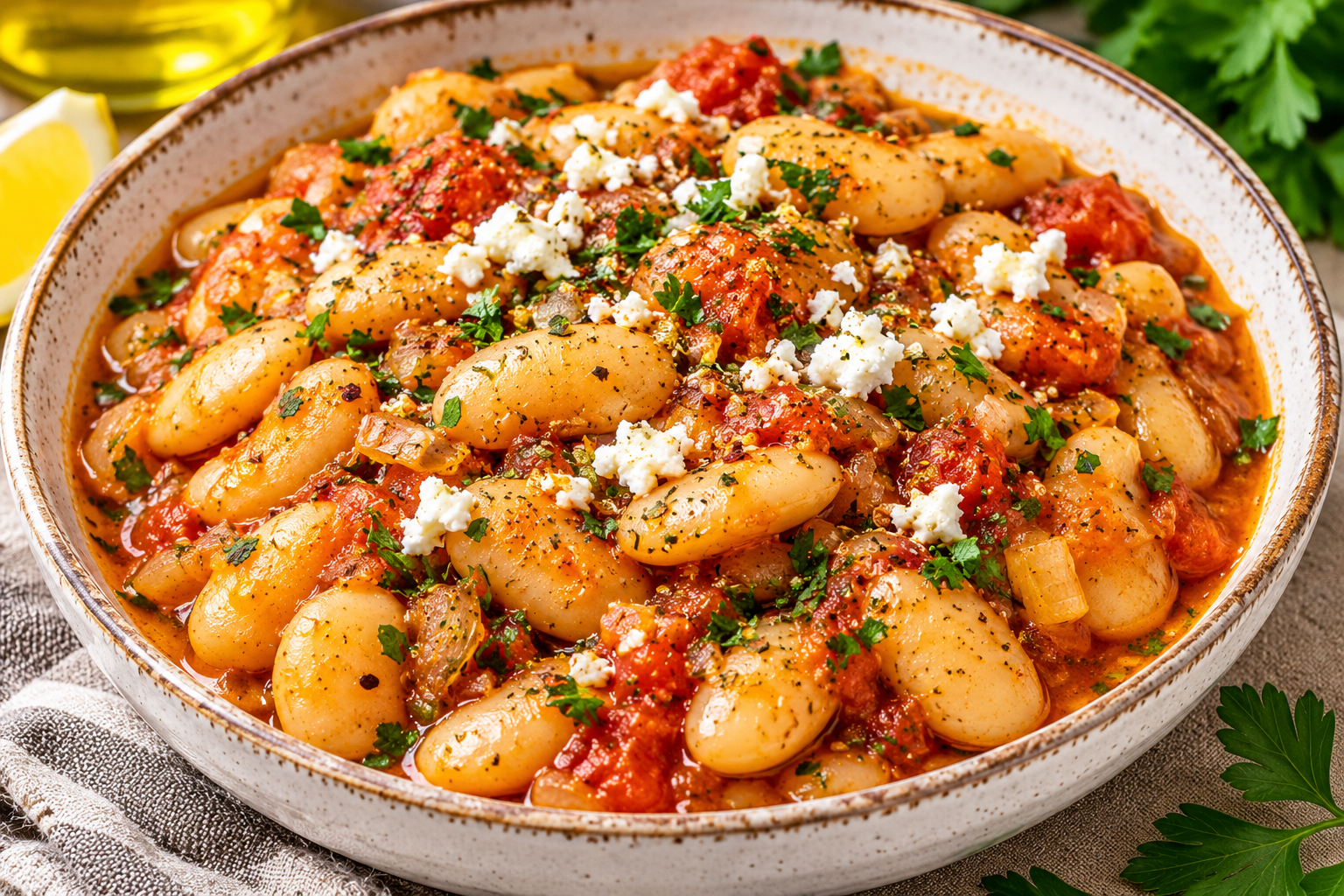
Greek Butter Beans – Easy, Budget-Friendly & Delicious Mediterranean Dinner
Description
Greek Butter Beans are a comforting Mediterranean-inspired dish made with tender, creamy butter beans simmered in a rich tomato-garlic sauce with onions, olive oil, oregano, and fresh herbs. Inspired by traditional Greek Gigantes Plaki, this easy, budget-friendly recipe delivers delicious flavor using simple pantry ingredients. Finished with crumbled feta cheese and fresh parsley, Greek Butter Beans are perfect for a satisfying vegetarian dinner, healthy lunch, or affordable family meal.
Recipe Time
-
Prep Time: 10 minutes
-
Cook Time: 30 minutes
-
Total Time: 40 minutes
-
Servings: 4
Ingredients
For the Greek Butter Beans
-
2 cans (15 oz each) butter beans or large lima beans, drained and rinsed
-
2 tablespoons extra virgin olive oil
-
1 medium yellow onion, finely chopped
-
4 garlic cloves, minced
-
1 medium carrot, finely diced
-
1 can (14.5 oz) diced tomatoes
-
2 tablespoons tomato paste
-
½ cup vegetable broth
-
1 teaspoon dried oregano
-
½ teaspoon smoked paprika
-
½ teaspoon dried thyme
-
¼ teaspoon crushed red pepper flakes (optional)
-
½ teaspoon salt, or to taste
-
¼ teaspoon freshly ground black pepper
-
1 teaspoon honey or maple syrup (optional)
-
1 tablespoon fresh lemon juice
For the Fresh Herb Topping
-
¼ cup fresh parsley, finely chopped
-
2 tablespoons fresh dill, chopped
-
¼ cup crumbled feta cheese
-
1 teaspoon extra virgin olive oil
-
½ teaspoon dried oregano
-
Freshly cracked black pepper
Optional Additions
-
1 cup baby spinach
-
¼ cup sliced Kalamata olives
-
½ cup roasted red bell peppers
-
1 tablespoon capers
-
Fresh basil leaves
-
Extra lemon wedges
Instructions
Step 1: Prepare the Butter Beans
Open the canned butter beans and transfer them to a colander.
Drain the canning liquid completely, then rinse the beans gently under cool running water.
Allow them to drain thoroughly while preparing the remaining ingredients.
Butter beans are naturally creamy and delicate, so avoid rubbing or stirring them aggressively.
For the best Greek Butter Beans, choose large, tender beans that hold their shape when heated.
If using dried butter beans instead, soak and fully cook them until tender before beginning this recipe. Dried beans require additional preparation time.
Step 2: Prepare the Vegetables
Peel the yellow onion and chop it into small, even pieces.
Mince the garlic cloves finely.
Peel the carrot and dice it into small cubes.
Finely chopped vegetables blend beautifully into the tomato sauce, creating a rich consistency without requiring heavy cream or butter.
Carrots also provide a subtle natural sweetness that helps balance the acidity of the tomatoes.
Keep all the prepared ingredients nearby for convenient cooking.
Step 3: Heat the Olive Oil
Place a large skillet or heavy-bottomed saucepan over medium heat.
Add 2 tablespoons of extra virgin olive oil.
Allow the oil to warm gently for approximately 30 seconds.
Avoid overheating the olive oil.
A heavy-bottomed pan helps distribute heat evenly, preventing the tomato sauce from sticking or burning.
Step 4: Sauté the Onion and Carrot
Add the chopped onion and diced carrot to the heated skillet.
Cook for approximately 5–6 minutes, stirring occasionally.
The onion should become soft and translucent, while the carrot begins to tenderize.
This step develops the savory base that gives Greek Butter Beans their comforting homemade flavor.
If the vegetables begin sticking, add a tablespoon of vegetable broth instead of additional oil.
Step 5: Add the Garlic
Add the minced garlic to the softened vegetables.
Stir continuously for approximately 30–60 seconds.
The garlic should become fragrant without turning dark brown.
Burnt garlic can make the sauce taste bitter, so keep the heat moderate.
Fresh garlic is particularly important because it provides much of the savory Mediterranean character of this recipe.
Step 6: Add the Tomato Paste
Stir in 2 tablespoons of tomato paste.
Cook for approximately 1 minute, stirring frequently.
Heating the tomato paste helps deepen its flavor and reduces some of its raw acidity.
The mixture should become slightly darker and more fragrant.
This creates a delicious foundation for the Greek-style tomato sauce.
Step 7: Add the Tomatoes and Seasonings
Pour the canned diced tomatoes into the skillet, including their juices.
Add the vegetable broth.
Sprinkle in the dried oregano, smoked paprika, thyme, black pepper, and optional crushed red pepper flakes.
Add the salt gradually.
Stir thoroughly until everything is evenly combined.
The tomato sauce should have a rich red color with visible herbs, onions, and carrots.
If you prefer a slightly smoother sauce, gently crush some of the tomatoes with a wooden spoon.
Step 8: Simmer the Tomato Sauce
Reduce the heat to medium-low.
Allow the tomato mixture to simmer uncovered for approximately 8–10 minutes.
Stir occasionally to prevent sticking.
During this time, the tomatoes soften, the carrots become more tender, and the seasonings blend together.
If the sauce becomes too thick, add a small splash of vegetable broth.
For an especially balanced flavor, add the optional honey or maple syrup if the tomatoes taste overly acidic.
Step 9: Add the Butter Beans
Carefully add the drained butter beans to the simmering tomato sauce.
Use a large spoon or silicone spatula to fold the beans into the mixture.
Avoid vigorous stirring because the butter beans can break apart easily.
Make sure the beans are evenly coated with the fragrant tomato sauce.
The creamy texture of the beans beautifully complements the slightly chunky vegetables.
Step 10: Simmer Until Tender
Cover the skillet partially and reduce the heat to low.
Allow the Greek Butter Beans to simmer gently for approximately 8–10 minutes.
Stir carefully once or twice during cooking.
The beans should become thoroughly heated and absorb some of the delicious tomato-garlic flavor.
If the mixture looks dry, add 2–3 tablespoons of vegetable broth.
The finished sauce should be thick enough to coat the beans without becoming watery.
Step 11: Add Fresh Lemon Juice
Remove the skillet from the heat.
Drizzle 1 tablespoon of fresh lemon juice over the beans.
Gently stir to combine.
Lemon juice brightens the rich tomato sauce and balances the olive oil and creamy beans.
Taste the sauce and adjust the salt, pepper, or oregano if necessary.
A small additional squeeze of lemon can make the flavors even more refreshing.
Step 12: Finish with Fresh Herbs
Sprinkle the finely chopped parsley and dill over the cooked beans.
Gently fold some of the herbs into the sauce.
Reserve the remaining herbs for garnishing.
Fresh parsley adds a pleasant, earthy freshness, while dill brings a classic Greek-inspired aroma.
If using baby spinach, stir it into the hot beans now and allow it to wilt for approximately 1–2 minutes.
Step 13: Add the Feta Cheese
Transfer the Greek Butter Beans to a large serving bowl.
Sprinkle the crumbled feta cheese evenly over the top.
Drizzle with 1 teaspoon of extra virgin olive oil.
Finish with dried oregano, freshly cracked black pepper, and extra parsley.
Feta adds a creamy, salty contrast to the tomato sauce.
For a dairy-free version, simply omit the feta.
Step 14: Serve Warm
Serve the Greek Butter Beans immediately while warm.
Pair them with crusty whole-grain bread, warm pita, rice, or a fresh cucumber salad.
For a beautiful Mediterranean presentation, serve in a rustic ceramic bowl with lemon wedges on the side.
The finished dish should have creamy beans, a thick tomato sauce, and a generous scattering of fresh herbs.
Tips for the Best Greek Butter Beans
1. Choose Large Butter Beans
Large butter beans or lima beans provide a rich, creamy texture. Their mild flavor absorbs the tomato sauce beautifully.
2. Avoid Overcooking the Beans
Canned butter beans are already cooked. They only need gentle simmering to absorb the flavors.
Cooking them too aggressively may cause them to break apart.
3. Use Extra Virgin Olive Oil
Extra virgin olive oil adds a distinctive Mediterranean flavor. Measure the oil carefully to keep the recipe economical and balanced.
4. Cook the Tomato Paste
Allow the tomato paste to cook briefly with the vegetables before adding the tomatoes.
This enhances the depth of the sauce.
5. Use Fresh Garlic
Freshly minced garlic provides stronger flavor than garlic powder.
However, garlic powder can be used when fresh garlic is unavailable.
6. Simmer Slowly
A gentle simmer allows the sauce to thicken naturally without damaging the delicate beans.
7. Adjust the Sauce Consistency
If the sauce becomes too thick, add a little vegetable broth.
If it looks watery, simmer uncovered for a few additional minutes.
8. Add Lemon at the End
Fresh lemon juice tastes brightest when added after cooking.
It balances the rich tomato sauce and creamy beans.
9. Use Fresh Herbs
Parsley and dill provide freshness that complements the cooked tomatoes.
Fresh basil is another delicious option.
10. Prepare Ahead
Greek Butter Beans taste delicious after resting because the flavors have more time to combine.
Make the dish ahead and reheat gently before serving.
Variations
Traditional Greek-Style Baked Butter Beans
For a variation inspired more closely by Greek Gigantes Plaki, transfer the bean and tomato mixture to a baking dish.
Cover and bake at 375°F (190°C) until bubbling, then uncover briefly to allow the sauce to thicken.
Use fully cooked beans and add a splash of broth if necessary.
The oven develops a richer, more concentrated tomato flavor.
Greek Butter Beans with Spinach
Add 2 cups of fresh baby spinach during the final minutes of cooking.
Stir gently until the spinach becomes tender.
This variation adds extra vegetables and makes the dish more colorful.
Spicy Greek Butter Beans
Increase the crushed red pepper flakes to ½ teaspoon.
You can also add a pinch of cayenne pepper or a finely chopped fresh chili.
The spicy tomato sauce pairs beautifully with the mild, creamy beans.
Greek Butter Beans with Roasted Peppers
Stir in ½ cup chopped roasted red bell peppers.
Roasted peppers provide natural sweetness and a slightly smoky flavor that complements the tomatoes.
Vegan Greek Butter Beans
Omit the feta cheese and replace any honey with maple syrup.
Finish with extra olive oil, parsley, dill, and fresh lemon juice.
This creates a completely plant-based meal using affordable ingredients.
Greek Butter Beans with Olives
Add ¼ cup sliced Kalamata olives during the final few minutes of cooking.
The olives provide extra savory flavor and a delicious Mediterranean character.
Reduce the added salt because olives contain sodium.
Serving Suggestions
Warm Pita Bread: Serve Greek Butter Beans with lightly toasted pita bread for scooping up the delicious tomato sauce.
Crusty Whole-Grain Bread: A slice of rustic bread makes this dish a comforting, affordable dinner.
Brown Rice: Spoon the beans over cooked brown rice for a hearty meal with additional whole grains.
Mediterranean Cucumber Salad: Pair with cucumbers, tomatoes, red onion, parsley, and lemon dressing.
Roasted Vegetables: Serve alongside roasted zucchini, carrots, eggplant, or bell peppers.
Greek Salad: Combine the beans with a traditional-style Greek salad for a colorful Mediterranean dinner.
Baked Potatoes: Spoon the warm beans over baked potatoes and garnish with parsley and feta.
Grilled Chicken or Fish: Serve a smaller portion alongside grilled chicken or fish for a protein-rich meal.
Frequently Asked Questions (FAQ)
1. What are Greek Butter Beans?
Greek Butter Beans are a Mediterranean-inspired preparation of large, creamy beans cooked in a flavorful tomato sauce with olive oil, onions, garlic, and herbs.
The recipe is inspired by the traditional Greek dish known as Gigantes Plaki.
2. Can I use canned butter beans?
Yes. Canned butter beans are convenient, affordable, and significantly reduce preparation time.
Drain and rinse them before cooking.
3. Can I use dried butter beans?
Absolutely. Soak dried butter beans and cook them fully until tender before adding them to the tomato sauce.
The soaking and cooking process requires additional time.
4. What can I substitute for butter beans?
Large lima beans are an excellent substitute.
Cannellini beans or other large white beans also work, although their texture may be slightly different.
5. Are Greek Butter Beans healthy?
Butter beans provide plant-based protein, fiber, and several minerals.
When prepared with vegetables, olive oil, and a moderate amount of salt, they can be part of a balanced Mediterranean-style eating plan.
6. Are Greek Butter Beans suitable for weight management?
They can fit into a weight-management eating plan because beans contain fiber and protein that contribute to fullness.
However, portion sizes and overall daily energy intake remain important.
7. Can I prepare this recipe ahead of time?
Yes. Greek Butter Beans are an excellent make-ahead meal.
Prepare the recipe, allow it to cool, and refrigerate it in an airtight container.
8. How long do Greek Butter Beans last in the refrigerator?
Store leftovers in an airtight container at 40°F (4°C) or below for up to 3–4 days.
Reheat thoroughly before serving.
9. Can I freeze Greek Butter Beans?
Yes. Allow the cooked beans to cool, then transfer them to freezer-safe containers.
Freeze for approximately 2–3 months for the best quality.
Thaw in the refrigerator before reheating.
10. How do I reheat Greek Butter Beans?
Place the beans in a saucepan over medium-low heat.
Add a small splash of water or vegetable broth if the sauce has thickened.
Stir gently until thoroughly heated.
11. Can I make Greek Butter Beans without feta?
Yes. The recipe is delicious without feta cheese.
Add extra lemon juice and fresh herbs for a flavorful dairy-free version.
12. What makes this recipe budget-friendly?
This recipe relies on affordable pantry staples such as canned beans, tomatoes, onions, carrots, garlic, and dried herbs.
Using store-brand ingredients and seasonal vegetables can further reduce the cost.
Nutrition Information
Approximate values per serving, based on four servings with canned butter beans, tomato sauce, olive oil, and feta cheese.
| Nutrient | Approximate Amount |
|---|---|
| Calories | 280–340 kcal |
| Protein | 11–14 g |
| Carbohydrates | 32–40 g |
| Total Fat | 12–16 g |
| Saturated Fat | 2–4 g |
| Fiber | 9–12 g |
| Sugar | 6–9 g |
| Sodium | 450–650 mg |
| Iron | 2–4 mg |
Nutrition values are estimates and vary depending on the bean brand, feta cheese, olive oil, and portion sizes.