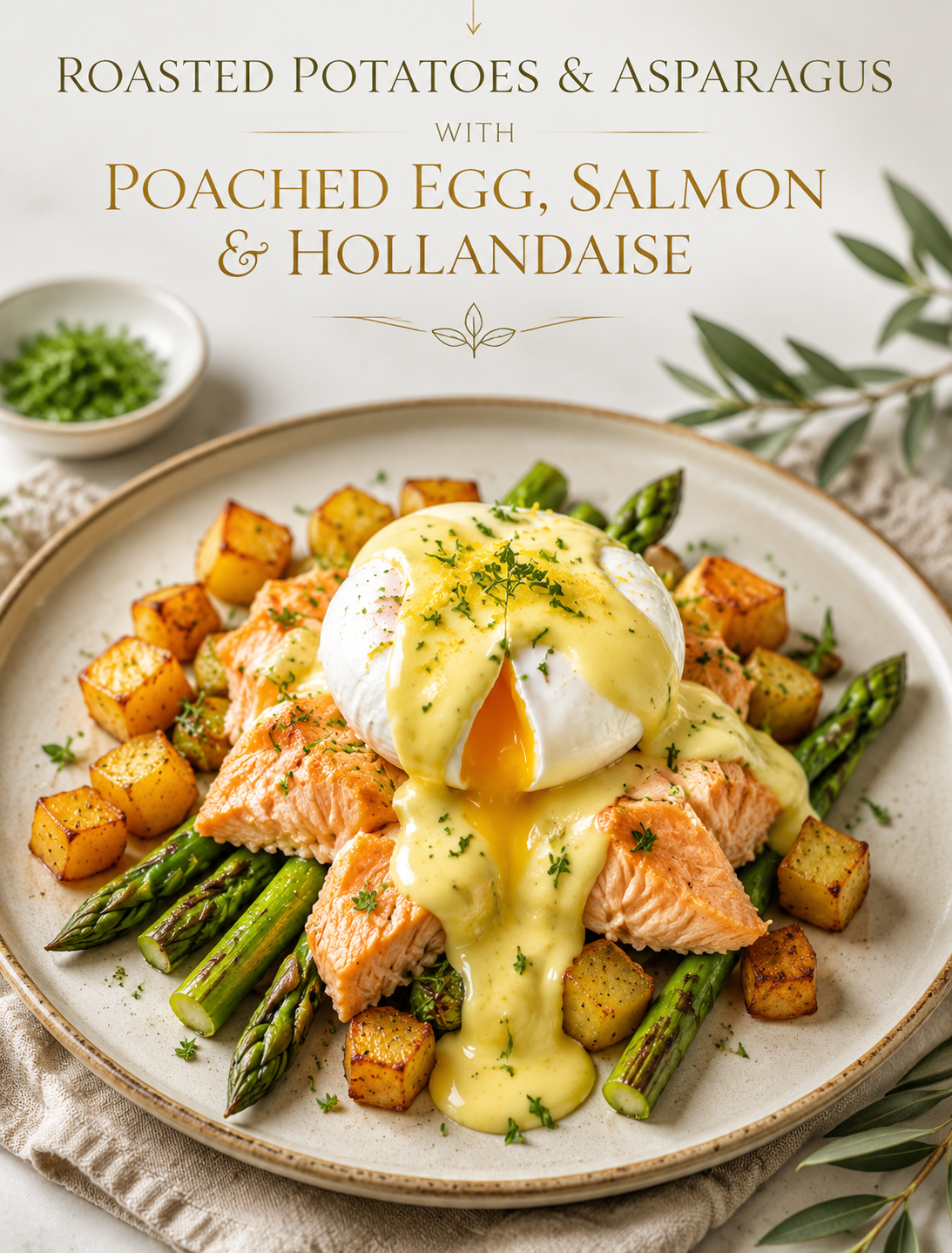
Roasted Potatoes & Asparagus with Poached Egg, Salmon & Hollandaise
Roasted Potatoes & Asparagus with Poached Egg, Salmon & Hollandaise is an elegant, restaurant-quality meal that brings together simple ingredients in a beautifully balanced dish. Crispy golden potatoes provide a hearty foundation, while tender roasted asparagus adds freshness and a subtle earthy flavor. Perfectly seasoned salmon delivers rich, flaky protein, and a delicately poached egg creates a luscious center that blends beautifully with the silky homemade hollandaise sauce. Every bite offers a delicious combination of crispy, creamy, savory, and buttery textures.
Although this recipe looks sophisticated enough for a special brunch or weekend gathering, it is surprisingly approachable for home cooks. Each component can be prepared step by step, making the process manageable even for beginners. The roasted vegetables can cook while you prepare the salmon, and the hollandaise sauce comes together just before serving, ensuring everything reaches the table fresh and warm.
This meal is naturally rich in protein, healthy fats, vitamins, and minerals. Salmon provides heart-healthy omega-3 fatty acids, asparagus contributes fiber and antioxidants, while eggs offer high-quality protein and essential nutrients. Whether you’re preparing an impressive brunch, a holiday breakfast, a Mother’s Day meal, Easter brunch, or a light yet satisfying dinner, this recipe is guaranteed to impress both family and guests.
The bright lemon notes, creamy hollandaise, flaky salmon, and perfectly roasted vegetables combine into a dish that tastes luxurious without requiring expensive ingredients or professional cooking skills.
Prep Time: 15 minutes
Cook Time: 30 minutes
Total Time: 45 minutes
Ingredients:
For the Roasted Potatoes & Asparagus
- 2 medium Yukon Gold or red potatoes, diced into bite-sized pieces
- 1 tablespoon olive oil
- ½ teaspoon salt
- ½ teaspoon freshly ground black pepper
- ½ teaspoon garlic powder
- ½ teaspoon smoked paprika
- 1 bunch fresh asparagus, woody ends trimmed
- 1 teaspoon lemon zest (optional)
- 1 tablespoon chopped fresh parsley (for garnish)
For the Salmon
- 2 salmon fillets (4–5 ounces each)
- 1 tablespoon olive oil
- ½ teaspoon salt
- ½ teaspoon black pepper
- ½ teaspoon garlic powder
- ½ teaspoon dried dill or dried thyme
- ½ teaspoon paprika (optional)
- Lemon wedges for serving
For the Poached Eggs
- 2 large eggs
- 1 tablespoon white vinegar
- Water for poaching
For the Hollandaise Sauce
- 2 egg yolks
- ½ cup light olive oil or melted unsalted butter
- 1 tablespoon fresh lemon juice
- ½ teaspoon Dijon mustard (optional)
- Pinch of salt
- Pinch of cayenne pepper
- Pinch of white pepper (optional)
Instructions:
Step 1: Prepare the Oven
Preheat your oven to 425°F (220°C). Line a large baking sheet with parchment paper or lightly grease it with olive oil. Preheating ensures the potatoes begin roasting immediately, helping them develop a crisp, golden exterior while remaining fluffy inside.
Step 2: Season the Potatoes
Wash and dice the potatoes into evenly sized pieces so they cook uniformly. Place them in a large mixing bowl and drizzle with olive oil. Sprinkle over the salt, black pepper, garlic powder, and smoked paprika. Toss thoroughly until every piece is evenly coated with seasoning.
Spread the potatoes onto the prepared baking sheet in a single layer. Avoid overcrowding the pan, as this causes steaming instead of roasting.
Roast for 20 minutes, turning the potatoes halfway through cooking to promote even browning.
Step 3: Roast the Asparagus
While the potatoes roast, rinse the asparagus and trim away the tough woody ends. If the stalks are thick, cut them into halves.
After the potatoes have roasted for 20 minutes, add the asparagus to the baking sheet. Drizzle lightly with olive oil and season with a pinch of salt and pepper. Toss gently.
Continue roasting for another 8–10 minutes, until the asparagus becomes tender with lightly caramelized tips while the potatoes finish turning crisp and golden.
Sprinkle the vegetables with fresh lemon zest once removed from the oven for extra brightness.
Step 4: Cook the Salmon
Pat the salmon fillets dry using paper towels. Removing excess moisture helps develop a beautiful golden crust.
Brush each fillet with olive oil before seasoning both sides with salt, pepper, garlic powder, dill, and paprika.
Heat a large skillet over medium heat.
Add the olive oil and place the salmon skin-side down (if using skin-on fillets).
Cook undisturbed for 4–5 minutes, allowing the fish to develop a crisp crust.
Carefully flip and cook another 3–4 minutes, depending on thickness, until the salmon flakes easily with a fork.
Alternatively, bake the salmon at 400°F (200°C) for 12–15 minutes.
Once cooked, gently flake the salmon into large chunks.
Step 5: Prepare the Poaching Water
Fill a medium saucepan with water and bring it to a gentle simmer rather than a rolling boil.
Add the vinegar. The vinegar helps the egg whites coagulate quickly, producing beautifully shaped poached eggs.
Crack each egg into separate small bowls.
Using a spoon, gently stir the water to create a slow whirlpool.
Carefully slide one egg into the center.
Cook for 3–4 minutes for a runny yolk or slightly longer for a firmer center.
Lift the egg with a slotted spoon and drain on paper towels.
Repeat with the second egg.
Step 6: Make the Hollandaise Sauce
Fill a saucepan with about one inch of water and bring it to a gentle simmer.
Place a heatproof bowl over the pan, ensuring the bowl does not touch the water.
Add the egg yolks and lemon juice.
Whisk constantly until the mixture begins to thicken slightly.
Very slowly drizzle in the olive oil (or melted butter), whisking continuously.
The sauce should gradually become thick, creamy, and smooth.
Whisk in Dijon mustard if using.
Season with salt, cayenne pepper, and white pepper.
Keep warm until ready to serve.
If the sauce becomes too thick, whisk in a teaspoon of warm water.
Step 7: Assemble the Dish
Divide the roasted potatoes and asparagus between two serving plates.
Scatter generous chunks of flaked salmon over the vegetables.
Carefully place one poached egg on top of each serving.
Generously spoon the warm hollandaise over the egg and salmon.
Finish with chopped parsley, lemon zest, cracked black pepper, and fresh lemon wedges.
Serve immediately while everything is hot.
Serving Suggestions
This beautiful meal pairs wonderfully with:
- Fresh sourdough bread
- Whole-grain toast
- Garlic artisan bread
- Mixed green salad
- Fresh fruit salad
- Roasted cherry tomatoes
- Sparkling water with lemon
- Fresh orange juice
- Mimosa for brunch
- Iced herbal tea
Recipe Tips
- Cut potatoes into equal-sized pieces for even roasting.
- Always pat salmon dry before seasoning.
- Do not overcrowd the baking tray.
- Fresh asparagus gives the best texture.
- Keep poaching water at a gentle simmer.
- Fresh lemon juice makes hollandaise taste much brighter than bottled juice.
- Whisk hollandaise continuously to prevent scrambling.
- Warm serving plates help keep the food hot longer.
- Prepare all ingredients before beginning for smoother cooking.
- Garnish just before serving for maximum freshness.
Variations
Smoked Salmon Version
Replace cooked salmon with smoked salmon for an elegant brunch option.
Vegetarian Version
Replace salmon with grilled mushrooms, roasted chickpeas, or avocado slices.
Spicy Version
Add chili flakes to the potatoes and a dash of hot sauce to the hollandaise.
Mediterranean Version
Top with crumbled feta cheese, olives, cherry tomatoes, and fresh basil.
Low-Carb Version
Replace potatoes with roasted cauliflower or zucchini.
Storage
Store each component separately in airtight containers.
- Potatoes and asparagus: up to 4 days
- Salmon: up to 3 days
- Hollandaise: best eaten fresh, but can be refrigerated for 1 day
- Poached eggs: refrigerate in cold water for up to 24 hours
Reheating
Reheat potatoes and asparagus in a 400°F (200°C) oven for about 8 minutes.
Warm salmon gently in a skillet or microwave at low power.
Avoid microwaving hollandaise, as it may separate. Instead, warm it gently over a double boiler while whisking.
Poached eggs can be reheated by placing them in warm water for about 1 minute.
Frequently Asked Questions
Can I make hollandaise ahead of time?
Hollandaise is best served immediately. If necessary, keep it warm for up to 30 minutes over barely warm water while whisking occasionally.
Can I use frozen salmon?
Yes. Thaw completely in the refrigerator before cooking and pat dry before seasoning.
Can I use sweet potatoes?
Absolutely. Sweet potatoes provide a sweeter flavor and additional nutrients while roasting beautifully.
Why did my poached eggs fall apart?
The water was likely boiling too vigorously. Maintain only a gentle simmer and use fresh eggs for the best results.
Can I bake everything together?
The vegetables and salmon can be baked simultaneously on separate sections of the baking tray. Prepare the eggs and hollandaise just before serving.
Is this recipe suitable for meal prep?
Yes. Prepare the vegetables and salmon ahead of time, then make fresh poached eggs and hollandaise before serving for the best quality.
Nutrition (Approx. Per Serving)
Calories: 620 kcal
Protein: 40 g
Fat: 40 g
Carbohydrates: 30 g
Fiber: 5 g
Sugar: 3 g
Sodium: 500 mg
Cholesterol: 310 mg
Omega-3 Fatty Acids: Approximately 2 g
Vitamin C: 35% DV
Vitamin A: 20% DV
Calcium: 10% DV
Iron: 15% DV
This elegant brunch recipe delivers a wonderful balance of lean protein, healthy fats, vibrant vegetables, and satisfying carbohydrates, making it a wholesome and impressive meal for both everyday dining and special occasions.