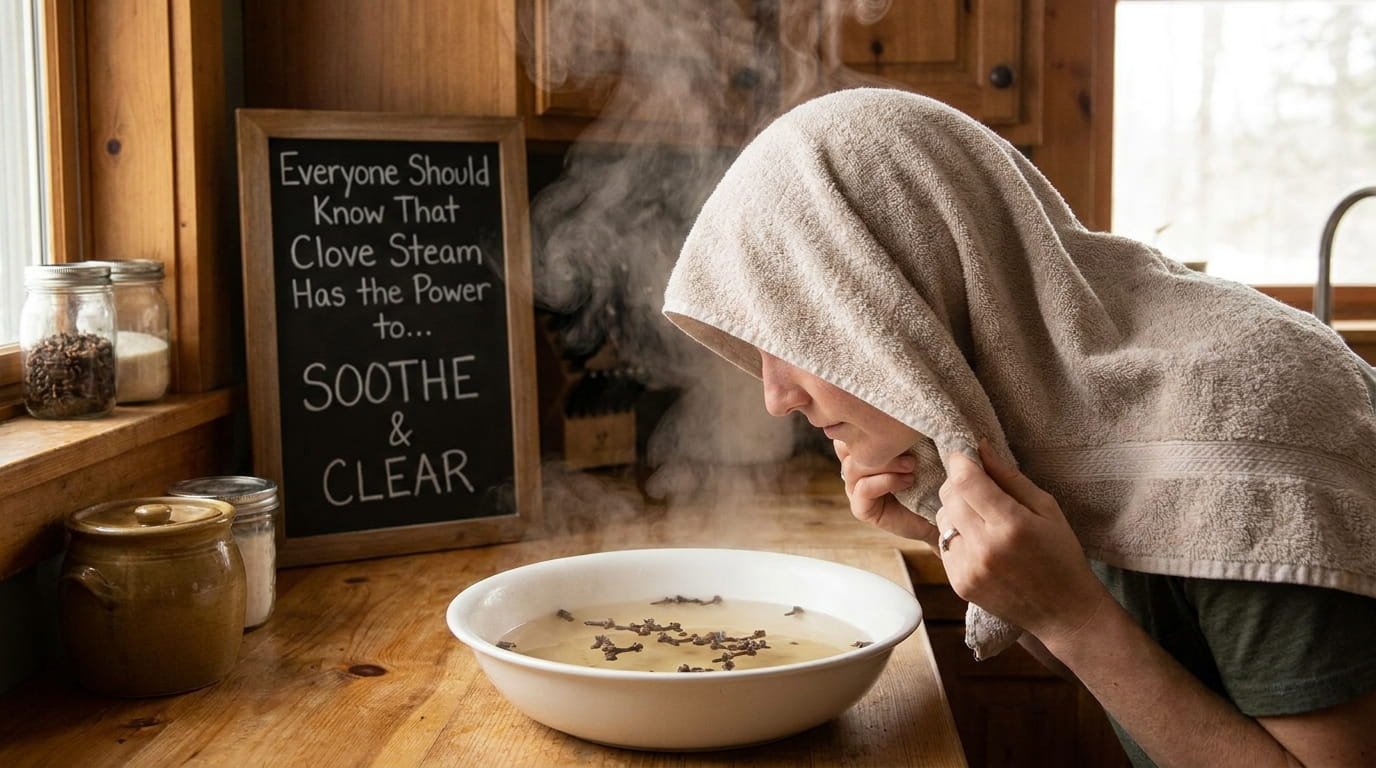
Everyone Should Know That Clove Steam Has the Power to Ease Congestion Naturally
Discover how clove steam inhalation may help ease congestion and support easy breathing. Learn the simple steps for this cozy home remedy.
There’s something deeply comforting about leaning over a bowl of warm, spiced steam when your head feels heavy and your nose won’t stop running. My grandmother swore by clove steam whenever anyone in the family caught a cold, and years later, I still reach for it first before anything else in the medicine cabinet.
Clove steam isn’t a miracle cure, but this simple ritual has been used for generations to help open up stuffy sinuses and make breathing feel a little easier. It’s warm, it’s fragrant, and it takes just a few minutes to prepare. Here’s everything you need to know about making it at home.
Why This Remedy Is Worth Trying
- Simple and affordable — cloves and hot water are all you really need
- A cozy, calming ritual — the warmth and aroma alone can feel soothing when you’re under the weather
- Traditionally used for congestion — cloves have long been part of home remedies for stuffy noses and scratchy throats
- No special equipment required — a bowl, a towel, and a stove are enough to get started
- Pairs well with other comfort remedies — think herbal tea, honey, and rest
What You’ll Need
- 4–5 cups water (roughly 1 liter)
- 1 tbsp whole cloves (about 6 g)
- Optional: a few fresh or dried eucalyptus leaves or 2–3 drops eucalyptus oil
- Optional: a small piece of fresh ginger, sliced
- A large heatproof bowl
- A clean towel
Step-by-Step Instructions
- Boil the water. Bring 4–5 cups of water to a rolling boil in a pot on the stove. Using enough water helps produce a good amount of steam that will last through your session.
- Add the cloves. Drop the whole cloves into the boiling water and let them simmer for 3–4 minutes. This gives the water time to pick up the warm, spiced aroma cloves are known for.
- Add optional extras. If you’re using eucalyptus leaves or ginger, add them now and let everything simmer together for another 2 minutes. These additions can make the steam feel even more soothing.
- Carefully pour into a bowl. Turn off the heat and carefully pour the hot water into a large heatproof bowl. Let it sit for about a minute so the steam isn’t scalding hot before you lean over it.
- Drape a towel over your head. Sit comfortably, lean over the bowl at a safe distance, and drape a towel over your head to trap the steam. Keep your face far enough away to avoid any burns from the hot vapor.
- Breathe slowly and gently. Close your eyes and breathe in through your nose for 5–10 minutes, taking breaks if the steam feels too intense. Stop immediately if you feel any discomfort or dizziness.
Pro Tips & Precautions
- Keep a safe distance. Stay at least 12 inches away from the hot water to avoid steam burns, especially with children or sensitive skin.
- Never do this with young children unsupervised. Steam inhalation should always be supervised closely with kids, and it’s generally not recommended for infants.
- This is a comfort remedy, not a medical treatment. Clove steam may help you feel more comfortable, but it isn’t a substitute for medical care if symptoms are severe or persistent.
- Check with a doctor first if you have asthma or respiratory conditions. Steam inhalation isn’t right for everyone, so it’s worth checking with a healthcare provider if you have an underlying condition.
Variations
- Extra Soothing Version: Add a cinnamon stick along with the cloves for an even warmer, more comforting aroma.
- Minty Version: Swap eucalyptus for a few fresh mint leaves for a cooling sensation alongside the warmth of the cloves.
- Tea Pairing Version: Sip a warm cup of ginger or chamomile tea while doing your steam session for double the comfort.
When to Use This Remedy
Clove steam is best used when you’re dealing with a stuffy nose, mild congestion, or that heavy, foggy feeling that comes with a cold. Many people find it especially comforting in the evening, right before settling in for rest. It pairs naturally with other cold-weather comfort habits like warm soup, herbal tea, and extra sleep.
Storage Notes
There’s nothing to store here since clove steam is meant to be used fresh and immediately after boiling. If you have leftover clove-infused water, you can strain it and sip it warm as a mild clove tea, but don’t save it for a second steam session, since it loses heat and potency quickly.
Frequently Asked Questions
Does clove steam actually help with congestion?
Many people find the warmth and moisture from steam inhalation comforting for a stuffy nose, and cloves add a pleasant aroma, though results can vary and it isn’t a clinically proven treatment.
Is it safe to do clove steam every day?
Occasional use is generally considered safe for most healthy adults, but doing it daily for extended periods isn’t necessary and may dry out your skin or airways.
Can I use ground cloves instead of whole cloves?
Whole cloves work better since ground cloves can create a gritty residue in the water and are harder to strain out cleanly.
Is clove steam safe during pregnancy?
It’s best to check with your doctor before trying any steam inhalation remedy during pregnancy, just to be on the safe side.
How is this different from just using a humidifier?
A humidifier adds gentle moisture to a whole room over time, while a clove steam session is a more concentrated, short-term burst of warm, aromatic moisture aimed directly at easing stuffiness.