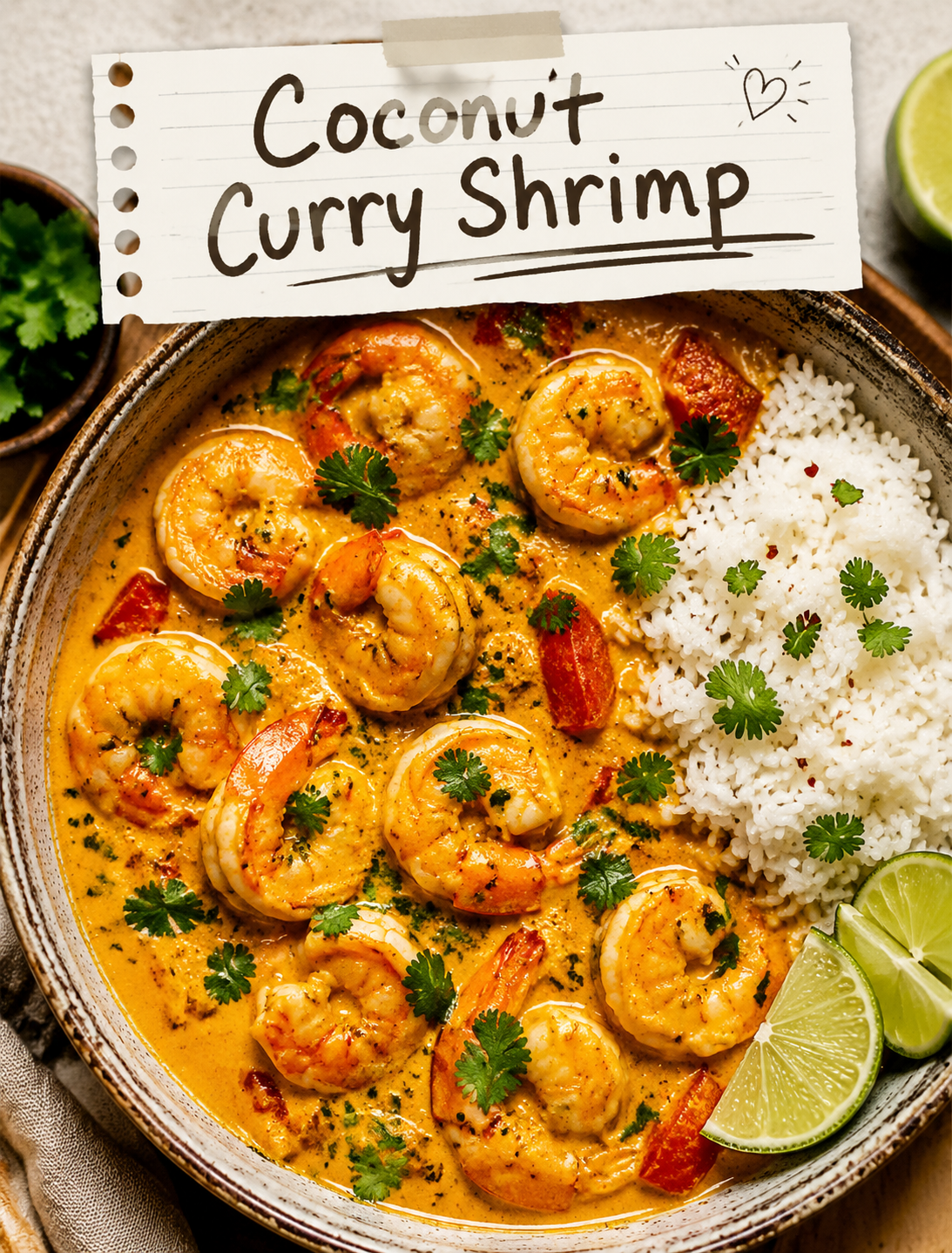
Coconut Curry Shrimp
If you’re looking for a quick, restaurant-quality seafood dinner that delivers bold flavors with minimal effort, this Coconut Curry Shrimp is the perfect recipe. Tender, juicy shrimp are gently simmered in a luxuriously creamy coconut curry sauce infused with fragrant garlic, fresh ginger, warm spices, and a touch of lime for brightness. Every spoonful offers the perfect balance of savory, creamy, slightly sweet, and mildly spicy flavors that make this dish incredibly comforting and satisfying.
One of the best things about Coconut Curry Shrimp is how quickly it comes together. In less than 30 minutes, you can transform simple pantry ingredients into a vibrant meal that tastes like it came from your favorite Thai or Indian-inspired restaurant. The rich coconut milk creates a silky sauce while aromatic curry powder, turmeric, cumin, and paprika build layers of flavor that perfectly complement the natural sweetness of shrimp.
This versatile recipe is ideal for busy weeknights, elegant dinner parties, meal prep, or whenever you’re craving something warm and comforting without spending hours in the kitchen. Serve it over fluffy jasmine rice, fragrant basmati rice, coconut rice, or alongside warm naan bread to soak up every drop of the delicious curry sauce. Fresh cilantro, basil, and a squeeze of lime complete the dish with refreshing freshness.
Whether you’re an experienced cook or just beginning your culinary journey, this foolproof recipe is easy to follow and consistently delivers amazing results.
Prep Time: 10 minutes
Cook Time: 15 minutes
Total Time: 25 minutes
Ingredients:
For the Shrimp
- 1 pound (450g) large shrimp, peeled and deveined
- 1 tablespoon coconut oil (or olive oil)
- ¼ teaspoon salt
- ¼ teaspoon black pepper
For the Coconut Curry Sauce
- 1 tablespoon coconut oil
- 1 small onion, finely chopped
- 3 garlic cloves, minced
- 1-inch fresh ginger, grated
- 1 tablespoon curry powder
- ½ teaspoon ground turmeric
- ½ teaspoon ground cumin
- ½ teaspoon paprika
- ¼ teaspoon cayenne pepper (optional)
- 1 can (14 ounces) full-fat coconut milk
- ½ cup diced tomatoes
- 1 tablespoon soy sauce or fish sauce
- 1 teaspoon honey or brown sugar
- ½ teaspoon salt (adjust to taste)
- ¼ teaspoon black pepper
- 1 tablespoon fresh lime juice
- ¼ cup chopped fresh cilantro or basil
Optional Vegetables
- 1 cup spinach
- ½ cup sliced bell peppers
- ½ cup snap peas
- ½ cup zucchini
- ½ cup mushrooms
For Serving
- Steamed jasmine rice
- Basmati rice
- Coconut rice
- Warm naan bread
- Fresh cilantro
- Lime wedges
Instructions:
Step 1: Prepare the Shrimp
Pat the shrimp completely dry using paper towels. Removing excess moisture helps the shrimp sear beautifully instead of steaming. Season both sides with salt and black pepper.
Heat one tablespoon coconut oil in a large skillet over medium-high heat until shimmering. Arrange the shrimp in a single layer, making sure not to overcrowd the pan. Cook for approximately 1–2 minutes per side until they turn pink and opaque.
Avoid overcooking, as shrimp become rubbery very quickly. Remove them immediately from the skillet and transfer to a plate. They will finish cooking later in the curry sauce.
Step 2: Cook the Aromatics
Reduce the heat to medium.
Add another tablespoon of coconut oil if needed.
Add the chopped onion and sauté for 3–4 minutes until soft and translucent.
Stir in the minced garlic and grated ginger. Cook for another 30–45 seconds until fragrant.
These fresh aromatics create the flavorful foundation of the curry.
Step 3: Toast the Spices
Add the curry powder, turmeric, cumin, paprika, and cayenne pepper.
Cook the spices for about 30 seconds while stirring continuously.
Toasting the spices releases their essential oils, deepens their flavor, and gives the curry a richer aroma.
Your kitchen should begin smelling wonderfully warm and fragrant.
Step 4: Build the Curry Sauce
Pour in the coconut milk while stirring continuously to combine everything smoothly.
Add:
- Diced tomatoes
- Soy sauce or fish sauce
- Honey or brown sugar
- Salt
- Black pepper
Mix thoroughly.
Bring the sauce to a gentle simmer—not a rapid boil.
Allow it to cook for 6–8 minutes, stirring occasionally.
During this time, the sauce thickens naturally while the spices fully develop.
Step 5: Add Vegetables (Optional)
If using vegetables such as spinach, bell peppers, mushrooms, zucchini, or snap peas, stir them into the simmering sauce now.
Cook for 3–5 minutes until they become tender while still maintaining their vibrant color.
Adding vegetables makes the curry even more nutritious and satisfying.
Step 6: Return the Shrimp
Add the cooked shrimp back into the skillet.
Gently stir to coat every shrimp with the creamy coconut curry sauce.
Cook for only 1–2 minutes.
Do not overcook the shrimp.
Remove the skillet from heat.
Step 7: Finish with Lime
Stir in the fresh lime juice.
Taste the sauce and adjust the seasoning if necessary.
If you’d like more spice, add extra cayenne or sliced fresh chili.
For extra richness, stir in two tablespoons coconut cream.
Finally, sprinkle chopped cilantro or basil over the top.
Step 8: Serve
Spoon the Coconut Curry Shrimp over warm jasmine rice or basmati rice.
Serve with naan bread to soak up every bit of the flavorful sauce.
Finish with extra cilantro and fresh lime wedges.
Serve immediately while hot.
Why You’ll Love This Recipe
- Ready in under 30 minutes.
- Rich, creamy, and comforting.
- Packed with protein.
- Naturally gluten-free when using gluten-free soy sauce.
- Easily customizable with vegetables.
- Great for meal prep.
- Restaurant-quality flavors using simple ingredients.
- Family-friendly and beginner-friendly.
- Perfect for busy weeknights.
- Delicious leftovers.
Expert Tips
- Use large shrimp for the juiciest texture.
- Fresh ginger provides much better flavor than powdered ginger.
- Full-fat coconut milk creates the creamiest sauce.
- Never boil coconut milk aggressively; gentle simmering prevents separation.
- Cook shrimp only until pink.
- Toasting spices before adding liquid significantly enhances flavor.
- Fresh lime juice should always be added at the end to preserve its brightness.
- Fresh herbs dramatically improve the finished dish.
- Taste before serving and balance flavors with additional salt, lime, or honey if needed.
- If the curry becomes too thick, add a splash of chicken broth or water.
Recipe Variations
Chicken Coconut Curry
Replace shrimp with diced chicken breast or thighs.
Cook chicken thoroughly before making the sauce.
Salmon Coconut Curry
Large salmon cubes work beautifully in this creamy curry.
Vegetarian Version
Replace shrimp with:
- Chickpeas
- Tofu
- Cauliflower
- Sweet potatoes
- Mixed vegetables
Extra Spicy
Add:
- Fresh Thai chilies
- Cayenne pepper
- Chili flakes
- Red curry paste
Mild Version
Reduce curry powder slightly and omit cayenne pepper.
Serving Suggestions
This Coconut Curry Shrimp pairs wonderfully with:
- Jasmine rice
- Basmati rice
- Brown rice
- Coconut rice
- Garlic naan
- Roti
- Quinoa
- Rice noodles
- Cauliflower rice
- Steamed broccoli
- Roasted vegetables
- Cucumber salad
- Mango salad
Storage
Allow leftovers to cool completely before storing.
Refrigerate in an airtight container for up to 3 days.
The flavors become even richer overnight.
Freezing
The sauce freezes well for up to 2 months.
Because shrimp can become slightly chewy after freezing and reheating, many cooks prefer freezing only the sauce and adding freshly cooked shrimp when serving.
Reheating
Warm gently over medium-low heat on the stovetop.
Add a splash of coconut milk or water if the sauce has thickened too much.
Avoid boiling the shrimp during reheating to maintain a tender texture.
Microwave in 30-second intervals, stirring between each interval until heated through.
Nutritional Benefits
Shrimp is an excellent source of lean protein while remaining relatively low in calories. It also provides selenium, iodine, vitamin B12, phosphorus, and omega-3 fatty acids that support heart, brain, and thyroid health.
Coconut milk contributes healthy fats that create the dish’s creamy texture and satisfying richness.
Garlic and ginger are known for their antioxidant and anti-inflammatory properties, while turmeric contains curcumin, a natural compound widely studied for its potential health benefits. Fresh herbs such as cilantro and basil add vitamins, minerals, and refreshing flavor without extra calories.
When served with rice and vegetables, this meal becomes a balanced combination of protein, healthy fats, fiber, and carbohydrates.
Nutrition (Approx. Per Serving)
Calories: 320
Protein: 28g
Carbohydrates: 12g
Fat: 18g
Saturated Fat: 11g
Fiber: 2g
Sugar: 5g
Cholesterol: 190mg
Sodium: 600mg
Potassium: 520mg
Vitamin A: 12% DV
Vitamin C: 18% DV
Calcium: 8% DV
Iron: 15% DV
Frequently Asked Questions:
Can I use frozen shrimp?
Yes. Thaw frozen shrimp overnight in the refrigerator or place them in a bowl of cold water for 10–15 minutes before cooking. Pat them dry thoroughly to achieve a good sear.
Can I substitute coconut milk?
Yes, although the flavor and texture will change. Cashew cream, heavy cream, evaporated milk, or Greek yogurt can be used, but coconut milk provides the signature richness and tropical flavor of this dish.
How can I make the curry thicker?
Simmer the sauce a few extra minutes to naturally reduce it. For a quicker method, whisk 1 teaspoon cornstarch with 2 tablespoons cold water and stir it into the simmering sauce until thickened.
Can I prepare this ahead of time?
Absolutely. The curry sauce can be made up to two days in advance and refrigerated. For the best texture, cook the shrimp fresh and add them to the reheated sauce just before serving.
Is this recipe spicy?
As written, it has a mild, family-friendly warmth. Increase the heat with cayenne pepper, fresh chilies, or red curry paste if you enjoy a spicier curry.
What vegetables work best in this curry?
Bell peppers, spinach, zucchini, mushrooms, broccoli, snap peas, green beans, carrots, and baby corn all pair beautifully with the creamy coconut curry sauce.
Can I make it dairy-free and gluten-free?
Yes. The recipe is naturally dairy-free. To keep it gluten-free, simply use a certified gluten-free soy sauce or tamari instead of regular soy sauce.