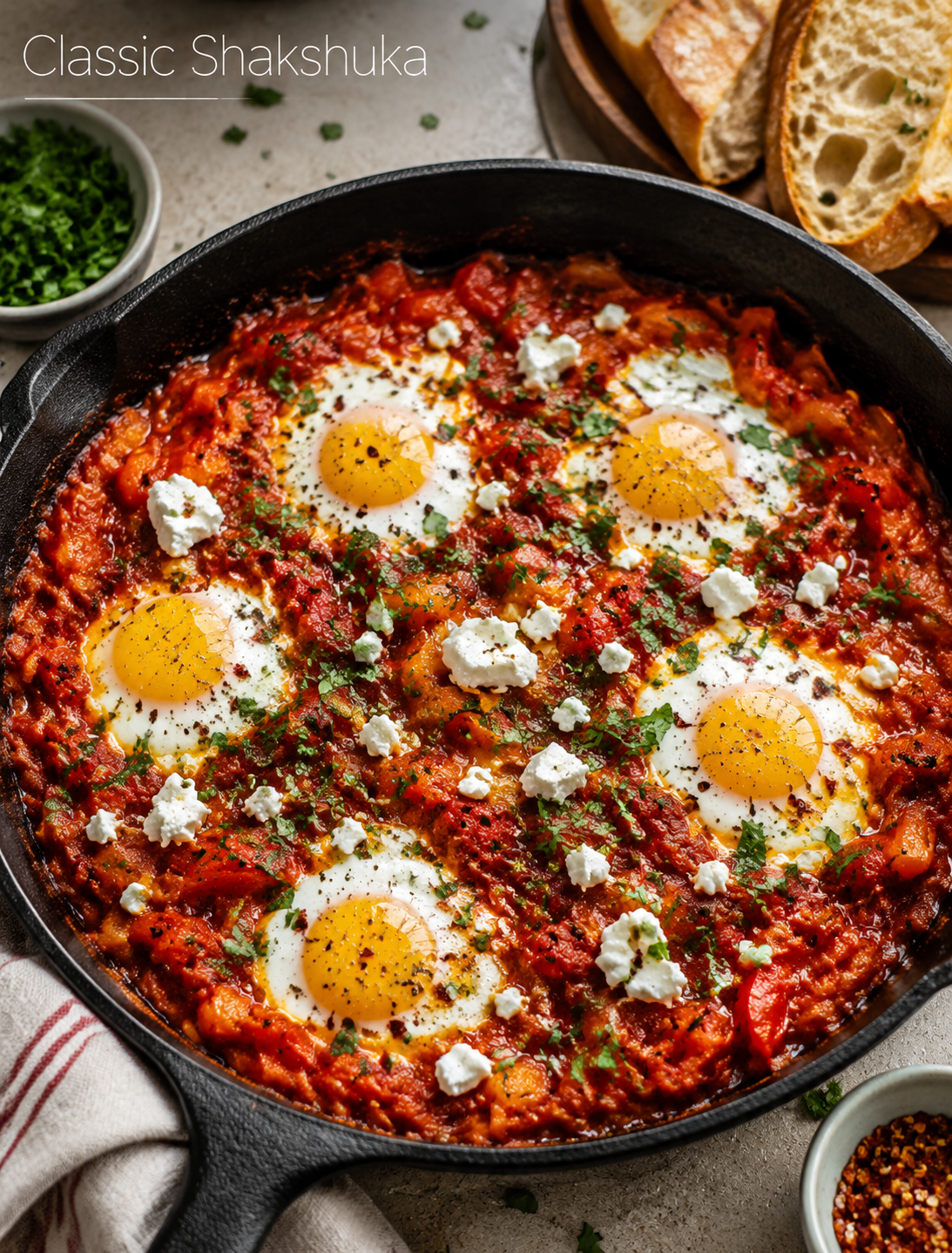
Classic Shakshuka Recipe
Classic Shakshuka is a beloved Mediterranean, North African, and Middle Eastern dish known for its rich tomato sauce, colorful vegetables, warm spices, and perfectly poached eggs. This one-pan recipe transforms simple everyday ingredients into a comforting and flavorful meal that can be enjoyed at breakfast, brunch, lunch, or dinner.
The heart of shakshuka is its slow-cooked tomato and pepper sauce, infused with aromatic spices like cumin, paprika, and coriander. The eggs are gently cooked directly in the sauce until the whites are perfectly set while the yolks remain soft and creamy. Every bite combines the richness of the eggs with the sweet, smoky, and slightly spicy tomato base.
Traditionally served with warm pita bread, crusty sourdough, or naan, shakshuka is designed for dipping and scooping, making it a satisfying communal meal. It is naturally high in protein, packed with vegetables, and easy to customize according to your taste preferences.
Whether you are looking for a healthy Mediterranean breakfast, a quick weeknight dinner, or a meal-prep-friendly recipe, this Classic Shakshuka is a perfect choice. It requires only one skillet, minimal preparation, and delivers restaurant-quality flavor right from your own kitchen.
Prep Time
15 minutes
Cook Time
30 minutes
Total Time
45 minutes
Servings
4 servings
Ingredients:
For the Shakshuka Tomato Sauce
- 2 tablespoons extra virgin olive oil
- 1 medium yellow onion, finely chopped
- 1 large red bell pepper, diced
- 1 large yellow or orange bell pepper, diced (optional for extra color)
- 3 cloves garlic, minced
- 1 teaspoon ground cumin
- 1 teaspoon smoked paprika
- 1 teaspoon sweet paprika
- ½ teaspoon ground coriander
- ¼ teaspoon cayenne pepper (optional for spice)
- 1 teaspoon dried oregano
- 1 teaspoon dried chili flakes (optional)
- 1 can (14–15 oz) crushed tomatoes
- 3–4 fresh ripe tomatoes, chopped (optional for fresh flavor)
- 1 tablespoon tomato paste
- ½ cup vegetable broth or water
- ½ teaspoon sugar or honey (optional to balance tomato acidity)
- Salt, according to taste
- Freshly ground black pepper, according to taste
For the Eggs
- 6 large eggs
- ¼ cup crumbled feta cheese
- 2 tablespoons fresh parsley, chopped
- 2 tablespoons fresh cilantro, chopped (optional)
- Extra chili flakes for topping (optional)
For Serving
- Warm pita bread
- Crusty sourdough bread
- Naan bread
- Avocado slices (optional)
- Fresh herbs for garnish
- Greek yogurt on the side (optional)
Instructions:
Step 1: Prepare the Vegetables
Start by preparing all your vegetables before cooking. Finely chop the onion, dice the bell peppers, and mince the garlic. Preparing everything ahead makes the cooking process smooth and allows the flavors to develop properly.
Heat a large skillet over medium heat and add the olive oil. Once the oil is warm, add the chopped onion and cook for about 3–4 minutes until it becomes soft and slightly translucent.
Add the diced bell peppers and continue cooking for another 5–6 minutes. The peppers should become tender and slightly sweet. Slow cooking the vegetables at this stage creates a flavorful foundation for the sauce.
Step 2: Add Garlic and Spices
Once the vegetables are softened, add the minced garlic. Cook for about 30 seconds until fragrant. Be careful not to burn the garlic because it can create a bitter taste.
Add cumin, smoked paprika, sweet paprika, coriander, oregano, and cayenne pepper if you prefer a spicy shakshuka.
Stir everything together and cook for another 30–60 seconds. Heating the spices in oil helps release their natural flavors and gives the shakshuka its signature warm and aromatic taste.
Step 3: Create the Tomato Sauce
Add the crushed tomatoes, fresh chopped tomatoes (if using), and tomato paste to the skillet. Stir well until all ingredients are combined.
Season the sauce with salt, black pepper, and a small amount of sugar or honey if your tomatoes are very acidic.
Pour in vegetable broth or water to create the perfect sauce consistency. The sauce should be thick enough to hold the eggs but not too dry.
Reduce the heat to low and allow the sauce to simmer uncovered for 15–20 minutes. Stir occasionally to prevent sticking.
During this time, the tomatoes will break down, the peppers will soften further, and the spices will blend beautifully into the sauce.
A properly cooked shakshuka sauce should be rich, thick, and flavorful.
Step 4: Create Wells for the Eggs
Once the tomato sauce has reached the desired consistency, use the back of a spoon to create small wells throughout the sauce.
These wells will hold the eggs and allow them to cook evenly without spreading throughout the pan.
Crack one egg into each well. Try to keep the yolks intact for the best presentation and texture.
Season the eggs lightly with a little salt and pepper.
Step 5: Cook the Eggs
Cover the skillet with a lid and reduce the heat to low.
Allow the eggs to cook gently for approximately 6–8 minutes. The cooking time depends on how you prefer your eggs.
For soft, runny yolks:
Cook for about 5–6 minutes.
For medium yolks:
Cook for 7–8 minutes.
For fully cooked yolks:
Cook for 9–10 minutes.
Avoid cooking on high heat because the bottom sauce may burn before the eggs are ready.
The perfect shakshuka has firm egg whites with creamy, slightly runny yolks that mix beautifully with the tomato sauce.
Step 6: Add Final Toppings
Once the eggs are cooked, remove the skillet from heat.
Sprinkle crumbled feta cheese over the top. The salty creaminess of feta perfectly balances the sweet tomato sauce.
Add freshly chopped parsley and cilantro for freshness and color.
For extra flavor, sprinkle some chili flakes or drizzle a little extra virgin olive oil over the dish.
Step 7: Serve and Enjoy
Serve shakshuka immediately while it is warm.
Place the skillet directly on the table and serve with warm pita bread, naan, or crusty bread.
Use the bread to scoop up the rich tomato sauce and creamy egg yolk. The combination of textures makes this dish incredibly satisfying.
Shakshuka is best enjoyed fresh, but the sauce can also be prepared ahead for easy meals throughout the week.
Tips for Perfect Shakshuka
Use Quality Tomatoes
The tomato sauce is the star of this recipe, so using flavorful tomatoes makes a big difference. Fresh summer tomatoes provide natural sweetness, while canned crushed tomatoes are convenient and consistent.
Cook the Sauce Slowly
Do not rush the simmering process. Allowing the sauce to cook slowly helps concentrate the flavors and creates a richer texture.
Adjust the Spice Level
Shakshuka can be mild or spicy depending on your preference. Add extra cayenne pepper, chili flakes, or harissa paste for a spicy version.
Add More Vegetables
You can increase the nutrition by adding spinach, mushrooms, zucchini, or kale. These vegetables blend beautifully into the tomato base.
Do Not Overcook the Eggs
The best shakshuka has soft eggs with creamy yolks. Keep an eye on the cooking time because eggs continue cooking slightly after removing from heat.
Make It More Filling
For a heartier meal, add chickpeas, cooked lentils, ground turkey, or sausage to the tomato sauce.
Prepare Ahead
The tomato sauce can be made up to three days ahead and stored in the refrigerator. When ready to eat, simply warm the sauce, add fresh eggs, and cook.
Storage Instructions
Store leftover shakshuka sauce in an airtight container in the refrigerator for up to 3 days.
For best results, store the sauce separately from the eggs. When reheating, warm the sauce in a skillet and add fresh eggs.
If you already have cooked eggs in the leftovers, gently reheat them over low heat to prevent the eggs from becoming rubbery.
Freezing is not recommended for cooked eggs, but the tomato sauce can be frozen for up to 3 months.
Variations of Shakshuka:
Green Shakshuka
Replace tomatoes with spinach, kale, herbs, and green vegetables for a fresh alternative.
Mediterranean Shakshuka
Add feta cheese, olives, zucchini, and fresh herbs for a Mediterranean-style version.
Protein-Rich Shakshuka
Add chickpeas, beans, chicken, or turkey sausage for extra protein.
Cheesy Shakshuka
Add mozzarella, goat cheese, or extra feta before serving for a creamy variation.
Nutritional Information (Approximate Per Serving)
Calories: 330 kcal
Protein: 18g
Carbohydrates: 22g
Fat: 20g
Fiber: 5g
Sugar: 9g
Sodium: 620mg
Health Benefits of Classic Shakshuka
High in Protein
Eggs provide complete protein containing all essential amino acids needed for muscle repair and overall health.
Rich in Antioxidants
Tomatoes contain lycopene, while peppers provide vitamin C and antioxidants that support overall wellness.
Supports Heart Health
Olive oil, vegetables, and herbs provide healthy fats and nutrients associated with a balanced Mediterranean diet.
Promotes Healthy Digestion
The vegetables and fiber content help support digestive health and keep you feeling satisfied.
Supports Weight Management
Because shakshuka is rich in protein and vegetables, it can help keep you full for longer periods.
Frequently Asked Questions
Can I make shakshuka without feta cheese?
Yes. Feta is optional and can easily be removed. The dish remains flavorful without cheese.
Can I use canned tomatoes?
Absolutely. High-quality canned crushed tomatoes work very well and are often used for convenience.
Can I make shakshuka dairy-free?
Yes. Simply skip the feta cheese or replace it with a dairy-free alternative.
Is shakshuka good for meal prep?
Yes. Prepare the sauce ahead and add fresh eggs whenever you are ready to serve.
What bread goes best with shakshuka?
Pita bread, sourdough, naan, and crusty artisan bread are all excellent choices.
Can I bake shakshuka instead of cooking it on the stove?
Yes. Prepare the sauce in an oven-safe skillet, add eggs, and bake at 375°F (190°C) for about 8–12 minutes until the eggs are cooked.
Classic Shakshuka is a simple yet impressive recipe that proves healthy food can also be comforting, flavorful, and satisfying. With its rich tomato sauce, perfectly cooked eggs, Mediterranean spices, and fresh toppings, it is a dish you will want to make again and again.