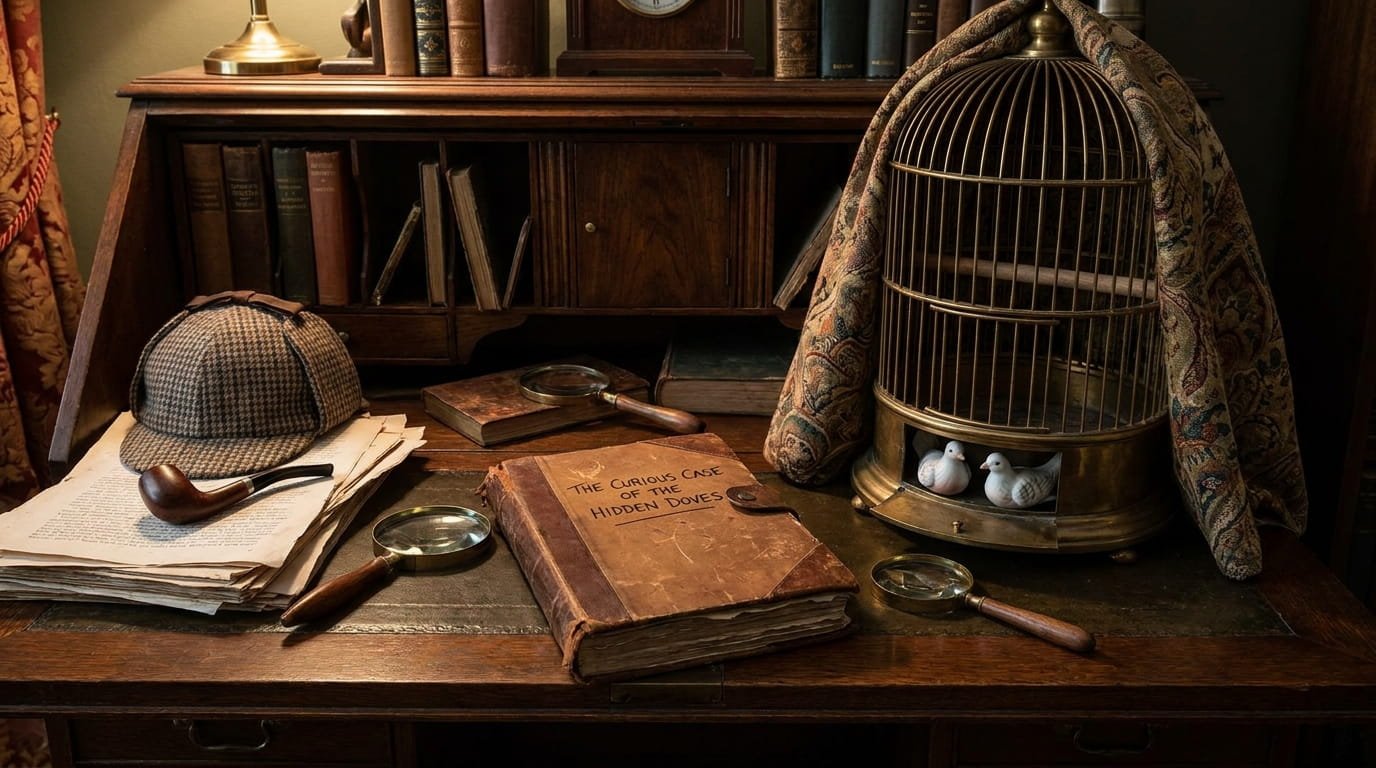
The Curious Case of the Hidden Doves
Uncover the curious case of hidden doves tucked into art, architecture, and folklore for centuries — small symbols with surprisingly big meanings.
Look closely enough at an old cathedral ceiling, a Renaissance painting, or even the carved trim of a Victorian home, and you might spot something unexpected: a small, quiet dove, tucked into a corner where it seems to have no business being. Not front and center, not part of the obvious composition — just there, waiting to be noticed.
This is the curious case of the hidden doves. Across centuries and cultures, artists, architects, and craftsmen have slipped doves into their work in places easy to overlook. Once you start looking for them, you start seeing them everywhere. So what’s actually going on here?
A Symbol With Old Roots
The dove has carried symbolic weight for thousands of years, long before it became a favorite hidden motif. In many religious traditions, it represents peace, purity, and the presence of something greater than the everyday. In Christian art especially, the dove often stands in for the Holy Spirit, appearing in scenes of baptism, annunciation, and divine visitation.
Because the dove already carried such loaded meaning, tucking one into the background of a larger scene became a quiet way for artists to add a layer of significance without disrupting the main subject. A hidden dove wasn’t decoration — it was commentary.
Where Hidden Doves Show Up
In Religious Art
Many Renaissance and Baroque painters folded small doves into busy compositions — perched on a windowsill in the background, resting on a rooftop, or barely visible among clouds. These weren’t accidents. Painters often used hidden symbols as a kind of visual footnote, guiding viewers who took the time to look closely toward a deeper reading of the scene.
In Architecture
Stonemasons and woodcarvers have long embedded doves into the structural bones of buildings — church cornices, doorframes, and ceiling medallions. Some architectural historians suggest these carvings marked buildings as places of sanctuary or blessing, a small stone promise built into the walls themselves.
In Folklore and Storytelling
Beyond visual art, doves hidden within stories carry their own tradition. Folk tales across many cultures feature doves that appear briefly, deliver a message, or transform from something else entirely, often symbolizing hope arriving quietly, without fanfare, exactly when it’s needed most.
Why Hide a Symbol at All?
It’s a fair question. Why go through the trouble of painting or carving something meant to be missed by most people who see it?
Part of the answer likely comes down to intention over spectacle. A hidden symbol rewards patience and attention rather than demanding it. For an artist working within religious or cultural traditions, tucking a dove into a quiet corner may have felt less like decoration and more like a private note left for anyone willing to slow down and really look.
There’s also something to be said for restraint. A dove placed dead-center would announce itself loudly. A dove hidden in the folds of a robe or the branches of a painted tree invites discovery instead of demanding attention — and discovery tends to stick with people longer than a bold, obvious statement ever could.
Spotting Them Today
You don’t need to travel to a European cathedral to find hidden doves. Keep an eye out in:
- Older residential architecture — carved trim, doorway medallions, and decorative moldings, especially in homes built in the 1800s and early 1900s
- Vintage book illustrations — small, easy-to-miss details tucked into borders and chapter headers
- Museum paintings — particularly religious works from the Renaissance through the Baroque period
- Public monuments and memorials — doves often appear in peace-related memorials, sometimes worked subtly into larger sculptural elements
Once you know to look, it becomes something of a habit — a small scavenger hunt built into ordinary sightseeing.
The Takeaway
The curious case of the hidden doves isn’t really a mystery to be solved so much as a tradition to be noticed. These small, tucked-away symbols have quietly traveled through centuries of art, architecture, and storytelling, carrying the same message each time: peace and hope don’t always arrive with fanfare. Sometimes they’re just there, waiting patiently in the corner, for whoever takes the time to look.