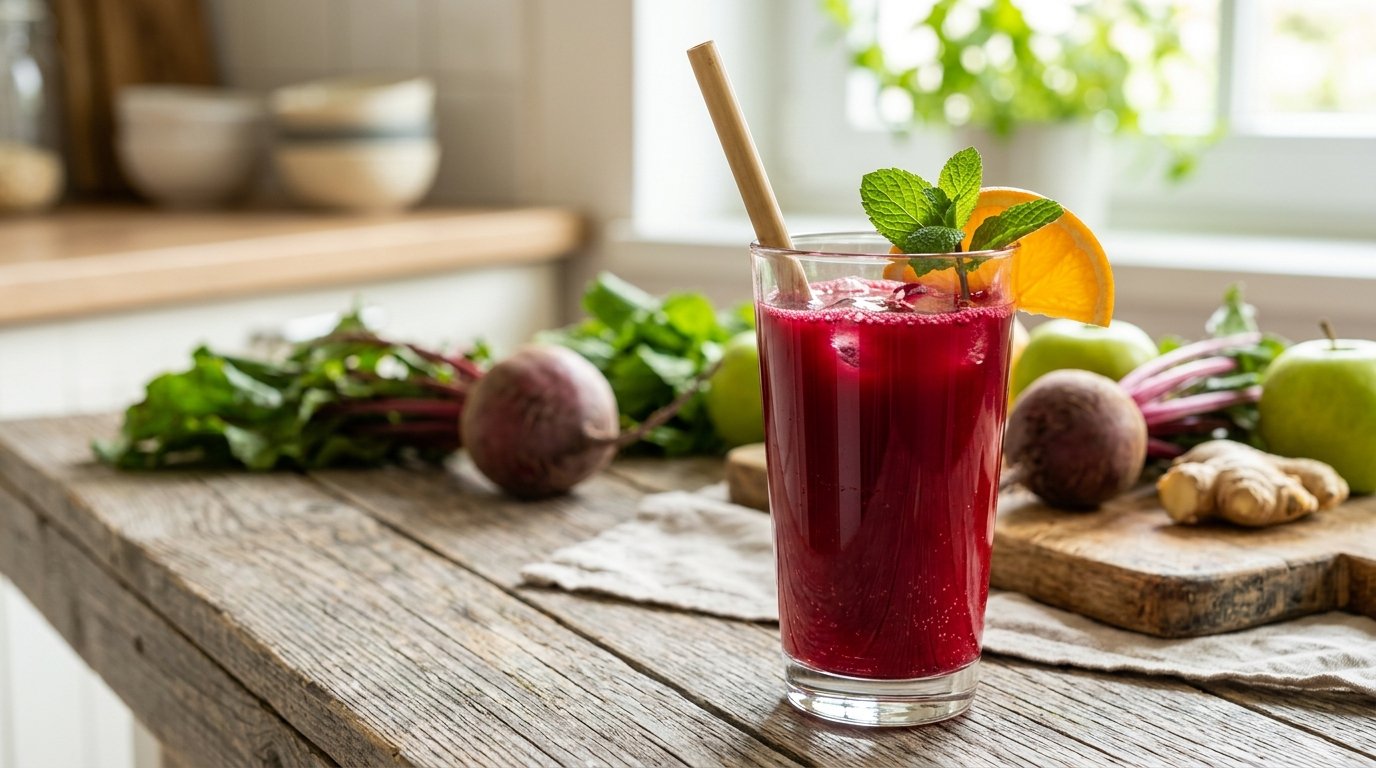
There’s something almost magical about a glass of freshly pressed beetroot juice — that deep ruby color, the earthy sweetness, and the quiet satisfaction of knowing you just made something genuinely good for your body. If you’ve never tried making it at home, you’re in for a pleasant surprise: beetroot juice takes just minutes to prepare, needs only a handful of ingredients, and tastes far better fresh than anything you’ll find bottled at the store.
This recipe walks you through a simple, balanced version of beetroot juice — one that pairs the natural sweetness of beets with a bit of apple, lemon, and ginger to keep the flavor bright rather than overpowering. Whether you’re new to juicing or just looking for a reliable go-to recipe, this one is easy to make and easy to love.
Why Beetroot Juice Deserves a Spot in Your Routine
Beets are naturally rich in nitrates, which the body converts into nitric oxide — a compound that helps blood vessels relax and may support healthy blood pressure and circulation. They’re also a good source of folate, manganese, and potassium, along with plant compounds called betalains, which give beets their color and have antioxidant properties. Regularly including beetroot juice as part of a varied, balanced diet is a reasonable and enjoyable way to add nutrients to your day — though it’s worth being realistic that no single food or drink is a cure for chronic conditions like high cholesterol or arthritis. Think of it as a smart addition to a healthy lifestyle, not a quick fix.
Recipe Overview
- Preparation Time: 10 minutes
- Cooking Time: 0 minutes (no cooking required)
- Total Time: 10 minutes
- Servings: 2 glasses (approximately 250 ml each)
Ingredients
- 2 medium beetroots (about 300g), peeled and roughly chopped
- 1 medium apple, cored and roughly chopped (Granny Smith or Fuji work well)
- 1 medium carrot, peeled and chopped
- 1-inch piece of fresh ginger, peeled
- 1 tablespoon fresh lemon juice
- 1 cup (240 ml) cold water (adjust for desired consistency)
- Ice cubes, for serving (optional)
Step-by-Step Instructions
1. Prepare the Vegetables
Wash the beetroots, apple, and carrot thoroughly. Peel the beetroots and carrot, then roughly chop all the produce into chunks small enough to fit your juicer or blender.
2. Juice or Blend
If using a juicer: Feed the beetroot, apple, carrot, and ginger through the juicer one at a time. Collect the juice in a jug or large glass.
If using a blender: Add the chopped beetroot, apple, carrot, ginger, and 1 cup of cold water to the blender. Blend on high for 1–2 minutes until smooth. Strain the mixture through a fine mesh sieve or cheesecloth into a bowl, pressing gently to extract as much liquid as possible.
3. Add Lemon Juice
Stir in the fresh lemon juice. This brightens the flavor and helps balance the earthiness of the beets.
4. Adjust Consistency
If the juice feels too thick, add a little more cold water, a tablespoon at a time, until you reach your preferred consistency.
5. Serve
Pour into glasses over ice, if desired, and serve immediately for the best flavor and nutrient content.
Cooking Tips
- Use fresh, firm beetroots. Soft or wrinkled beets will yield less juice and a duller flavor.
- Don’t skip the ginger. Even a small amount adds warmth and helps cut through the beet’s sweetness.
- Drink it fresh. Beetroot juice oxidizes quickly, so it’s best consumed within 15–20 minutes of making it for optimal taste and nutrients.
- Start small if you’re new to beets. Their strong flavor and natural sugars can be intense; diluting with extra water or apple is a good way to ease in.
Notes
Beetroot juice can temporarily turn urine or stool a pink or reddish color — this is harmless and simply due to natural pigments called betalains. If you have kidney stones, low blood pressure, or are on blood pressure medication, it’s worth checking with a doctor before making beetroot juice a regular habit, since it can affect blood pressure and oxalate levels.
Variations
- Green Beet Juice: Add a handful of spinach or kale for extra greens.
- Tropical Twist: Swap the apple for pineapple for a sweeter, tangier flavor.
- Spiced Version: Add a pinch of ground turmeric or black pepper for an earthy, warming kick.
- Citrus Boost: Add orange juice instead of water for a naturally sweeter, vitamin C–rich version.
Storage Instructions
Fresh beetroot juice is best enjoyed immediately. If needed, store it in an airtight glass container in the refrigerator for up to 24 hours — expect some separation and a slight loss of color and flavor. Give it a good stir or shake before drinking. Freezing in ice cube trays is another option for longer storage (up to 2 months); simply blend the thawed cubes when ready to drink.
Nutrition Facts (Per Serving, Approximate)
- Calories: 70
- Carbohydrates: 17g
- Sugars: 12g
- Fiber: 2g
- Protein: 1g
- Fat: 0g
- Vitamin C: 15% DV
- Potassium: 8% DV
- Folate: 10% DV
Values are estimates and may vary based on exact ingredients and portion sizes.
Frequently Asked Questions
1. Can I drink beetroot juice every day? Many people enjoy it daily in moderate amounts (about 1 cup) as part of a balanced diet. If you have a medical condition or take medication, check with your doctor first.
2. Do I need a juicer to make this recipe? No — a high-speed blender works well too. Just strain the mixture afterward to remove the pulp.
3. Why does my beetroot juice taste too earthy? This is common with beets. Adding more apple, a bit of lemon, or a touch of honey can help balance the flavor.
4. Is it normal for my urine to turn pink after drinking beet juice? Yes, this is called beeturia and is completely harmless. It happens in some people due to natural pigments in beets.
5. Can I add beetroot juice to smoothies instead of drinking it alone? Absolutely. It blends well with berries, bananas, and leafy greens for a nutrient-dense smoothie.
6. What’s the best time to drink beetroot juice? Many people prefer it in the morning or about 30–60 minutes before exercise, since the nitrates may support circulation during physical activity.
7. Can I use canned or pre-cooked beets? Fresh, raw beets are best for juicing. Canned or cooked beets have a softer texture and different flavor, and won’t juice the same way.
Conclusion
Homemade beetroot juice is one of those simple recipes that feels like a small act of self-care — quick to make, vibrant to look at, and genuinely nourishing. While it’s not a miracle cure, incorporating it into a varied, balanced diet is a tasty way to support your overall wellness. Give this recipe a try, experiment with the variations, and find the version that fits your taste best.