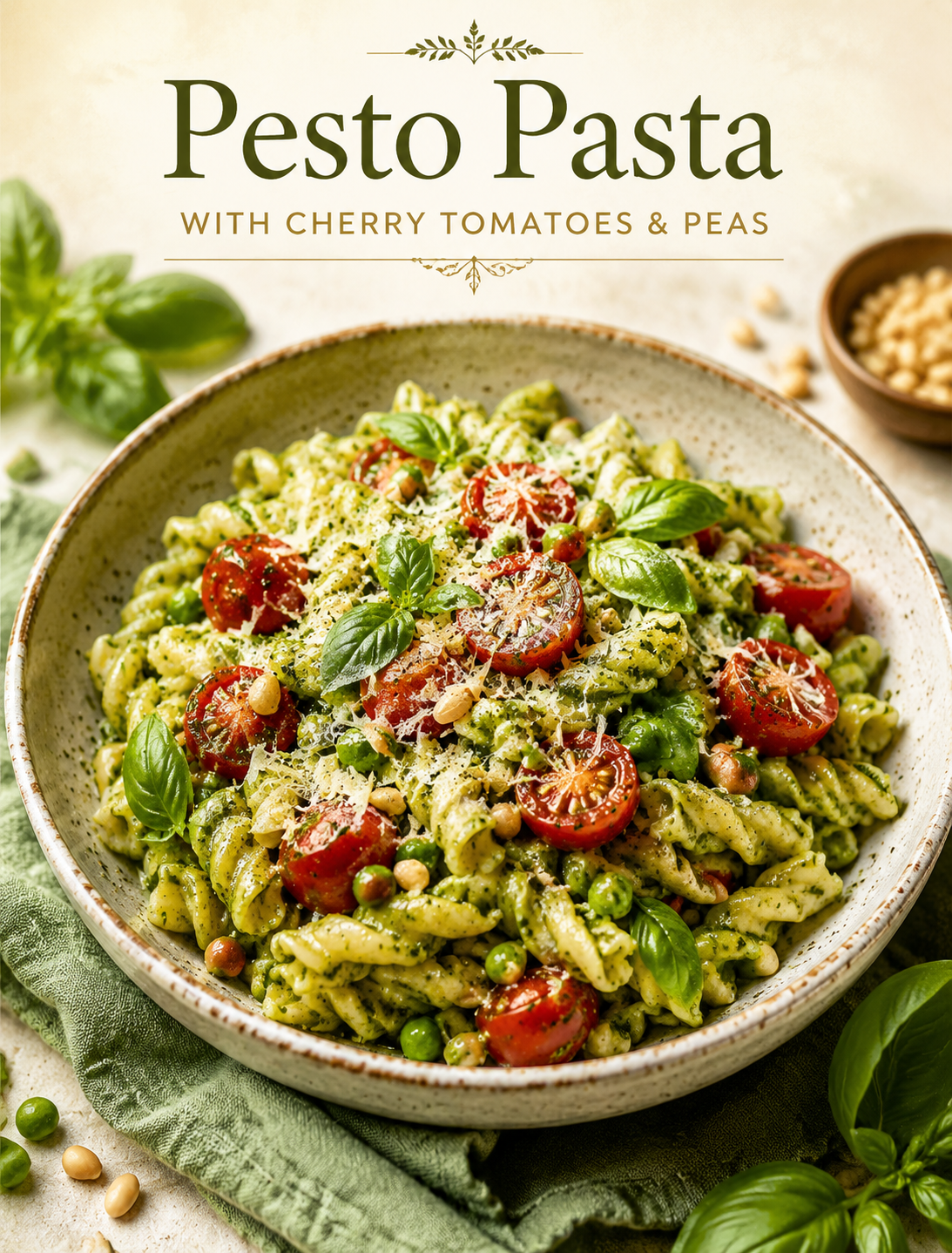
Pesto Pasta with Cherry Tomatoes & Peas
Pesto Pasta with Cherry Tomatoes & Peas is a fresh, colorful, and flavorful Italian-inspired dish that brings together the comforting texture of pasta with the bright flavors of homemade basil pesto, juicy cherry tomatoes, and sweet green peas. This recipe is perfect for busy weeknights when you want a meal that feels special but doesn’t require hours in the kitchen. The combination of creamy pesto, tender pasta, and vegetables creates a balanced dish that is both satisfying and nutritious.
The homemade pesto sauce is the star of this recipe, made with fresh basil leaves, Parmesan cheese, garlic, pine nuts, extra virgin olive oil, and a touch of lemon juice. It adds a rich, herby flavor that coats every piece of pasta beautifully. The cherry tomatoes provide natural sweetness and freshness, while the peas add a gentle sweetness, vibrant color, and extra nutrients.
This pasta can be enjoyed as a complete vegetarian meal for lunch or dinner, or you can customize it by adding grilled chicken, shrimp, salmon, or chickpeas for extra protein. It is also a great option for meal prep because it stores well and tastes delicious even the next day. Whether you are cooking for your family, preparing a quick lunch, or hosting friends, this pesto pasta is an easy recipe that everyone will love.
Prep Time: 10 minutes
Cook Time: 15 minutes
Total Time: 25 minutes
Ingredients:
For the Pasta
12 oz (340g) pasta such as spaghetti, penne, fusilli, or your favorite shape
1 ½ cups cherry tomatoes, washed and halved
1 cup fresh or frozen green peas
1 tablespoon extra virgin olive oil
¼ teaspoon salt, or adjust according to taste
¼ teaspoon freshly ground black pepper
¼ teaspoon red pepper flakes (optional for a mild spicy flavor)
For the Homemade Pesto Sauce
2 cups fresh basil leaves, washed and dried
¼ cup pine nuts, walnuts, or almonds
½ cup freshly grated Parmesan cheese
2 cloves garlic, peeled
½ teaspoon salt
¼ teaspoon black pepper
½ cup extra virgin olive oil
1 tablespoon fresh lemon juice
For Garnishing
Extra grated Parmesan cheese
Fresh basil leaves
Toasted pine nuts (optional)
Freshly cracked black pepper
Instructions:
Prepare the Pasta
Start by bringing a large pot of water to a boil. Add a generous amount of salt to the water because it helps season the pasta from the inside while cooking. Once the water is boiling, add your pasta and cook according to the package instructions until it reaches an al dente texture. The pasta should be tender but still have a slight bite when you chew it.
During the last two minutes of cooking, add the peas directly into the boiling pasta water. This allows the peas to warm up and become tender without needing a separate cooking step. Before draining the pasta, reserve about half a cup of pasta water. This starchy water will help loosen the pesto sauce and create a smooth coating on the pasta.
Drain the pasta and peas together, then set them aside while preparing the remaining ingredients.
Prepare the Homemade Pesto
To make the pesto sauce, add fresh basil leaves, pine nuts, Parmesan cheese, garlic cloves, salt, and black pepper to a food processor. Pulse several times until the ingredients are finely chopped and combined.
Slowly drizzle in the extra virgin olive oil while blending. Continue processing until the pesto becomes smooth and creamy. The texture should be thick enough to coat the pasta but still have a fresh, vibrant appearance.
Add fresh lemon juice and blend again for a few seconds. The lemon juice brightens the flavors and balances the richness of the Parmesan and olive oil. Taste the pesto and adjust the seasoning if needed by adding more salt, pepper, or Parmesan cheese.
If you prefer a chunkier pesto, pulse the ingredients fewer times. For a smoother sauce, blend a little longer until the desired consistency is reached.
Cook the Cherry Tomatoes
Heat one tablespoon of olive oil in a large skillet over medium heat. Add the halved cherry tomatoes and season them with salt, black pepper, and red pepper flakes if using.
Cook the tomatoes for about 3–4 minutes, stirring occasionally. They should become slightly softened while still maintaining their shape. Cooking the tomatoes briefly helps release their natural sweetness and creates a delicious juicy texture that mixes beautifully with the pesto.
Avoid overcooking the tomatoes because they should remain fresh and colorful rather than becoming completely mushy.
Combine Everything Together
Add the cooked pasta and peas to the skillet with the tomatoes. Turn off the heat and add the homemade pesto sauce.
Gently toss everything together until the pasta is evenly coated with the pesto. If the sauce feels too thick, gradually add a little reserved pasta water until you reach a creamy and silky consistency. The starch from the pasta water helps the pesto cling to every piece of pasta.
Continue tossing gently so that the pasta absorbs the flavors of the pesto, tomatoes, and peas. Make sure every bite contains a balance of pasta, vegetables, and sauce.
Transfer the pasta to serving bowls and garnish with extra Parmesan cheese, fresh basil leaves, and toasted pine nuts if desired. Serve immediately while warm.
Tips
Use fresh basil whenever possible because it gives the pesto the best flavor and aroma. Dried basil will not provide the same fresh taste.
Toast the pine nuts lightly before making the pesto for a deeper nutty flavor. Be careful not to burn them because they can become bitter.
For a creamier pesto pasta, add a few tablespoons of cream cheese, Greek yogurt, or heavy cream while mixing the sauce.
Always reserve pasta water before draining. It is one of the easiest ways to improve homemade pasta sauces because it helps create a smooth texture.
Use high-quality extra virgin olive oil because it greatly affects the flavor of the pesto.
If using frozen peas, there is no need to thaw them before cooking. They can go directly into the boiling pasta water.
For a more filling meal, add grilled chicken, shrimp, chickpeas, white beans, or roasted vegetables.
To make this recipe vegan, replace Parmesan cheese with nutritional yeast or a dairy-free Parmesan alternative.
For a gluten-free version, simply use your favorite gluten-free pasta.
This recipe can be served warm, at room temperature, or chilled as a pasta salad for summer gatherings.
Q&A
Can I use store-bought pesto instead of homemade pesto?
Yes, you can use store-bought pesto to save time. Homemade pesto provides a fresher flavor, but a good-quality prepared pesto works well for a quick meal.
Can I make this pasta ahead of time?
Yes, this pasta can be prepared ahead and stored in the refrigerator. Add a small splash of olive oil or warm water when reheating to bring back the creamy texture.
How long can I store leftovers?
Store leftover pesto pasta in an airtight container in the refrigerator for up to 3 days.
Can I freeze pesto pasta?
Yes, you can freeze it, but the texture of the vegetables and pasta may slightly change after thawing. For best results, freeze the pesto separately and mix it with freshly cooked pasta.
What protein goes well with this recipe?
Grilled chicken, shrimp, salmon, chickpeas, tofu, or white beans pair beautifully with pesto pasta.
Nutrition (Approx. Per Serving)
Calories: ~450
Protein: ~14g
Carbohydrates: ~50g
Fat: ~22g
Fiber: ~5g
Sugar: ~5g
Sodium: ~450mg
This Pesto Pasta with Cherry Tomatoes & Peas is a delicious example of how simple ingredients can create a restaurant-quality meal at home. The fresh pesto, colorful vegetables, and perfectly cooked pasta make it a comforting yet healthy recipe that can easily become a family favorite.