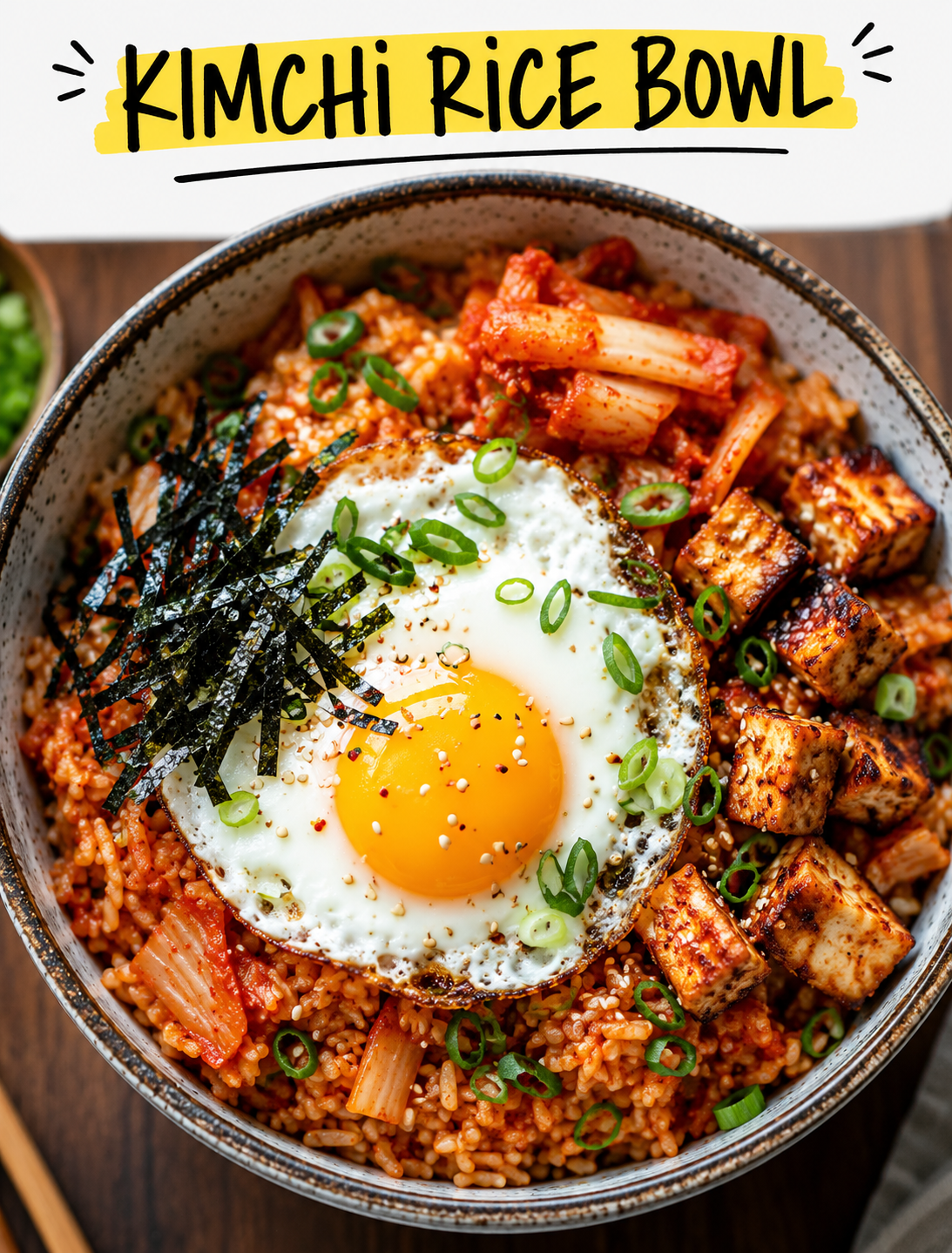
Kimchi Rice Bowl
Kimchi Rice Bowl is one of those comforting meals that comes together quickly while delivering bold, restaurant-quality flavor. This Korean-inspired dish combines fluffy rice with tangy, spicy kimchi, fragrant garlic, toasted sesame oil, and savory seasonings to create a satisfying meal that is both simple and incredibly delicious. Every bite offers a balance of spicy, sour, savory, and slightly nutty flavors, making it a favorite for busy weeknights, meal prep, or a quick lunch.
One of the greatest things about this recipe is its versatility. While the classic version is topped with a perfectly fried egg, you can easily customize it with grilled chicken, crispy tofu, sautéed shrimp, sliced beef, or even leftover roasted vegetables. The fermented kimchi adds a rich umami flavor while also providing beneficial probiotics, making this bowl as nutritious as it is flavorful.
Whether you’re already a fan of Korean cuisine or trying kimchi for the first time, this easy Kimchi Rice Bowl is a fantastic introduction. It requires only a handful of ingredients, comes together in about fifteen minutes, and can be adapted to suit your preferred spice level. It’s the perfect balance of comfort food and healthy eating, making it a recipe you’ll want to prepare again and again.
Prep Time: 5 minutes
Cook Time: 10 minutes
Total Time: 15 minutes
Ingredients:
For the Kimchi Rice
- 2 cups cooked rice (white jasmine rice, short-grain rice, brown rice, or cauliflower rice)
- 1 cup chopped kimchi
- 1 tablespoon kimchi juice from the jar
- 1 teaspoon vegetable oil
- 1 teaspoon toasted sesame oil
- 2 cloves garlic, finely minced
- ½ teaspoon soy sauce
- ½ teaspoon gochujang (optional, for extra heat)
- ¼ teaspoon black pepper
- ½ teaspoon sugar (optional, balances acidity)
- Pinch of salt, if needed
For the Toppings
- 2 large eggs (fried or soft-boiled)
- ½ cup cooked chicken, beef, shrimp, pork, or tofu (optional)
- 1 tablespoon sliced green onions
- 1 teaspoon toasted sesame seeds
- Thin strips of roasted nori (optional)
- Extra toasted sesame oil for drizzling
- Fresh cucumber slices (optional)
- Sliced avocado (optional)
- Pickled vegetables (optional)
Instructions:
Begin by preparing all of your ingredients before turning on the stove. Chop the kimchi into bite-sized pieces if it is not already cut. Mince the garlic, slice the green onions, and gather the remaining ingredients. Having everything ready makes the cooking process smooth because this recipe comes together very quickly.
Heat the vegetable oil in a large skillet or wok over medium heat. Once the oil is hot, add the minced garlic. Stir continuously for about thirty seconds until the garlic becomes fragrant. Be careful not to let it brown too much, as burnt garlic can become bitter.
Add the chopped kimchi to the skillet. Stir frequently and cook for about two to three minutes. Cooking the kimchi helps mellow its sharp acidity while intensifying its rich, savory flavor. The edges may become lightly caramelized, adding even more depth to the dish.
Stir in the kimchi juice, soy sauce, black pepper, and gochujang if you prefer a spicier bowl. Mix everything thoroughly so the seasonings coat the kimchi evenly. If your kimchi is particularly sour, add the optional sugar to create a better flavor balance.
Add the cooked rice to the skillet. Freshly cooked rice works well, but chilled leftover rice often creates an even better texture because the grains remain separate during stir-frying. Break up any clumps using your spatula and gently fold the rice into the kimchi mixture until every grain is coated.
Continue cooking for another two to three minutes, stirring frequently to heat the rice evenly. Drizzle in the toasted sesame oil during the final minute of cooking. The sesame oil should be added near the end to preserve its rich aroma and nutty flavor.
Taste the rice before removing it from the heat. If necessary, adjust the seasoning with a little extra soy sauce, kimchi juice, or gochujang depending on your taste preferences.
While the rice is cooking, prepare your eggs. Heat a small nonstick skillet over medium heat with a little oil. Crack the eggs into the pan and cook until the whites are fully set while the yolks remain runny. If you prefer firmer yolks, simply cook them a little longer. Alternatively, you can prepare soft-boiled eggs by boiling them for six to seven minutes before transferring them to an ice bath, peeling, and slicing them in half.
If you’re adding extra protein such as cooked chicken, shrimp, sliced beef, or tofu, warm it separately in another pan or add it to the rice during the final minute of cooking.
Divide the hot kimchi rice evenly between serving bowls. Arrange the fried or soft-boiled egg on top of each portion. Add your chosen protein beside the egg for a more filling meal.
Finish each bowl with sliced green onions, toasted sesame seeds, and roasted nori strips if desired. Drizzle a small amount of toasted sesame oil over the top for extra richness. Garnish with cucumber slices, avocado, or pickled vegetables if you enjoy additional freshness and texture.
Serve immediately while everything is hot and enjoy every flavorful bite.
Why You’ll Love This Recipe
This Kimchi Rice Bowl is packed with bold Korean-inspired flavors while remaining incredibly easy to prepare. It uses everyday ingredients and transforms leftover rice into a delicious meal within minutes. The combination of spicy kimchi, aromatic garlic, fluffy rice, and creamy egg creates a satisfying balance that feels comforting without being overly heavy.
The recipe is also highly customizable. You can increase the vegetables, swap proteins, reduce the spice level, or even make it completely vegan. Whether you’re cooking for one person or feeding the whole family, this dish adapts easily to your needs.
Tips for the Best Kimchi Rice Bowl
Use well-fermented kimchi for the richest flavor. Older kimchi has a deeper, tangier taste that works especially well in cooked dishes.
Day-old rice is ideal because it stays fluffy during stir-frying and absorbs the seasonings without becoming mushy.
Avoid adding too much soy sauce since kimchi is already naturally salty.
Cook the kimchi before adding the rice. This simple step creates a sweeter, more complex flavor.
Finish with sesame oil instead of cooking it for a long time. This keeps its aroma fresh and vibrant.
For restaurant-quality fried eggs, cook them over medium heat until the edges become slightly crispy while keeping the yolk soft.
Add vegetables like spinach, mushrooms, carrots, zucchini, broccoli, or bell peppers for additional nutrition.
If you enjoy spicy food, top your bowl with extra gochujang, Korean chili flakes, or sriracha.
Recipe Variations
For a vegetarian version, simply top the bowl with crispy tofu and extra vegetables.
For a vegan meal, omit the eggs and replace them with grilled tofu, tempeh, or edamame.
For extra protein, add grilled chicken breast, shredded rotisserie chicken, marinated beef, grilled shrimp, or salmon.
For a low-carb option, substitute cauliflower rice for regular rice.
For a richer flavor, melt a small pat of butter into the rice before serving.
You can also sprinkle crushed roasted peanuts, crispy fried onions, or roasted seaweed flakes on top for extra crunch.
Serving Suggestions
Serve your Kimchi Rice Bowl with Korean cucumber salad, steamed edamame, miso soup, roasted broccoli, kimchi pancakes, or a simple side salad. A refreshing iced green tea, sparkling water with lime, or cold barley tea also pairs wonderfully with the spicy flavors.
This bowl is filling enough to enjoy on its own but also works beautifully as part of a larger Korean-inspired meal.
Storage
Allow the kimchi rice to cool completely before transferring it to an airtight container. Store it in the refrigerator for up to three days.
For the best texture, store the fried eggs separately and prepare fresh eggs when serving. Reheat the rice in a skillet over medium heat or microwave until thoroughly heated. Add a splash of water if needed to keep the rice moist.
Freezing is possible, although freshly prepared kimchi rice offers the best texture. Freeze only the rice mixture without eggs or fresh garnishes for up to one month.
Nutrition Benefits
Kimchi is naturally rich in probiotics that support digestive health and contains vitamins A, C, and K. Garlic contributes antioxidants and immune-supporting compounds, while sesame seeds provide healthy fats, calcium, and minerals. Eggs supply high-quality protein and essential nutrients including vitamin D and choline. Choosing brown rice increases fiber, while adding lean protein or tofu makes the meal even more balanced and satisfying.
Frequently Asked Questions
Can I use freshly cooked rice?
Yes. Fresh rice works well, although slightly cooled or day-old rice produces a firmer texture that’s ideal for stir-frying.
Is kimchi always spicy?
Not always. Different brands vary in heat level, so choose one that matches your spice preference.
Can I make this recipe ahead of time?
Yes. Prepare the rice up to three days in advance and add freshly cooked eggs and garnishes just before serving.
What protein works best?
Grilled chicken, beef, shrimp, pork, tofu, salmon, or even leftover roasted meat all pair wonderfully with kimchi rice.
Can children eat this dish?
Yes, simply reduce or omit the gochujang and choose a milder kimchi if serving to children.
Nutrition (Approx. Per Serving)
- Calories: 400 kcal
- Protein: 12 g
- Carbohydrates: 55 g
- Fat: 15 g
- Saturated Fat: 3 g
- Fiber: 4 g
- Sugar: 3 g
- Sodium: 820 mg
- Cholesterol: 185 mg
- Calcium: 90 mg
- Iron: 2.8 mg
- Potassium: 380 mg