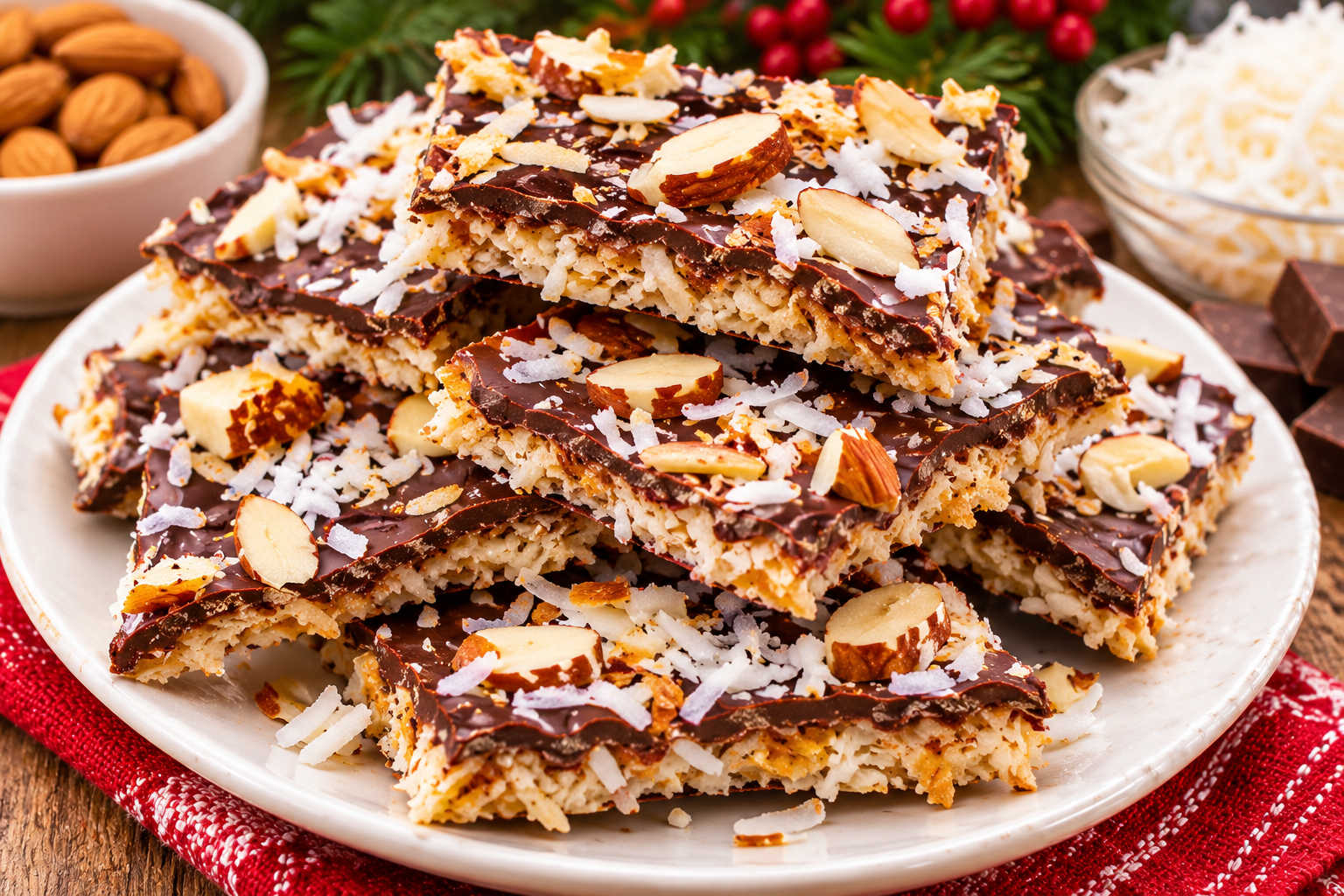
Coconut Chocolate Almond Bark – Easy, Crunchy & Irresistible Holiday Treat
Description
This Coconut Chocolate Almond Bark is a delicious homemade treat combining rich melted chocolate, sweet toasted coconut, and crunchy roasted almonds in every bite. With its beautifully crisp texture and irresistible chocolate flavor, this easy dessert is perfect for Christmas, holiday gatherings, homemade gifts, and festive dessert trays. The coconut and almond mixture is lightly baked until golden, then covered with smooth chocolate and chilled until firm. Every piece delivers a satisfying crunch with the perfect balance of nutty, sweet, and chocolatey goodness.
Recipe Time
Prep Time: 15 minutes
Cook Time: 12–15 minutes
Total Time: 1 hour (including cooling and chilling)
Servings: 16 pieces
Ingredients
For the Coconut Almond Base
-
2 cups unsweetened shredded coconut
-
1 cup sliced almonds
-
¼ cup pure maple syrup or honey
-
2 tablespoons coconut oil, melted
-
1 teaspoon vanilla extract
-
¼ teaspoon salt
For the Chocolate Layer
-
1½ cups (255 g) semisweet chocolate chips
-
1 teaspoon coconut oil
-
½ teaspoon vanilla extract (optional)
Optional Toppings
-
2 tablespoons toasted coconut flakes
-
2 tablespoons chopped almonds
-
¼ teaspoon flaky sea salt
-
1 tablespoon melted white chocolate for drizzling
-
A pinch of ground cinnamon
Step-by-Step Instructions
Step 1: Preheat the Oven
Preheat your oven to 325°F (165°C).
Line a 9×13-inch baking pan with parchment paper, leaving a little extra parchment hanging over the sides.
This will make it easier to remove the finished Coconut Chocolate Almond Bark once it has hardened.
Lightly grease the parchment paper with coconut oil if desired.
Make sure the oven is fully preheated before baking.
Step 2: Prepare the Coconut Almond Mixture
In a large mixing bowl, combine the unsweetened shredded coconut and sliced almonds.
Gently stir until the coconut and almonds are evenly distributed.
For a more delicate bark, use finely shredded coconut.
For a crunchier texture, choose larger coconut flakes and thicker almond slices.
The combination of coconut and almonds creates the delicious, nutty base of this homemade chocolate bark.
Step 3: Mix the Wet Ingredients
In a separate small bowl, combine the melted coconut oil, maple syrup or honey, vanilla extract, and salt.
Whisk until the ingredients are well blended.
The maple syrup adds sweetness and helps the coconut and almonds stick together during baking.
Coconut oil contributes richness and encourages a crisp texture once the mixture cools.
Step 4: Combine the Ingredients
Pour the wet mixture over the coconut and almonds.
Using a spatula, stir thoroughly until everything is evenly coated.
Make sure no dry pockets of coconut remain.
The mixture should feel lightly sticky but not excessively wet.
If using honey, warm it slightly before mixing so it distributes more easily.
Step 5: Spread the Mixture Into the Pan
Transfer the coconut almond mixture to the prepared baking pan.
Spread it into a thin, even layer, approximately ¼ inch thick.
Use the back of a spoon or a flat-bottomed measuring cup to press the mixture firmly into the pan.
Pressing is important because it helps the base hold together after baking.
For thicker bark, spread the mixture over a slightly smaller area of the pan.
Step 6: Bake Until Golden
Place the baking pan in the preheated oven.
Bake for approximately 12–15 minutes, or until the coconut turns lightly golden and the almonds smell toasted.
Keep a close eye on the mixture during the last few minutes.
Coconut can change from golden to burnt very quickly.
Avoid excessive browning because burnt coconut develops a bitter flavor.
Remove the pan from the oven once the surface looks beautifully golden.
Step 7: Cool the Coconut Almond Base
Place the baking pan on a cooling rack.
Allow the coconut almond mixture to cool completely for approximately 15–20 minutes.
As it cools, the maple syrup and coconut oil help create a firmer, crispier base.
Avoid stirring or breaking the mixture during cooling.
The base may still be somewhat delicate before the chocolate layer is added.
Step 8: Melt the Chocolate
Place the semisweet chocolate chips and 1 teaspoon coconut oil in a microwave-safe bowl.
Microwave in 20-second intervals, stirring thoroughly after each interval.
Continue until the chocolate is smooth and completely melted.
Alternatively, melt the chocolate over a double boiler using gentle heat.
Avoid overheating because chocolate can become thick, grainy, or scorched.
If using vanilla extract, stir it into the melted chocolate. For the smoothest result, use an oil-based chocolate flavoring or omit the extract, since water-based extracts can sometimes cause melted chocolate to seize.
Step 9: Spread the Chocolate
Pour the melted chocolate over the cooled coconut almond base.
Using an offset spatula or the back of a spoon, spread the chocolate evenly across the surface.
Make sure the chocolate reaches the edges.
The rich chocolate coating will help bind the coconut and almond mixture together once chilled.
For a beautiful finish, create gentle swirls across the chocolate surface using your spatula.
Step 10: Add the Toppings
While the chocolate is still melted, sprinkle toasted coconut flakes and chopped almonds over the top.
Add a tiny pinch of flaky sea salt to enhance the chocolate flavor.
If desired, drizzle a small amount of melted white chocolate across the surface for a festive presentation.
Press the toppings very gently into the chocolate so they remain attached after chilling.
Step 11: Chill Until Firm
Transfer the baking pan to the refrigerator.
Chill for approximately 25–35 minutes, or until the chocolate becomes completely firm.
The exact chilling time depends on the thickness of the chocolate layer.
Avoid leaving the bark uncovered near strongly scented foods because chocolate can absorb odors.
Step 12: Break Into Pieces
Once the chocolate has hardened, lift the bark from the pan using the parchment paper.
Place it on a cutting board.
Using a sharp knife, cut it into approximately 16 pieces.
For a more rustic presentation, break the bark into irregular pieces with your hands.
You should see a beautiful combination of golden coconut, crunchy almonds, and rich chocolate in every piece.
Serve immediately or store in an airtight container.
Tips and Notes
Use unsweetened coconut: Unsweetened shredded coconut allows you to control the sweetness while preserving the delicious natural coconut flavor.
Choose fresh almonds: Fresh sliced almonds provide a satisfying crunch. Avoid stale nuts because they can negatively affect the finished flavor.
Press the base firmly: Compressing the coconut almond mixture helps it hold together after baking and chilling.
Watch the baking time: Coconut browns quickly, especially around the edges. Check the pan after approximately 10 minutes.
Cool before adding chocolate: Pouring chocolate over a hot coconut base can make the bark difficult to handle and may affect the final texture.
Use quality chocolate: Semisweet chocolate creates a balanced sweetness, but dark chocolate also works beautifully.
Do not overheat chocolate: Melt slowly using short microwave intervals or a double boiler.
Use parchment paper: Parchment makes removing the bark easier and helps prevent sticking.
Chill until completely firm: Cutting too early may cause the chocolate layer to smear or break unevenly.
For a cleaner snap: Use well-tempered chocolate if you want bark that stays firm and snaps cleanly at cool room temperature. Chocolate melted with coconut oil is softer and is best stored chilled.
Adjust the thickness: Thin bark produces a delicate crunch, while thicker bark offers a more substantial bite.
Balance the flavors: A small pinch of flaky salt enhances the sweetness of the chocolate and the nuttiness of the almonds.
Variations
Dark Chocolate Coconut Almond Bark
Replace the semisweet chocolate chips with dark chocolate containing approximately 70% cocoa.
Dark chocolate creates a deeper, less sweet flavor that pairs beautifully with toasted coconut and roasted almonds.
This variation is especially delicious with flaky sea salt.
White Chocolate Coconut Bark
Use white chocolate instead of semisweet chocolate.
Sprinkle additional toasted coconut over the top for an attractive white-and-golden appearance.
For Christmas, add a small amount of festive red and green sprinkles.
Chocolate Coconut Almond Joy Bark
For a candy-bar-inspired variation, use sweetened shredded coconut and milk chocolate.
Add extra chopped almonds before the chocolate hardens.
The result is reminiscent of classic chocolate, coconut, and almond candy flavors.
Peanut Butter Chocolate Bark
Add 2 tablespoons of creamy peanut butter to the melted chocolate.
Stir until smooth before spreading it over the coconut almond base.
The peanut butter adds a delicious nutty richness.
Cranberry Coconut Chocolate Bark
Sprinkle ¼ cup chopped dried cranberries over the chocolate layer.
The cranberries add a sweet-tart flavor and beautiful red color.
This version is especially attractive for holiday dessert platters.
Pistachio Coconut Chocolate Bark
Replace half the sliced almonds with chopped pistachios.
The green pistachios create a beautiful contrast against dark chocolate.
This variation makes a lovely homemade holiday gift.
Sugar-Free Coconut Chocolate Bark
Use sugar-free chocolate chips and a suitable sugar-free liquid sweetener that behaves well when baked.
Keep in mind that some sweeteners do not bind the coconut base as effectively as maple syrup or honey, so the texture may be more crumbly.
Serving Suggestions
Christmas Dessert Trays: Arrange Coconut Chocolate Almond Bark alongside homemade cookies, chocolate truffles, and holiday fudge.
Holiday Gift Boxes: Package individual pieces in decorative boxes lined with parchment paper.
Coffee-Time Treat: Enjoy a small piece with freshly brewed coffee, cappuccino, or espresso.
Hot Chocolate Pairing: Serve with warm hot chocolate for a delicious chocolate-themed dessert experience.
Party Dessert Tables: Place irregular pieces on a beautiful serving platter for an elegant presentation.
Vanilla Ice Cream Topping: Chop the bark into small pieces and sprinkle over vanilla ice cream for added crunch.
Yogurt Bowls: Crumble a small amount over thick Greek yogurt for a sweet, crunchy topping.
Homemade Edible Gifts: Fill small food-safe bags with bark pieces and tie them with festive ribbons.
Make-Ahead Instructions
Coconut Chocolate Almond Bark is an excellent make-ahead dessert because it can be prepared several days before serving.
For Christmas or holiday gatherings, prepare the bark ahead of time and store it in an airtight container in the refrigerator.
Place parchment paper between layers to prevent pieces from sticking together.
If you’re giving the bark as a gift, make sure it is completely firm before packaging.
Use food-safe containers and keep the bark away from direct sunlight or excessive heat.
For the best presentation, remove the bark from the refrigerator shortly before serving.
Storage and Reheating
Room Temperature: If made with properly tempered chocolate, the bark can be stored in a cool, dry location. However, the version containing coconut oil is best kept refrigerated because it can soften in warm conditions.
Refrigerator: Store in an airtight container for up to 2 weeks for best quality.
Freezer: Freeze the bark in a freezer-safe container for up to 2 months.
Layering: Separate pieces with parchment paper to prevent sticking.
Thawing: Allow frozen bark to thaw gradually inside its sealed container to reduce condensation.
Reheating: Reheating is unnecessary because this dessert is meant to be enjoyed firm and crunchy.
Frequently Asked Questions
What is Coconut Chocolate Almond Bark?
Coconut Chocolate Almond Bark is a homemade dessert made with toasted coconut, crunchy almonds, and melted chocolate. The ingredients form a firm, breakable treat that’s perfect for holidays, gifts, and snacking.
Can I make Coconut Chocolate Almond Bark without baking?
Yes. You can toast the coconut and almonds separately in a skillet, then mix them with melted chocolate. Spread the mixture onto parchment paper and chill until firm. However, this creates a different texture from the baked coconut base.
Can I use milk chocolate instead of semisweet chocolate?
Absolutely. Milk chocolate produces a sweeter and creamier bark, while semisweet chocolate offers a more balanced flavor.
Why is my coconut almond bark falling apart?
The coconut base may not have been pressed firmly enough, or the sweetener may not have distributed evenly. Make sure to press the mixture into the pan and allow it to cool before adding chocolate.
Can I use coconut flakes instead of shredded coconut?
Yes. Coconut flakes create larger, crunchier pieces. However, they may not bind together as tightly as finely shredded coconut.
Is Coconut Chocolate Almond Bark gluten-free?
The main ingredients are naturally gluten-free, but always check the labels on chocolate chips, sweeteners, and optional toppings for potential gluten-containing additives or cross-contact.
Can I use dark chocolate for a less sweet version?
Yes. Dark chocolate is an excellent choice because its deeper flavor complements the natural sweetness of coconut and the nuttiness of almonds.
How do I prevent the chocolate from melting?
Store the bark in a cool environment, preferably in the refrigerator. Avoid leaving it in direct sunlight or near heat sources.
Can I make this bark for Christmas gifts?
Yes! Coconut Chocolate Almond Bark is perfect for homemade Christmas gifts. Package the completely cooled pieces in decorative food-safe bags, tins, or boxes.
Can I add other nuts or dried fruits?
Absolutely. Pistachios, pecans, walnuts, dried cranberries, and raisins are delicious additions. Adjust the quantities to keep the base from becoming overcrowded.
Nutrition Information
Approximate values per piece, based on 16 servings using semisweet chocolate and maple syrup. Actual nutrition varies by ingredient brands and portion size.
| Nutrient | Amount |
|---|---|
| Calories | 245 kcal |
| Protein | 4 g |
| Carbohydrates | 20 g |
| Total Fat | 18 g |
| Saturated Fat | 11 g |
| Fiber | 4 g |
| Sugar | 14 g |
| Sodium | 45 mg |
| Cholesterol | 2 mg |
This Coconut Chocolate Almond Bark combines rich chocolate, golden toasted coconut, and crunchy almonds in one irresistible homemade dessert. With its delicious texture, simple preparation, and endless topping possibilities, it’s perfect for Christmas treats, holiday dessert trays, edible gifts, or whenever you’re craving something sweet and crunchy.