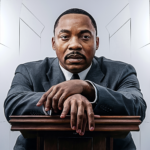

Martin Luther King Jr. – A Leader Who Changed History
Martin Luther King Jr. is remembered as one of the most influential leaders of the 20th century. His commitment to equality, justice, and nonviolent protest transformed the civil rights movement in the United States and inspired millions around the world. Through courage, faith, and powerful words, King challenged injustice and reshaped the course of history.
Early Life and Education
Born on January 15, 1929, in Atlanta, Georgia, Martin Luther King Jr. grew up in a family deeply rooted in faith and community leadership. His father was a Baptist minister, and the church played a central role in shaping his values. From an early age, King witnessed racial discrimination, which deeply affected his worldview.
King excelled academically and entered college at a young age. He later earned a doctorate in theology, combining intellectual strength with moral conviction. His education helped him articulate complex ideas about justice, equality, and human dignity in ways that resonated with diverse audiences.
Philosophy of Nonviolent Resistance
One of Martin Luther King Jr.’s defining contributions was his commitment to nonviolent resistance. Inspired by the teachings of Mahatma Gandhi, King believed that peaceful protest was the most powerful way to confront injustice. He argued that violence only deepened hatred, while nonviolence exposed moral wrongdoing.
This philosophy guided major campaigns, including boycotts, marches, and sit-ins. King’s approach required immense discipline and courage, especially in the face of hostility. His leadership demonstrated that moral strength could challenge deeply entrenched systems of discrimination.
Role in the Civil Rights Movement
Martin Luther King Jr. became a national figure during the civil rights movement of the 1950s and 1960s. He worked alongside activists to end segregation and secure voting rights for African Americans. His leadership helped unite communities across racial and social lines.
One of the movement’s most defining moments was King’s involvement in large-scale demonstrations that brought national attention to racial inequality. These efforts contributed to landmark legislation that reshaped American society and expanded civil rights protections.
I Have a Dream” and Powerful Oratory
King’s speeches remain among the most powerful ever delivered. His ability to combine moral clarity with poetic language made his message unforgettable. He spoke not only about injustice but also about hope, unity, and the future.
His words encouraged people to imagine a society built on fairness rather than division. Even today, his speeches are studied in schools, quoted by leaders, and shared across generations.
Challenges and Sacrifices
Despite his global recognition, King faced constant challenges. He was frequently criticized, threatened, and imprisoned. The emotional toll of leadership was heavy, yet he remained committed to his mission.
King understood that progress required sacrifice. His willingness to endure hardship strengthened the movement and inspired others to continue the struggle for justice.
Conclusion
Martin Luther King Jr.’s legacy extends far beyond his lifetime. His leadership reshaped laws, attitudes, and moral understanding. By standing firmly for equality and nonviolence, he left a timeless message: justice and dignity belong to everyone.